 14:00
2B or 1B to 1A That Is the Question DJ Mixedinkey Might Be the Answer for You
Contents of the video
0:00 He starts off on a nice walk that takes him down a country path
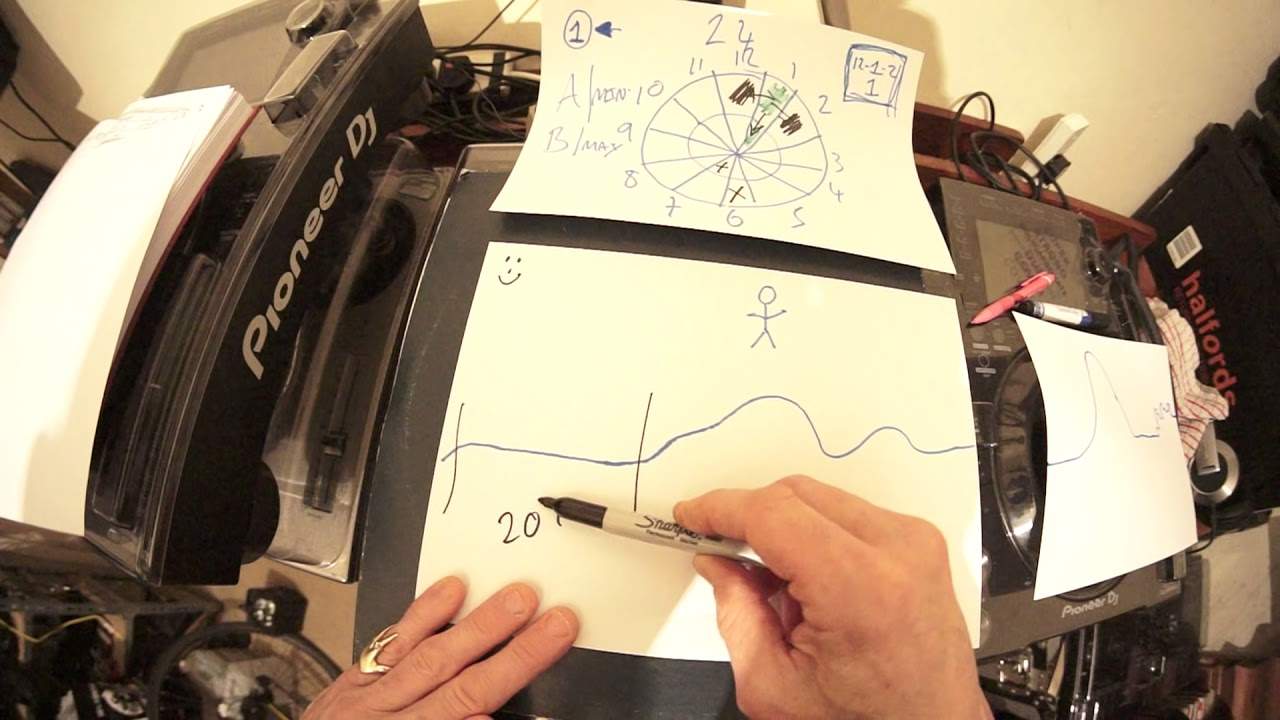
Alright, so it's a hot summer's day and our little man wants to go on a journey. Now, our little man, here he is, has decided he wants to go for a walk. Now, it's a sunny day and he's going to go for a stroll in the country by himself. So, he starts off on a nice walk that takes him down a country path. It's not going down, it's not going up, it's just going as straight as the eye can see for quite a distance but then all of a sudden he comes to a little hill and he takes a nice kind of walk up this hill, maybe gets to the top a nice gentle down and up and down and up and down and then he carries on his... Oh dear, that's going to be the other side. That didn't work, did it? And then he carries on his walk.
6:59 Maybe 7b over there now
Now this time he goes maybe up the hill, a big hill, quite a steep hill and down again, oh sorry, and then he carries on a long, on his walk again, a flat surface but then he comes to a bit of a rocky bit. Oh dear. Right, so how on earth does that represent harmonic mixing? I mean, you know, we've got a line. Right, so just remember that, we'll come back to that picture in a bit. There are... OK, there's 24 keys and let's imagine you have one track that you've brought onto the left-hand turntable and you've got a track to come over here on the right-hand turntable. Now, logic should tell you, you've got a 1 in 24 chance of getting the same key the exact same key but odds are better because... they're better than that, should I say
2:21 Outside, those, middle
Because there are other keys that work with that one not just that one key. So, for example, 1 will go with 1 12 will go with 1 and 2 would go with 1 and also, there's another 1 that will go with 1 which I will explain soon. So... Right, what is this? Well, let's imagine a wheel a circle at the top we've got 12 6 at the bottom 3 9 10 11 12 1 2 4 5 7 and 8. OK, so what I'm going to do now is I'm going to try very quickly and split those up OK, so bear with me let's make these into a bit of a clock like a pie chart but split up into not very good 12 pieces right, there it is I'm going to add another circle there as well so on the outside we have a certain type of key and on the inside we have a different one now we have what's known as major and minor
Now for the Camelot wheel purposes we will do A and B B is major A is minor Now in a way a good way for you to remember the keys is minor just imagine someone digging down deep in a coal pit they're a minor so those keys are very low and they're very moody on the other hand the major keys think of May the month of May the spring is here the flowers are out so that's a good way first of all of remembering how the keys will make you feel minor deep May nice and warm and hopefully the sun's coming out especially in Wales now again let's go back to our 24 keys because there are there's 12 but then we've got another group of 12 in the middle so on the outside we've got a group of 12 and on the inside we have 12 now it's up to you whether you want to put
The minors on the outside or in the middle but generally you have minor on the outside and major in the middle so again let's revert back to our one in 24 now of course imagine you randomly pick I don't know two or three hundred tracks you put one on your turntable and then you choose another track from those that pile you've got chances are you're not going to get exactly the same key because it's one in 24 but
This four here that there are others that I don't want to go into at the moment because it's a little bit more confusing for the time being we're going to stick to the very basics but you can pretty much use these four keys because these four keys should if the software has analysed your tracks correctly mix in to number one now let's have a look now you'll notice here I put a one above another one so why did I put two ones and why did I have a twelve and a two there so let's look at this area here twelve one and two now I'm going to put a cross in a different colour so we can distinguish between everything and my wacky drawings so there's our track okay there's our track 1a 1b okay so we go from a minor to a major we can also go from a1 to just through it
Yeah we can also go to a12 or we can also go to a1 so we can go that way that way or down and we can continue to use our walk rather than just going down and moving around the track which I hope you like I hope this is helpful if you are for example a6 over there and we go to maybe 7b over there now there could be issues there now let's just put that up there hopefully it will stay there I'm going to tilt the camera very slightly and let's go back to our lovely little drawing about our journey in the Sun now this this chap here is taking a nice walk along a garden path now let's imagine that that walk is our camelot wheel so this chap for say 20 minutes is walking along this garden path it's not going up or down what he's doing if we take a look at the camelot wheel he's
Sticking in the same key so he's sticking him for example a1 now as the as this journey starts to rise he could be going to say b1 or he could be going to a2 because what he's doing he's slowly making the journey a little bit more steep for him he's changing the feel of the journey it's going down again he may be going down a key so he may be going as he goes up to b1 and then when he goes down again he may be going back to a1 as he go goes up here he may be going to a2 and down back to a1 and so on all right so this is a bit of a steep incline here so possibly here you know we could get into maybe him going from a1 to a2 to a3 alternatively which is slightly more difficult and again I don't want to discuss this at the moment but he could go from a1 to a3 but that's more of a
Jump so really it's a little bit more difficult than what we've seen in the so really what I should have done is maybe I should have had a nice sort of steady increase but then a dip there and almost like a cavern and what he had to do was jump over that cavern to get to the other side if he wasn't careful he could actually fall down the cavern which is exactly what could happen if you do miss a key if you're not careful about where you bring your next track in and again that's a little bit more confusing that will be dealt with in a future video hopefully this week if I have the time all right so let's get back to our journey here now all right so he's walking along he's back to this nice sort of area here and let's get to say for example this is a6 this nice
Flat area which could be 10 minutes it could be 20 minutes it doesn't matter but what he's done here now he's gone on to rocky ground now that is him going to say 7b now if you're going to jump over that cavern you've got to make sure that
You're not pushing too much forward because you don't want to go off into the air and he's going to come back up there and jump all the way down at that same point so here's a nice little clip of him getting on to rocky ground and this is another example of a 5-minute journey so here's a 2-minute video of me trying to get on to rocky ground this is an example of a 2-minute journey but it's also a very detailed one I'll show you in just a moment so let's imagine you are taking a group of people on a two-hour trip through the tour around somewhere. You know, if you don't take them on a comfortable tour, they're going to get fidgety and get annoyed and get confused, maybe get bored and disappear. So you imagine
11:30 When you rise
The dance floor. If you take the people on a dance floor on the wrong kind of journey, they're going to get really pissed off. Now, in a nutshell, one, two, three, four, four ways of mixing in key. All right. Yes, this is a very basic way of looking at it. Oh, that's even a thicker black pen, is it? Oh well. Okay. So the first one is the same key. It's the same key. All right. That's where your journey is at a constant. The second one is when you rise. When you go, for example, like I said, from maybe A1 to B1 or A1 to B2, sorry, A1 to A2. So it's a nice kind of gentle lift. The third one, maybe you're in B1 and you get a B12. You've got sort of a dip sort of feel in the energy of the mix. The fourth one is say, for example, when you go from A5 to maybe something like
4B. Okay. So you're at A5 and you've got this kind of unnatural change in the track that just doesn't sound right. It's also sometimes it's the energy can feel different in a room. And I'm sure you've been there, I've been there, and I've made this mistake as well myself where I've gone to the wrong key. I thought I shouldn't have done that. I've been into a room where I've heard DJs playing and all of a sudden there's just something not right with the transition. It's because it's not mixed in key. Now, I hope this has been a help. Go and check out the Camelot Wheel. Also what I will do, I'll give you a link to a program called Mixed In Key that can help you in many ways. I do believe there's a cost for that program, but what it can do,
It can analyze your tracks for you and let you know what they are. For example, A1, B2, B3, A12, B4 and so on. But one thing you will notice, and I guarantee this if you are into modern day dance music, you will get a lot more As than Bs. In other words, a lot more of your tracks will be in the minor key than the major key. Now, the minor key, lastly the As, are very moody like I said, very deep. The Bs are more euphoric, more uplifting. So I will finish off this video with, just remember what I said quite close to the beginning, class the As as almost the minor keys. They're very deep. So remember a minor digging down for coal, deep. B is more major, may. Remember may, the sunshine, more euphoric, the sun's out and more happy. If you can remember that, you can't go wrong.
Practice and enjoy. Thank you.
This transcript was produced automatically from the audio of the video and may contain mistakes.