 8:24
A close look at a pro audio Speaker cab an RCF Event 6000
Contents of the video
0:00 Little bits of the speakers
Alright folks, occasionally I have to clean my speakers. Now you possibly think what on earth does he want to clean his speakers for? But speaker, grill in front of it so you've got a bit of space in between the speakers and the grill gets full of rubbish sometimes. So I thought while I'm doing it I can show you the little bits of the speakers. Right now then, check this out for a bit of a monster, okay? Now this is an Event 6000, okay? You have at the top here, you have a horn, which is the high frequency, which is the treble. If you consider on your mixer, you have bass, mid and treble. Out of this guy here, that's where you'll get most of your treble. Then here is the mid. This is like the vocals, the guitar. That's what you'll get out of this guy here. Now these little beauties here...
Little actually, these are 15 inch bass drivers. That's where you get that good old thumping drum and bass sound out of these guys. Now what I've done as well, don't normally do this, but I've unscrewed them so we can have a look at the actual magnets. Now I'm just going to stop the camera here because I just want to give you an example of difference in size. Bear with me. Right guys, now then, people often say to me, should I buy... You know, these small speakers for like £1.50, in other words, cheap speakers. I advise you if the actual price is cheap, the components, the pieces, the bits that make the noise are going to be cheap. Now then, in your cheap speakers, that is a horn, alright? That's known as like a piezo horn. Now, check out the size of the magnet there. That's where all of the sound...
All of this is made in there. You've got a small diaphragm that vibrates very, very fast and makes sound come out of this area here. Now then, that is the sort of thing you would find, let's say, in a cheap speaker setup. Now what we'll do is we'll open this guy up and we'll have a look at the magnet in this little so-and-so. Right, there you go. There's the difference, alright? Now that's the difference in size, OK? Now that guy works, that will throw out A lot of high frequency. Yes, it can actually deafen you. But the thing is with something like this, this is known as a compression driver. This thing will last indefinitely just so long as you look after it. The quality will be much better as well. So that's why it's always better to buy good, proper, what's known as pro audio speakers.
2:34 This is where we'll get all the guitar sounds
Good quality speakers, as opposed to flashy brand new stuff that looks perfect, it's all pristine and at the end of the day, you know, if it's cheap, it's going to be crap. Simply because if you're spending 100 quid on a set of speakers, you're better off spending 150 quid on a set of second hand speakers that are slightly better quality. Right now this guy here, this is the mid. This is where we'll get all the guitar sounds. The vocals, the voice, the melody. Now this thing here is called a phase plug. What that actually does, and here is the horn. Now the thing is with high frequency and mid frequency, you need a horn to actually transmit the sound. Now think about it logically. Let's say you're shouting to someone, alright, and they can't hear you. What is the first thing you'll do? You'll put your hands by your mouth and you'll almost shout in between your hands.
By doing that. Now then, if we look here what's happened basically what happens is the sound is transmitted from this particular driver, this is an eight inch driver and what happens is as it comes out it's echoed, it's bounced from here and basically this will actually make the sound louder. Now then, if we look again at the magnet in here what you can see there is like a grill now basically that's a heat sink because this guy gets very hot Now the magnet in here is covered, alright? The reason it's covered is because there's a lot of bass frequencies in here, there's a lot of air movement. Now if this wasn't covered what would happen is the actual air movement from the big speakers would make this small speaker move so much...
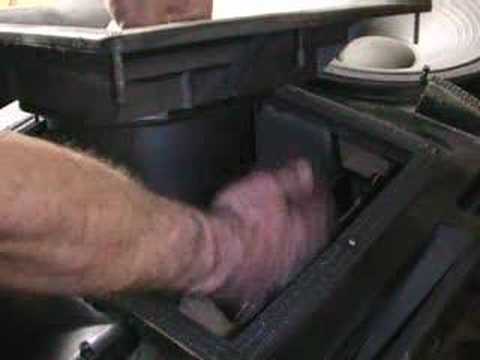
The DJ Tutor allows you to control the volume of the speaker. The DJ Tutor allows you to control the volume of the speaker. And if we take this one out, should be able to. Hold on, let's just undo those a little bit more. Right, we need the old screwy of driver rings. That's better. OK, now then, check this out. Oh, it's still not coming out. Play with these people who make these speakers. Right, there we go, that should do it. There you go. Right, there you go. Now then... That's a bit of a magnet, okay? There's my hand in relation to the size of the magnet, okay? This is an RCF 15 inch driver. These guys should take around about 500 to 700 watts each, okay? Now that's peak. What I mean by peak is that...
5:34 All of a sudden it doesn't go bang or pop
They won't take that amount of power continually, but peak in the industry basically means for a split second, if you've got 700 watts bang straight into that speaker and then the 700 watts is taken away, theoretically the actual speaker should take it. But if you had 700 watts continually in that speaker, there's a good chance the speaker may blow. All of a sudden it doesn't go bang or pop. What will happen is that there's an actual coil inside here. Without going into great detail, if you imagine a long piece of wire and you curl that wire around continually, continually, what will happen is all of a sudden a part of that wire will just split, it'll burn, and once you've lost contact from one side of the wire to the other, in other words the burn causes the wire to break, all of a sudden the speaker stops working.
But again, these are dual 15s. Now this particular speaker, it's an RCF Event 6000 and this is quite good because what you can do, you can run this known as passive or active. Passive basically means I can put an amplifier, one amplifier into this speaker and I can run all of these individual speakers, all four of them through one amplifier. Active, what that means is that I would, and by the way passive basically means I will be using the crossover inside this speaker. Active means I can have two amplifiers running this system. I can have one amplifier running these two speakers here on bass and then I can have another amplifier running these two guys here on mid and top. Now I'm just going to pause this and we'll have a look at the crossover inside.
Right, there you go. There's the crossover inside. Now without going into detail about what all those little bits and bobs do, basically what they do from an easy way of explaining is that they will cut out all of the mid and the top and they will only let the bass speakers, which is these big guys here, have bass sound, have the boom-boom. So in other words, all that will come out of this one and that one is boom-boom and not any vocals or any mid and top. Now the same applies, but the opposite to the mid and to the top. What will happen is the crossover will eliminate all of the bass, the boom, and all of that this guy, and it will just have the mid going into this one. And then the same applies with the treble. What will happen is that all of the bass through the crossover will be taken away, and the mid through the crossover will be taken away.
And then separately you'll just have a small signal with all the high frequency coming into this guy here. So there you go, there's a bit of an insight into a rather large speaker and now I've got to put the bugger back together again. Thank you for watching, practice and enjoy.
This transcript was produced automatically from the audio of the video and may contain mistakes.