 6:09
Starting out over forty-five
On YouTube this video is called Are You over 45 and a DJ if so Its Your Time to Shine!
What this lesson teaches
An argument about age, made from a particular vantage point, and the core of it holds up.
The shift he is describing
Through the 2000s and into the 2010s, DJs of his generation were classed as old, because younger DJs were arriving with new styles and new music.
And his comparison with the eighties makes the change visible: a mobile DJ who was fifty or sixty then was genuinely a bit old in the tooth, playing the classics of their own youth and not much else.
What is different now
The older DJs he lists - the names from the house and dance era - are themselves getting on. And they are playing modern tracks, while also holding the back catalogue.
So the older DJ is no longer the one playing old music. They are the one who can play both.
Why that is an advantage
His word for it is eclectic: the ability to play a diverse arrangement of almost anything, at the drop of a hat, because the knowledge is there.
And the contrast - put carefully, because he does not want to insult anybody - is that a DJ who is excellent at one current style may simply not have the older material, because they were not there and have not gone back for it.
At a private function that is decisive. A wedding needs sixty years of music, and no amount of skill in one genre substitutes for knowing what to play at nine o'clock when the room is forty-somethings.
The three things he says the older DJ brings
Knowledge - the breadth, and knowing which record works where.
Charisma - which this stage argues repeatedly is the actual product at a function.
Passion.
And the practical form it takes: knowing how to keep a floor going not only with current records but by slipping in an old one at the right moment.
The musical observation
A good aside, and it is the kind of thing only somebody who has watched for thirty years notices.
Tempos that had risen to 140 or 150 for full-on club music have been drifting back down towards 120 - which is where house was in the late eighties and early nineties. He credits producers bringing the disco feel back into house.
So the material a long-serving DJ already owns is coming back round to being the right tempo again. That is a real advantage and it is not available to somebody who started last year.
And his advice both ways
To young DJs: talk to the people who have been doing it for decades. The knowledge is the thing you cannot shortcut.
To older DJs: be thankful for who you are. What was once a disadvantage is now the thing being asked for.
The honest caveat he half-makes himself is worth stating straight: this only works if you have actually kept up. The older DJ who is valuable is the one playing current records and the catalogue. The one who stopped listening in 1995 is exactly the DJ the eighties comparison describes - which is the subject of the next lesson in this course.
Contents of the video
0:00 Is this where I change positions and we clip the camera?
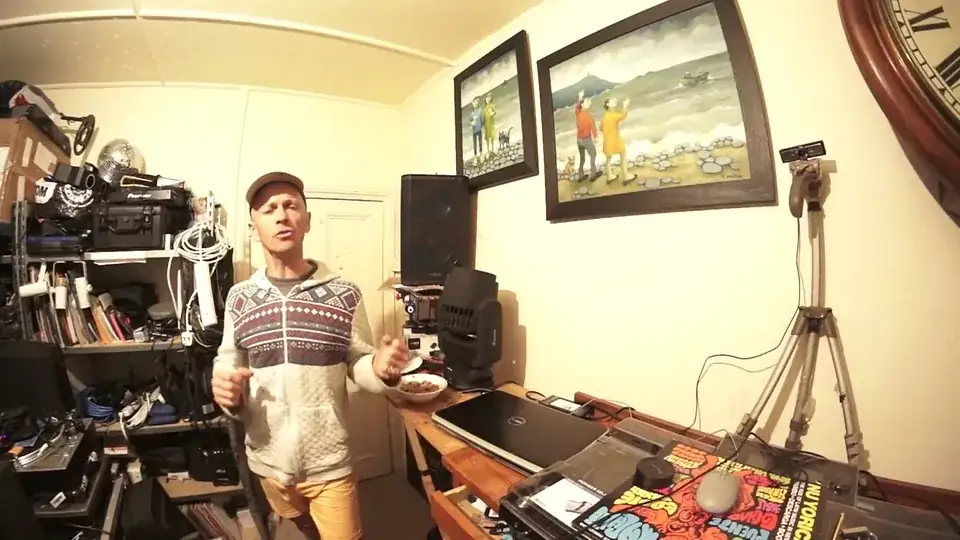
So, the day of the new DJ has arrived. Is this where I change positions and we clip the camera? Yes, the day of the new DJ has arrived. Do I go back to my original place now? We edit that. Right, so what am I on about? First of all, let's go back in time to 80s. You had a DJ. Male, female, you had a DJ. The 90s! It was more of a dance DJ, it was more sort of like clubby, styley, underground and your not occasional but private party out in the hills rave full-on been there amazing time. And then you have the noughties and you had young DJs coming in now of course all the way through the era of a DJ there's always been new DJs coming in but what I found And if you bear with me here, you'll agree with me, is that let's say about 2000 onwards to about 2010 and 15, maybe a bit earlier, DJs my age, slightly older, slightly younger, were classed as old because the younger generation were coming in with the new styles and the new music.
2:08 One, two, three o'clock, four o'clock, rock, five, six, seven o'clock
Over the age of say 50 or 45, you're going to like this. And if you are under that age, you're going to like this, maybe. Let's have a think about Roger Sanchez, Paul Van Dyke, Carl Cox, Seb Fontaine, Danny Rampling, Pete Tong. Now these people are getting on. Now let's go back in time now to maybe the 80s. Now you'll follow this. I hope you will. If you saw a mobile DJ who was 50 or 60, you'd think, my God, they're a bit old in the tooth, aren't they? And there they were playing the classic tracks from years gone by. One, two, three o'clock, four o'clock, rock, five, six, seven o'clock. And that's possibly all they could do. Of course, they would play the modern music as well and I don't want to start having people say, oh yeah, but I was that age and I used to play really good music. That's not the point. The point is this.
As you look at some of the old DJs now, and they are playing modern tracks, but not only that, they have the knowledge and the insight into the classic tracks as well. Now, DJs the likes of Pete Tong, the likes of say Roger Sanchez, Masters at Work, Kenny Doke Gonzalez, I mean, what a guy. Have an eclectic style of mixing. They can play a diverse arrangement of any form of music they want to at the drop of a hat. Nah, go on then. Because they have the knowledge, they have the power, they have the passion, but most importantly they do have the knowledge of music. Whereas a lot of up-and-coming DJs who may be wicked at playing trap... And maybe some modern day styles. Possibly do not have the knowledge of the old school music. And what I am finding more and more now, especially, is people are looking up to the older generation of DJs because the older generation of DJs have the knowledge. They have the charisma.
4:09 Really, to finish this video off, it's about your age
And the passion. And they know how to keep a dance floor going, not just by playing modern stuff, but by slipping in the old track as well. So what I am finding now, especially with the likes of say the DJ known as Purple Disco Machine, what he has done, he has brought in that disco vibe back into house music. So what we're finding now is the BPM of tracks that used to be 140, 150, that full-on house, fast club music, is now slowly drifting back down to 120, which is where it used to be in the late 80s, early 90s. So really, to finish this video off, it's about your age. It's about how long you've been a DJ. So if you are a young DJ, I highly recommend you speak to people like me, maybe not, or Bill, or other DJs who what you used to call old in the tooth are not anymore because these are very knowledgeable people who understand a diverse eclectic mix of music instead of
Possibly, again, I don't want to say every new DJ, but a lot, some, few, one, half, twenty-seven and a third modern day DJs might only like one style and cannot understand what it was like back in the day. So again, if you're an old DJ and you've been around for many, many years, be thankful for who you are. Practice and enjoy.
This transcript was produced automatically from the audio of the video and may contain mistakes.
This video is part of
Related videos
-
How to Get a Better Fee for Your Mobile DJ Services
He disclaims it as not financial advice and notes that everything depends on where you are. Taken as a checklist of what justifies a higher…