 6:45
KAM KXR150 V2 Power Amp Short Review
Contents of the video
0:00 I'll give you the exact model number
Alright ladies and gentlemen, my name is Jonathan, also known as the DJ Tutor, and I have in front of me a rather nice amplifier from a company called CAM. I'll give you the exact model number. It's the CAM KXR150V2, it's a power amplifier, it's 19 inch rack mount, 2 units high, 19 inch, 2 units high, and I'll give you all the spec. It's peak power 300 watts at 4 ohms, 150 watt program power, 75 watts RMS power. Designed and engineered in the UK. And very quickly, my first idea behind this amp was to use it for monitoring purposes inside the room when I do my videos. But after sort of turning it on and realising the potential, I've come to the conclusion that it's going to be very good for small to let's say just below medium sized functions. So if you're a mobile DJ...
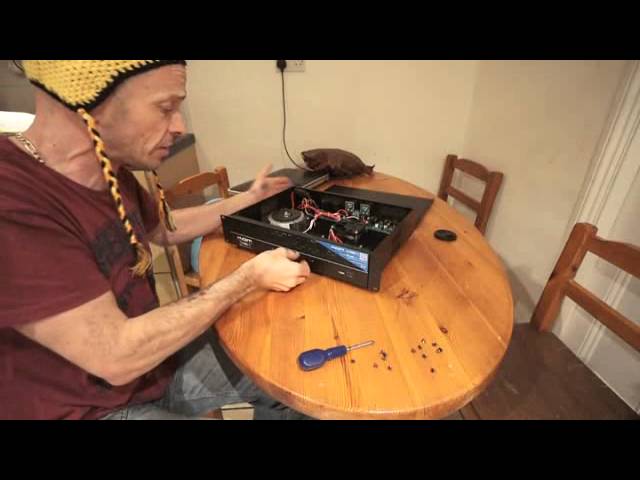
And let's say, for example, you're doing a party for 50 people. Well, this will rock the venue to be quite honest. I was pleasantly surprised. Also, what I do like about it is the construction. Normally, again, I'm not going to give any names, but amplifiers of this sort of power rating, the construction isn't that good, but this is built quite well. The first thing is, well, again, very quickly. I've done this so you don't have to. I've taken the top off so we can look at all the bits inside of it. But I highly recommend when you get your amplifier, you do not open it up because if you do open it up, even if it's brand new, you could potentially void your warranty. So you have been warned. If anything goes wrong with the amplifier after you've opened it up and the company find out you have opened it up then
2:13 Work, lower power, volts
They have a legal right to say, I'm sorry, you've opened the amplifier up. You potentially could have messed with it, therefore causing the problem in the first place. So your warranty is void. So don't open amplifiers up. If anything does go wrong during the course of the warranty, don't you try and fix it. Send it back. Whatever make or model it is, send it back. And I'm pretty sure it should be the company's right or the manufacturer or the shop's right to then pass it on and try and get it fixed. Anyway, digressing slightly. So one point I did like about it is construction-wise it hasn't just got a couple of screws at the top and they've thought let's bung a screw in one at the top, one either side, one at the back and hope for the best. No, they've made sure that it's constructed really well so even though it's one of the lower end
Power outputs of their amplifiers, they've still made sure the construction is pretty solid. So 1, 2, 3, 4, 5, 6, 7, 8, 9, 10, 11, 12, 13, 14 screws just to hold the top plate on. I'm sorry but that's very good. So I'm going to take this off and we'll have a look inside. Now bearing in mind this is one of the lower end power amplifiers but what we have here to give you a very basic idea. That there is your transformer. That there is almost like the powerhouse. What that will do, that will reduce the juice down to let's say a level where all of the internal workings can work properly. In other words if you all of a sudden stuck 240 volts into this or 120 volts you'd have lots of smoke going everywhere and it probably wouldn't work for very long. In fact it wouldn't work.
4:09 The actual power is pushed out from here
So what this does, it almost reduces it down to I believe it's sort of 12 or 24 volts, enabling everything to work. This here is your heat sink. Underneath here are your amplifiers and that is the fan to keep it cool. The rest is to do with the fact that it's a stereo amp. So if we have a look at the front, we have your two dials, sometimes known as attenuators, volume controls, gain controls, they'll just... Turn the amplifier up and down so my advice is to maybe put it about three o'clock like so. Clip mode here, so when you start seeing these little red lights flashing that's telling you that the amplifier is saying hold on a minute I'm just about at the point where I don't want any more, I don't want to push anymore out also I don't want to have any more signal coming in because
You don't have power coming into this from your mixer, you just have a signal. The actual power is pushed out from here. So if we have a look at the back, we have three options. We have these which are known as binding posts, we have these which are quarter inch jack and these are speak-on. Now I highly recommend you use speak-on if you're on the road. If you're at home, you're in your bedroom, then fine, you can get away with using these or the quarter inch jacks, that's fine. But if you are on the road, it's advisable to use a speak-on output. Your input again, they've tried to look at let's say the DJ who maybe is a bedroom DJ because a lot of bedroom DJs will just like to use RCA. So you've got RCA in and out, oh sorry, RCA in, pardon left and right, and also you've got quarter inch jack in. So quarter inch jack in, RCA in, quarter inch jack out, binding posts out, and speak on out as well.
That's your input for your power, and that there is a voltage selector, and I suggest you do not mess with that at all. So, right, there you go. That's pretty much it really. If you do want any info on this amp or any of the other in the range of the KXR series, then check out the link in the description. This is from a company called Cam, and what do they make? They make affordable mid-price products. This I do like. This is going to go on the road with me next time I have sort of a small function of about 50 people and I will be doing a video on it. I did a gig log recently where I took The Big Brother, the 2000. I'll put a link in the description to that video as well. Go and check it out and thank you very much. Practice and enjoy. Bye do.
This transcript was produced automatically from the audio of the video and may contain mistakes.