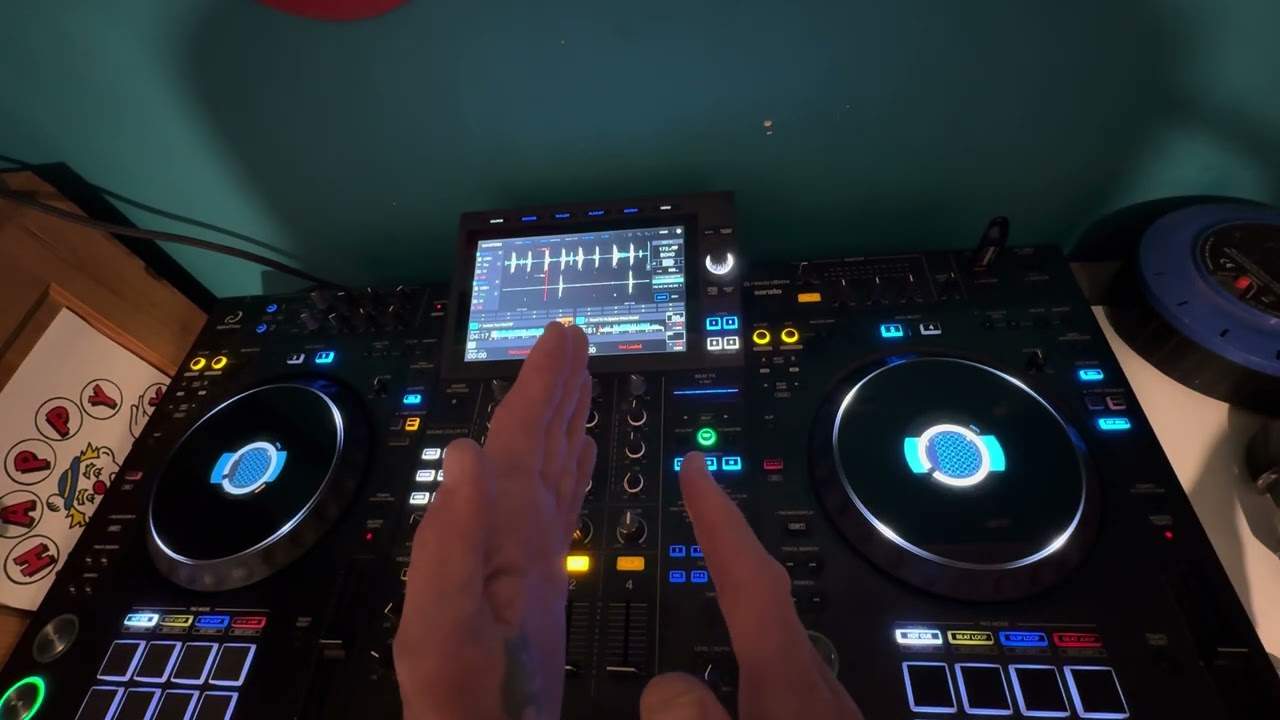
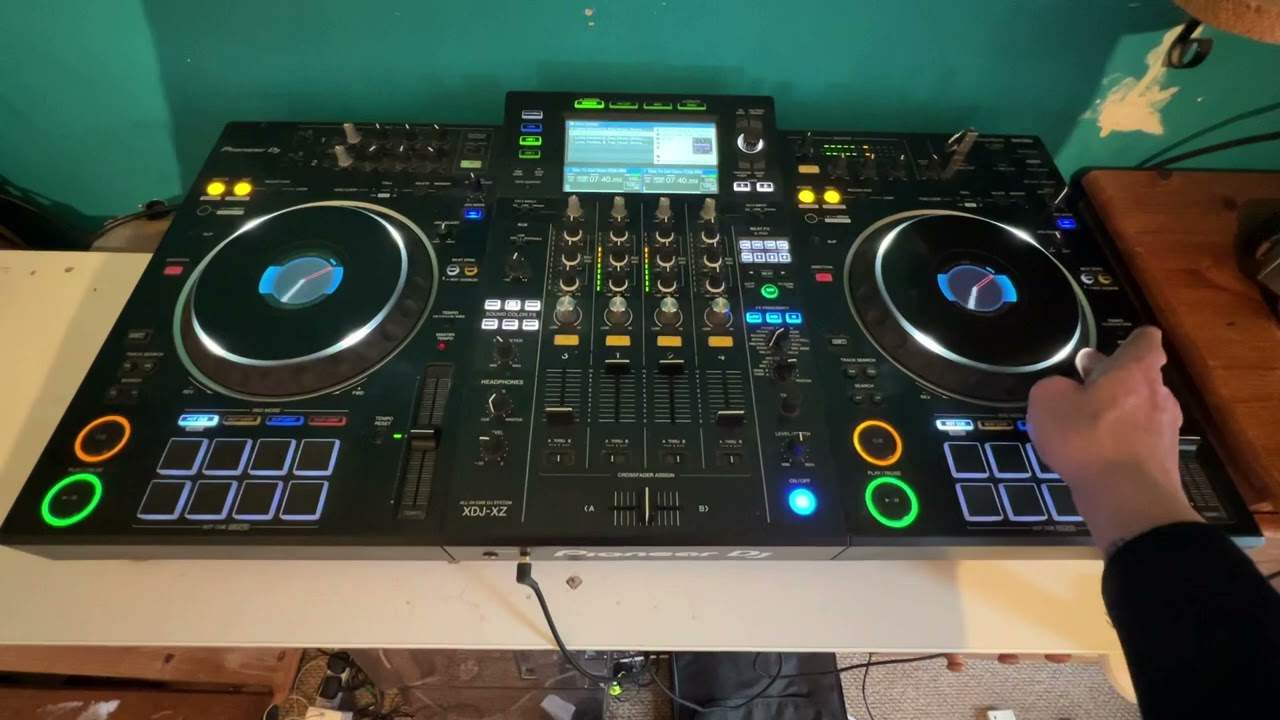
 5:05
A very simple practice mix
On YouTube this video is called Complete Beginner DJ Lessons Video 20 a Very Simple Practice Mix
What this lesson teaches
No headphones, no cueing, nothing but two identical tracks and your ears. The lesson is learning to recognise one sound.
The hands
His analogy is the best thing in the video and it is worth having in your head before you listen.
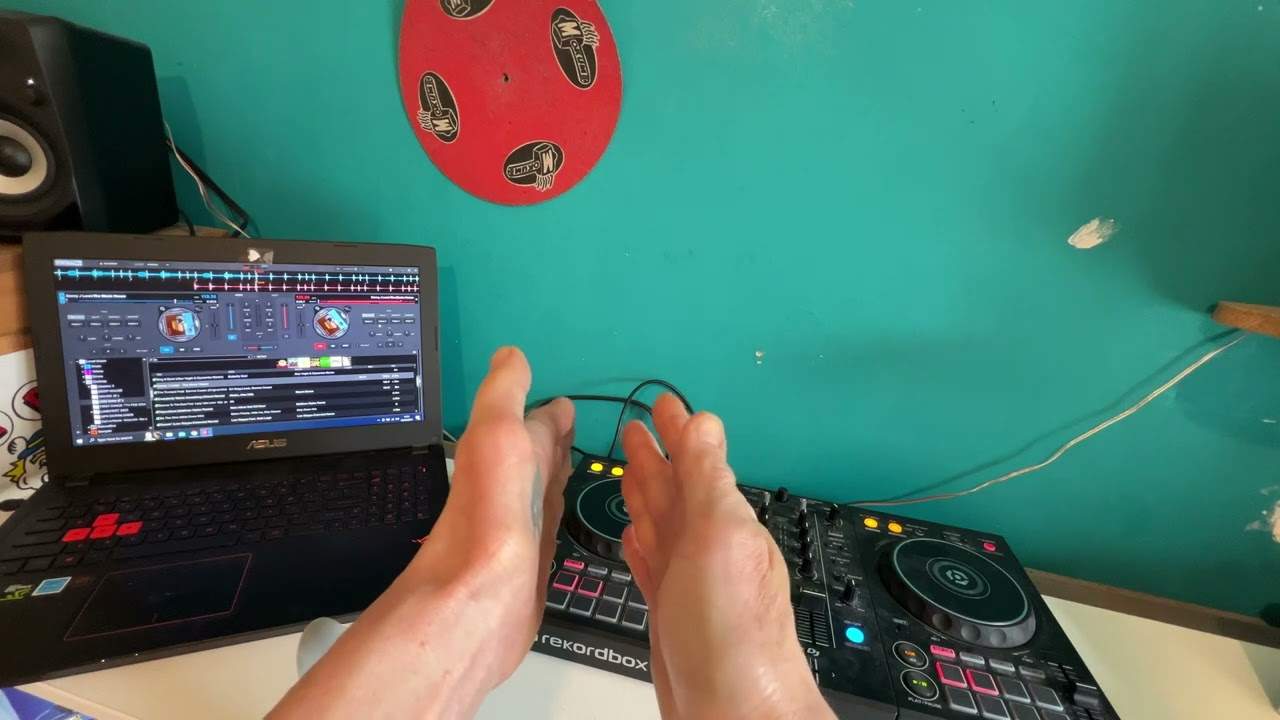
Hold one hand over the other, exactly aligned. You see one hand. The second is completely hidden behind the first.
Now slide one slightly. The fingers of the hidden hand start to appear around the edges - and the moment they do, you can see there are two.
That is what two identical tracks do to each other. Perfectly aligned, they fuse into something that sounds like one source. Slightly apart, you begin to hear the second one.
Phasing
The sound of two identical signals almost on top of each other is phasing - a hollow, slightly metallic quality where parts of each wave cancel parts of the other.
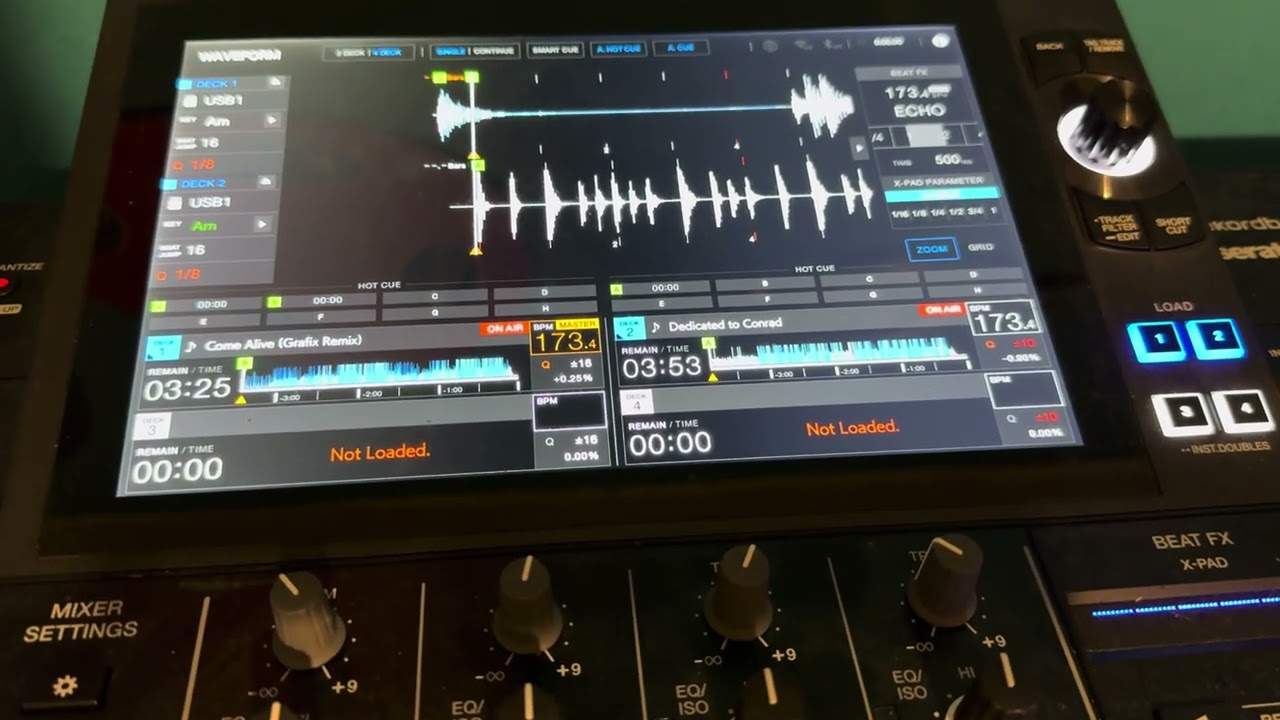
He presses play on both decks as close to simultaneously as he can and you hear it.
And here is the detail to hold on to, because the next lesson turns on it: with both tracks at the same BPM, that phasing sound does not change. It sits there, constant, however long you leave it. He repeats this three or four times because it is the thing to notice.
The four moves
The practice he sets is deliberately mechanical, which is right for a first attempt. There are exactly four things you can do:
1. Right jog wheel clockwise 2. Right jog wheel anticlockwise 3. Left jog wheel clockwise 4. Left jog wheel anticlockwise
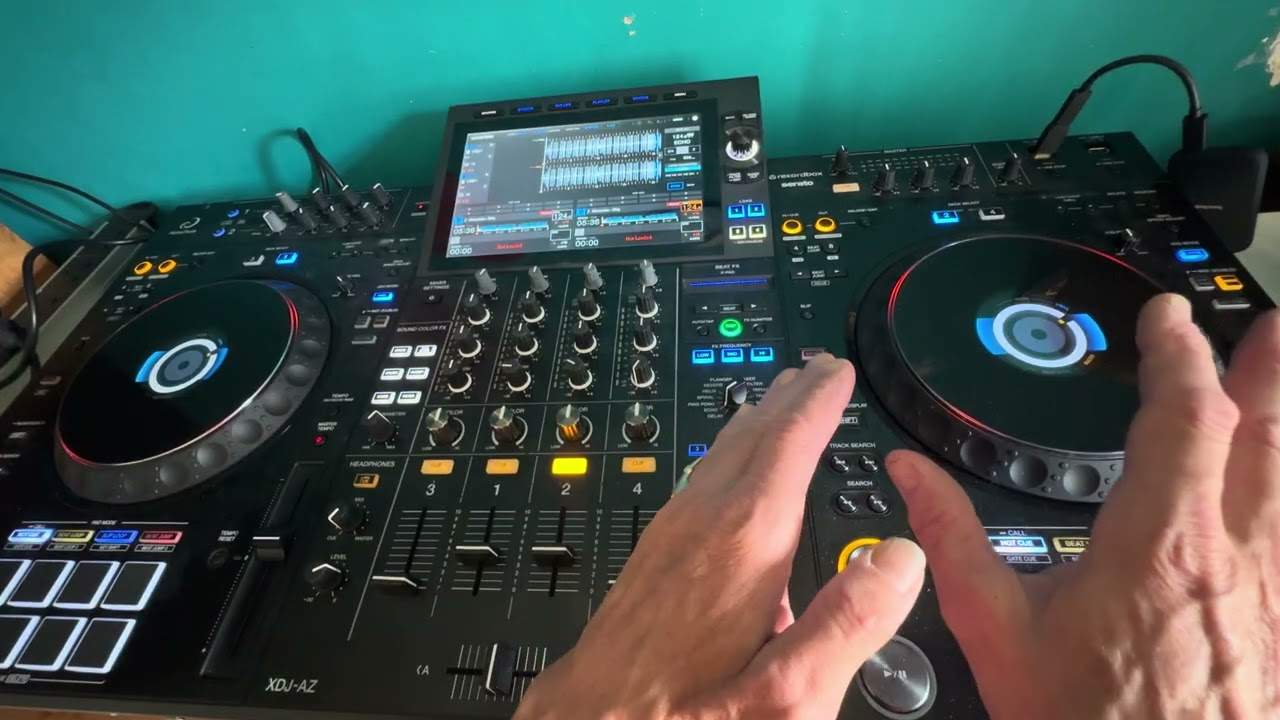
Clockwise nudges a track forward. Anticlockwise nudges it back. Do each one and listen to what happens to the phasing.
The jog wheel is temporary
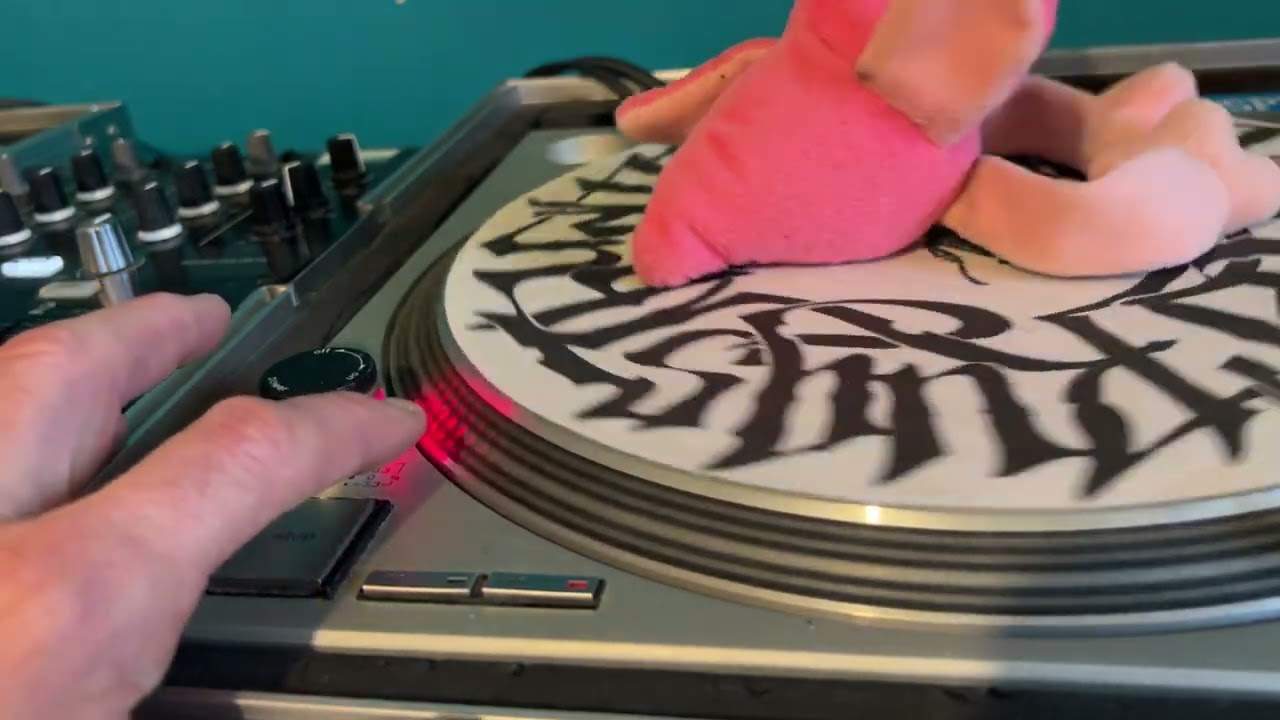
The point that saves confusion later: nudging does not change the track's speed.
While your hand is moving the wheel the track runs faster or slower; the moment you stop, it returns to exactly the tempo it was at. His throttle analogy again - press the accelerator for a second and you briefly do 32 instead of 30, then you are back to 30, having gained a little distance.
So the jog wheel moves a track's position and leaves its tempo alone. Which is the whole reason the next few lessons exist.
Contents of the video
0:01 We're going to form a mix
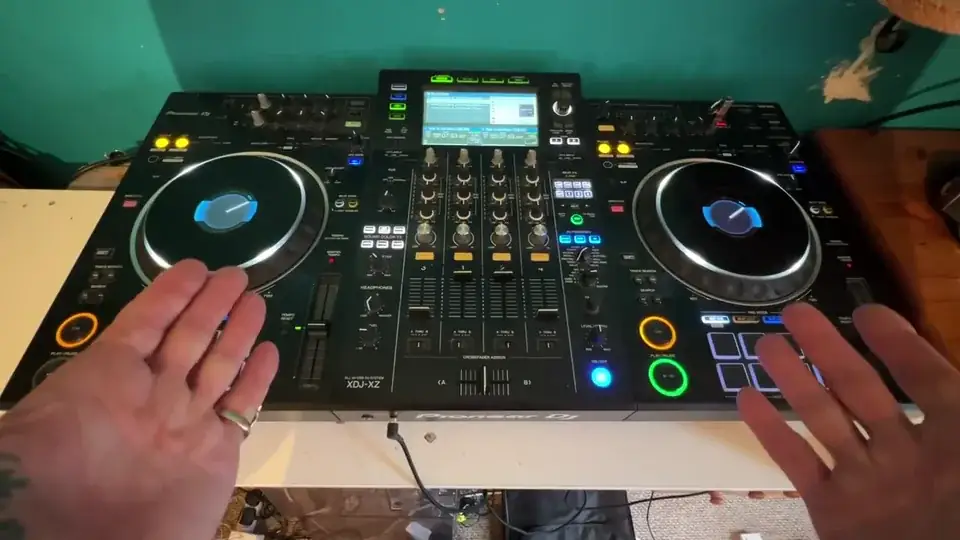
Right, here we go. Video 20. This is it. We're going to form a mix. But we're going to form a mix with a little bit of a difference because we're not going to use headphones. There's no need at this stage. What we're going to do though is use our ears and we are going to start to listen for those subtle sounds when two tracks are together. Now again, when you use different tracks, you're not going to hear these subtle sounds so pronounced. But when you play the same track over each other, you will definitely hear these sounds and it's called phasing. Now let me just show you something here. Here's one hand, here's the other hand. Okay, so if I move my hands as cleverly as I can over each other, which is a little bit difficult,
1:20 Something like
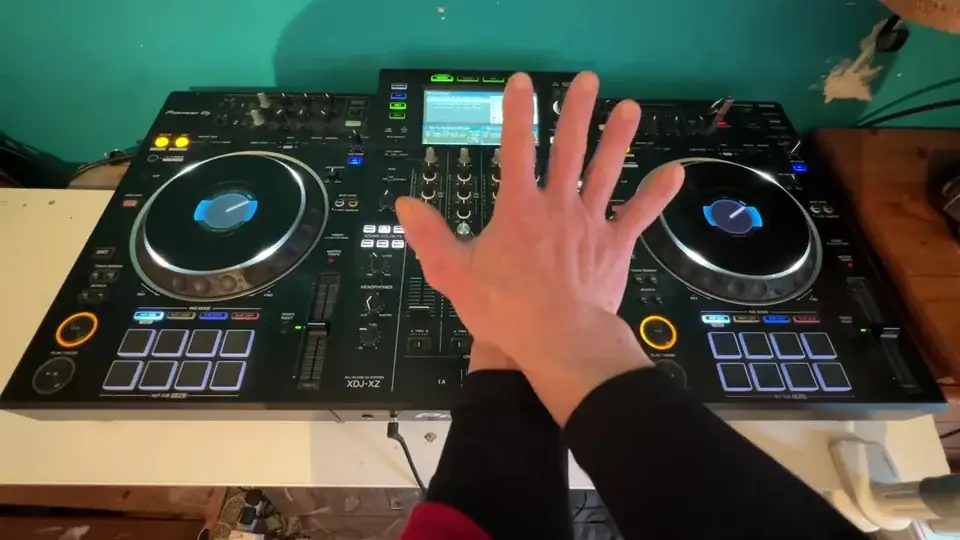
In many ways, they disappear. They disappear over each other. So if you imagine the two tracks, they disappear. But then as I move my fingers to one side, either the bottom fingers or the top ones, you do indeed start to see the other hand. Now, if you imagine... Let's place hands over each other again. Now that's exactly what we've done with these decks. We have the same track, the same speed, starting at the same time and we can only see one hand. There you go. But what I will do in the next video is show you something like this. So let's just press play and let's see. Let's hear what it sounds like. Here we go. And what I'm going to do now, I've got my fingers ready on the play pause, not the cue. I'm gonna press play on both of the decks as much as I can at the same time. Here we go. Two together, turn it down a little bit. There's one, two together and one. Listen. Okay, now rewind that if you need to.
3:06 Does it change sound?
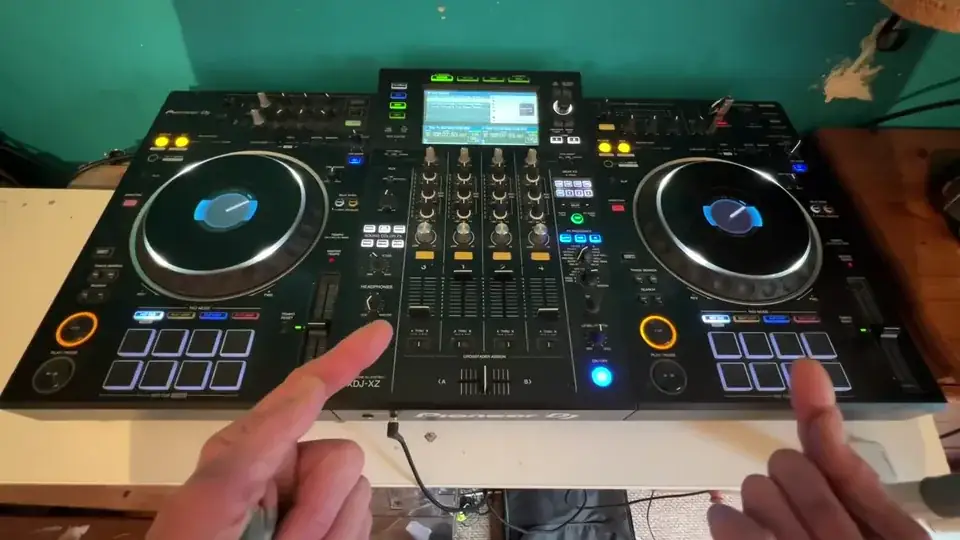
What you should have heard was something called phasing. Now that's when you get two sounds on top of each other and it's almost like one seems to cancel the other out. But what happened is that phasing sound you heard didn't change frequency. Sound. Does it change sound? That's the key there, alright? Again, it may take a little bit of time to sink in, but if I play them again, let's have a listen. It's not changing sound. I've moved the jog wheel slightly, it's not changing sound. I've moved the jog wheel slightly, it's not changing sound. You see, there you go. Alright, so the practice here... for all of you is to do this press play on both sides and start having a mess around with one of the jog wheels and again there are four moves you can do with the jog wheels you can move the right one clockwise number one anti-clockwise number two the left one clockwise number three anti-clockwise number four don't forget clockwise on the jog wheel you're nudging
The track forward. Anti-clockwise, you're nudging it back. The thing is though, when you use the jog wheel and you nudge it forward, you're not actually changing the speed of the track. You are while you move it forward on the jog wheel but as soon as you stop your movement, it will go back to its original speed. It's a little bit like you in an Audi, you're driving along at 30 miles an hour and for like a split second you just put your foot on the gas and you go maybe to 31 or 32 miles an hour but as soon as you go back to the original position on the throttle you're back to 30. That's how the jog wheel works. Video 20, practice and enjoy, thank you.
This transcript was produced automatically from the audio of the video and may contain mistakes.