 6:43
Beat mixing on a pair of CD decks
On YouTube this video is called DJ Beat Mixing Tutorial on a Set of CDJ Turntables.
What this lesson teaches
He has seen this so many times that he made a video about it, and if you are two months in there is a good chance you are doing it.
The mistake, step by step
1. The DJ sets the pitch where they think it should be. 2. The mix starts drifting. 3. They nudge the jog wheel - clockwise to catch up, anticlockwise to hold back. 4. It comes into beat. It sounds right. 5. They take their hand off the jog, leaving the pitch exactly where it was. 6. Within a few seconds it is off again.
Why it happens
Because step four feels like success. The two records are audibly together, and the natural conclusion is that the problem has been solved.
It has not. The pitch is unchanged, so the tempo is unchanged, so the rate at which the two records separate is unchanged. The nudge bought one or two seconds of alignment and did nothing about the cause.
His logic is the clearest statement of it: because it was off beat to begin with, with the pitch in that position, it will still be off beat.
The rule
If you keep nudging in the same direction, the pitch is wrong.
One nudge means nothing - records drift and a single correction is normal. A pattern of nudges the same way is a measurement: it tells you the track is consistently slow or consistently fast, and by roughly how much, from how often you have to correct.
When you notice the pattern, move the pitch. Then nudge once more to tidy up the position, and stop.
Why this error is so durable
Because it is self-concealing. Every time the mix goes out, the nudge fixes it, so the DJ never gets strong evidence that something is wrong - just a constant low-level workload they assume is normal.
The tell is effort. A properly matched mix needs almost nothing from you. If you are working hard to hold it together, you have not matched it, you are carrying it.
Contents of the video
0:00 It will speed the music up
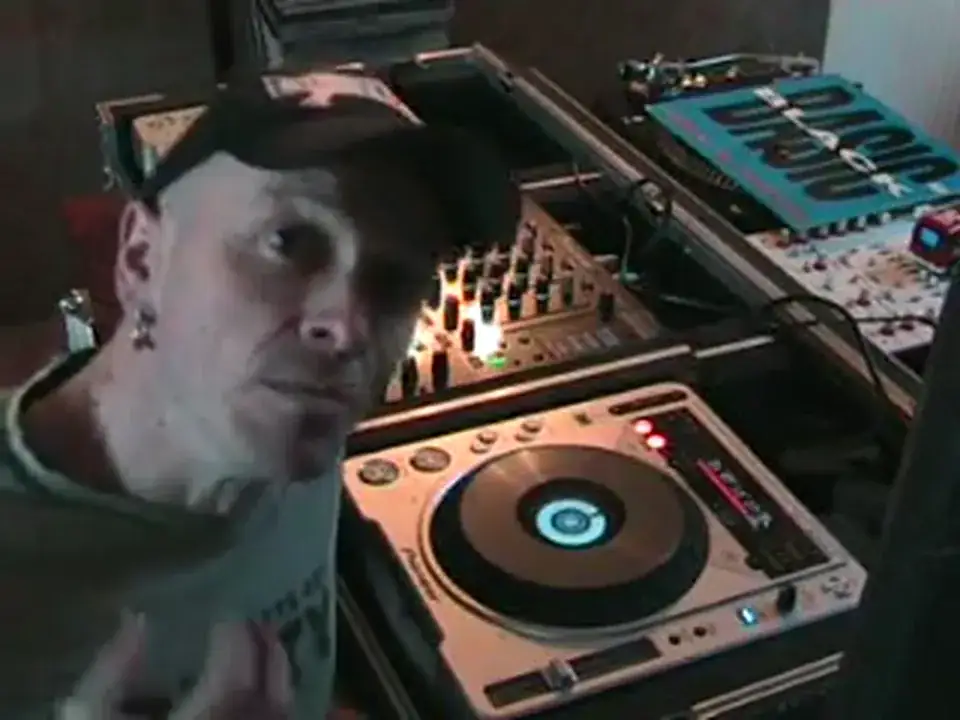
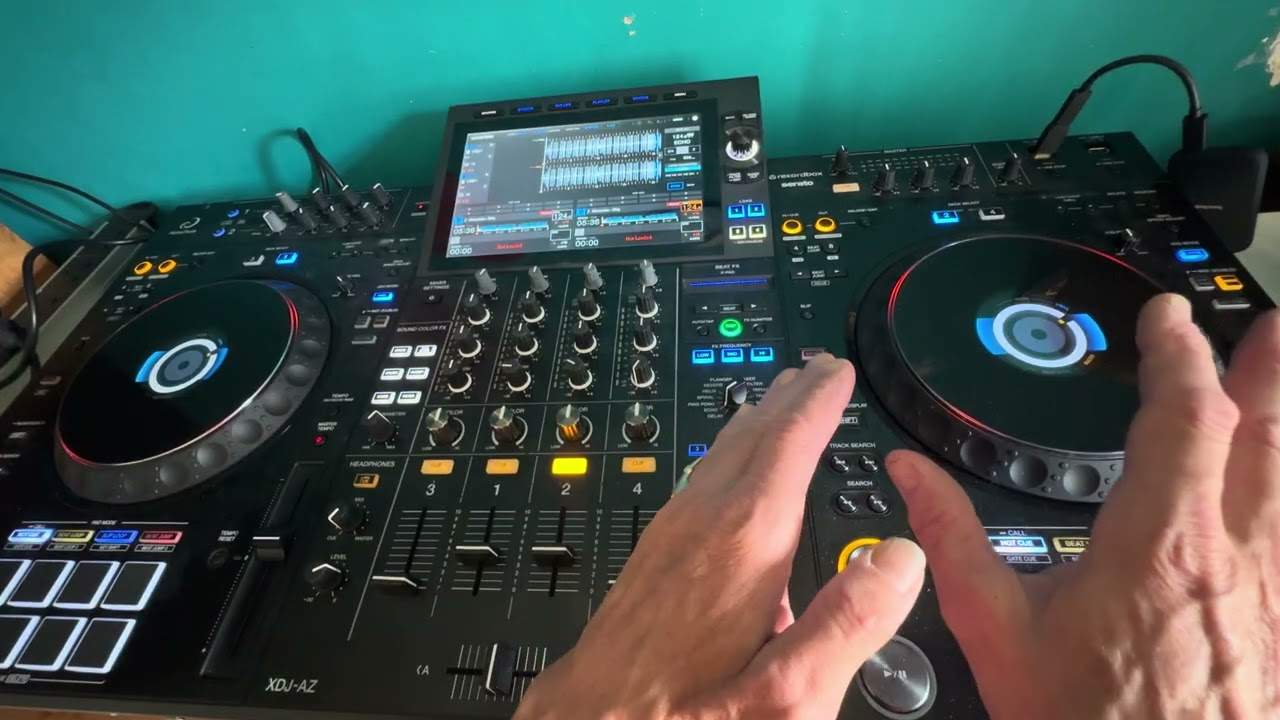
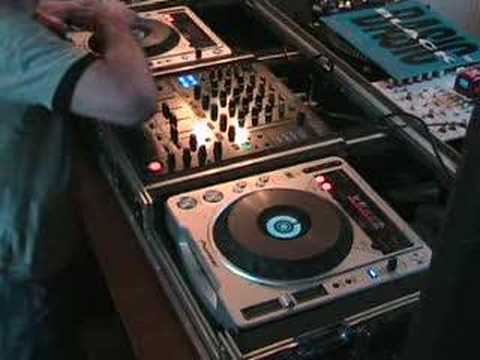
Alright folks, Jonathan here. A lot of people have been asking me to do more tutorials on beatmixing using CDJ turntables. The reason being is because people are confused about the jog wheel, what it does, what it's for, etc. So in this video I'm going to give you a demonstration on how you can use the jog wheel to beatmix. It will speed the music up. It will slow the music down, but the music will go back to the speed where the pitch is. In other words, if I put the pitch control up here like so, you can just see it off camera, then that's how fast the music will be on this CDJ turntable. If the music's playing and I move the CDJ turntable forward like so in a clockwise motion, The music will speed up. It will go above the speed of the pitch, but as soon as I stop moving the jog wheel, it'll go back down to the speed where the pitch is. Alternatively, if I move the jog wheel anti-clockwise, the music will slow down. It will almost be as though I'm moving that pitch down, but I'm not touching the pitch control. So as I'm moving it anti-clockwise, the music will slow down. As soon as I stop moving the jog wheel, the music will go back to the speed
In relation to where the actual pitch control is. Now this is very important because I have seen so many DJs, they think that's where it should be, the pitch control. Then what they do is they can hear it's going off beat. They'll move the jog wheel slightly clockwise to speed it up or anti-clockwise to slow it down and at that point they'll think yes, it's caught up, it's now in beat. Then they'll take their hands off the jog wheel but they won't move the pitch. They'll keep the pitch as it was. Now if you think about it logically, because it was offbeat to begin with, with the pitch in that position, it will still be offbeat. The only thing you'll actually be doing is putting it in beat for one or two seconds and then it will go back offbeat. You need to remove the pitch. So this is what we'll do. Right, it's alright. I've got a runny nose because it's damn cold out there.
2:23 We've got that track playing there
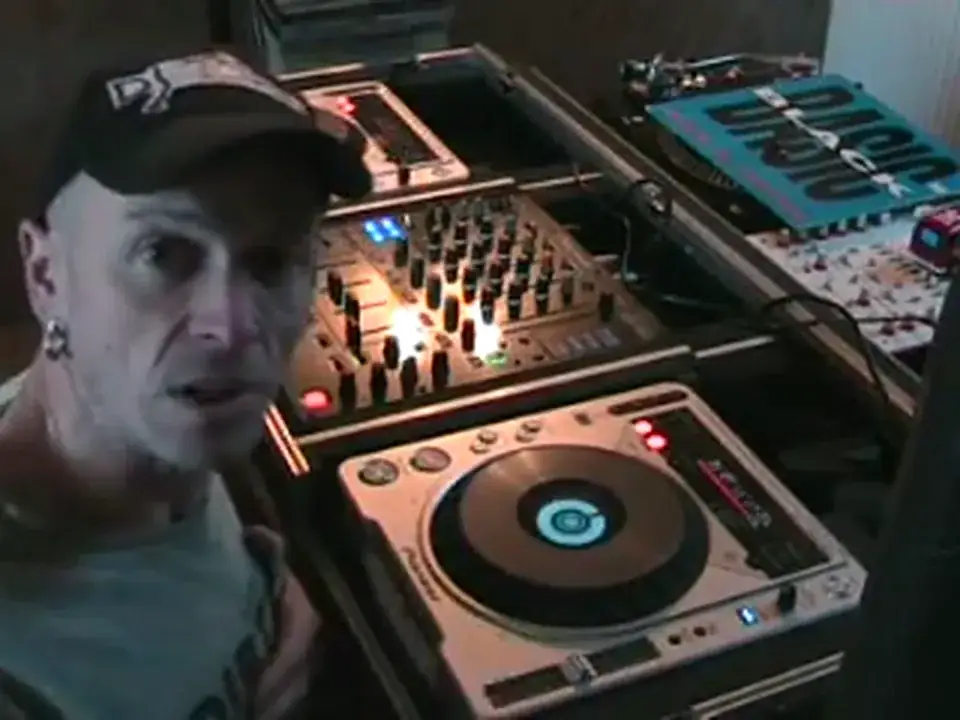
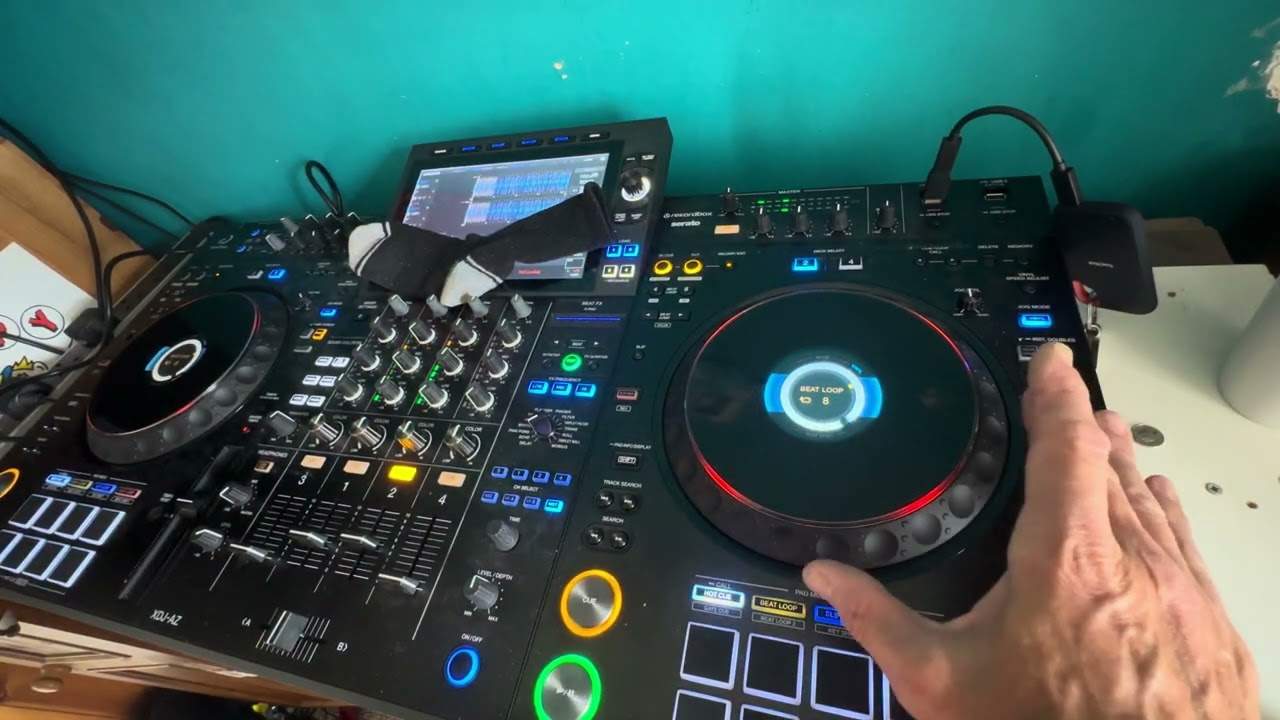
We've got that track playing there. Now this isn't set up. Okay, we're going to move the pitch all over the place. I'm just going to wangle the camera down a little bit so we can see this CDJ turntable. I'm going to play this bit of music towards the end. Now what I'm going to do, you're going to see me move this pitch control. Now I'm going to set the pitch at a certain point. Then you'll see me move the jog wheel. And then according to how I move the jog wheel, clockwise or anticlockwise, will be according to how I move the pitch control. So if I think this music here is going too slow, I'll move the jog wheel clockwise. Then when it's caught up, I will move the pitch control to the plus position very slightly because it's all well and good, like I said earlier, moving the jog wheel to let it catch up. But you need to move the pitch control because the pitch control is the guy that will determine the actual speed of the CDJ turntable. So here we go. I'll just put it forward a bit.
5:09 What we did, we moved the jog wheel clockwise and then it caught up
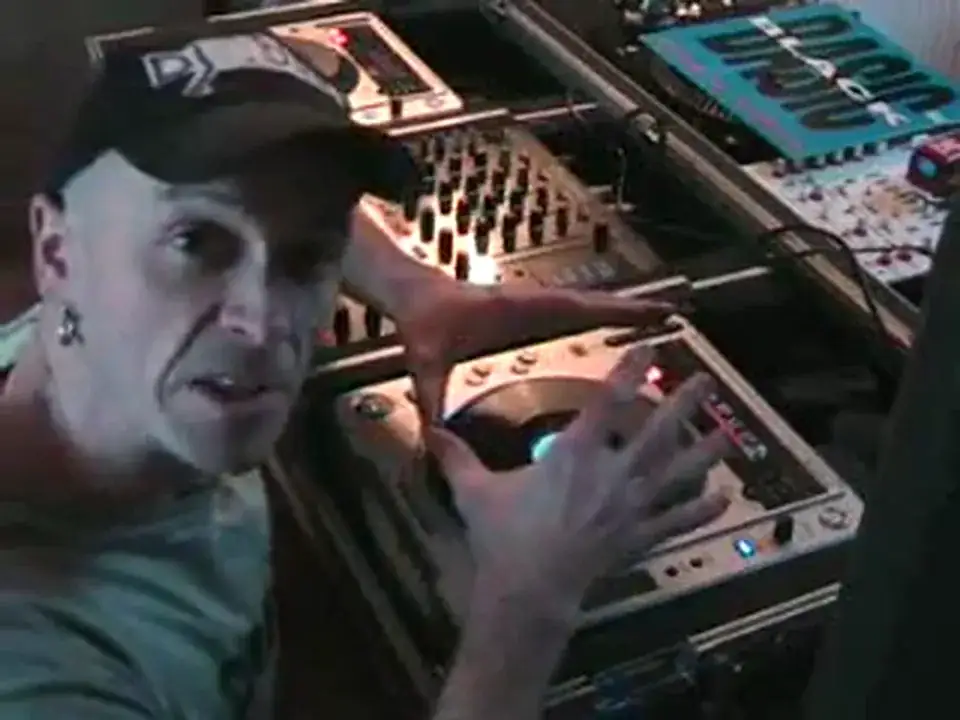
Okay, so what I'm going to do now is cue. You can hear it's offbeat. That's really offbeat. So here we go. What I'll do now, the one is towards the end. Okay, towards the end. Here we go. Wait for the breaks. Now it's off. The jog wheel. Now it's in beat. Now watch what happens when I stop moving the jog wheel. It goes offbeat again. Watch this now. Move the pitch. Basically what you actually saw me doing was this particular piece of music needed to speed up. So what we did, we moved the jog wheel clockwise and then it caught up. But because I didn't move the pitch to begin with and I took my hands off the jog wheel, the music went back to the original speed of where the pitch was. So what I had to do was move the jog wheel, get it in beat and then move the pitch control
Have a listen. Maybe it was off, so move the jog wheel again. Maybe it was still off, move the jog wheel again. Pitch. Continually, what we're doing is we're chopping and changing from the jog wheel to the pitch. That's one way of doing it. This is almost the same principle of a vinyl DJ, a vinyl turntablist DJ. What they're doing is they're moving the turntable, moving the platter back and forwards. I have said that I don't normally do that with a vinyl turntable simply because I'm so used to just using the pitch on a vinyl turntable. But I actually find with a CDJ, it's a good idea. It's useful. It's very useful for fine tuning. So if that pitch is just there and you think maybe it needs to be tweaked up, it needs to speed up a tiny amount, you could just do small movements on that jog wheel. You see DJs just like that. But once they've done that, then they've got to move that pitch control in relation to the jog wheel. Clockwise, speed the pitch up. Anti-clockwise, slow the pitch down.
That's what you've got to do. I hope this has been a help. Practice and enjoy. Thank you.
This transcript was produced automatically from the audio of the video and may contain mistakes.