 12:46
DJ How Many Times Can You Form a Transition with Two Songs CD Pool Dance July 2017
Contents of the video
0:00 Jonathan here, The DJ Tutor
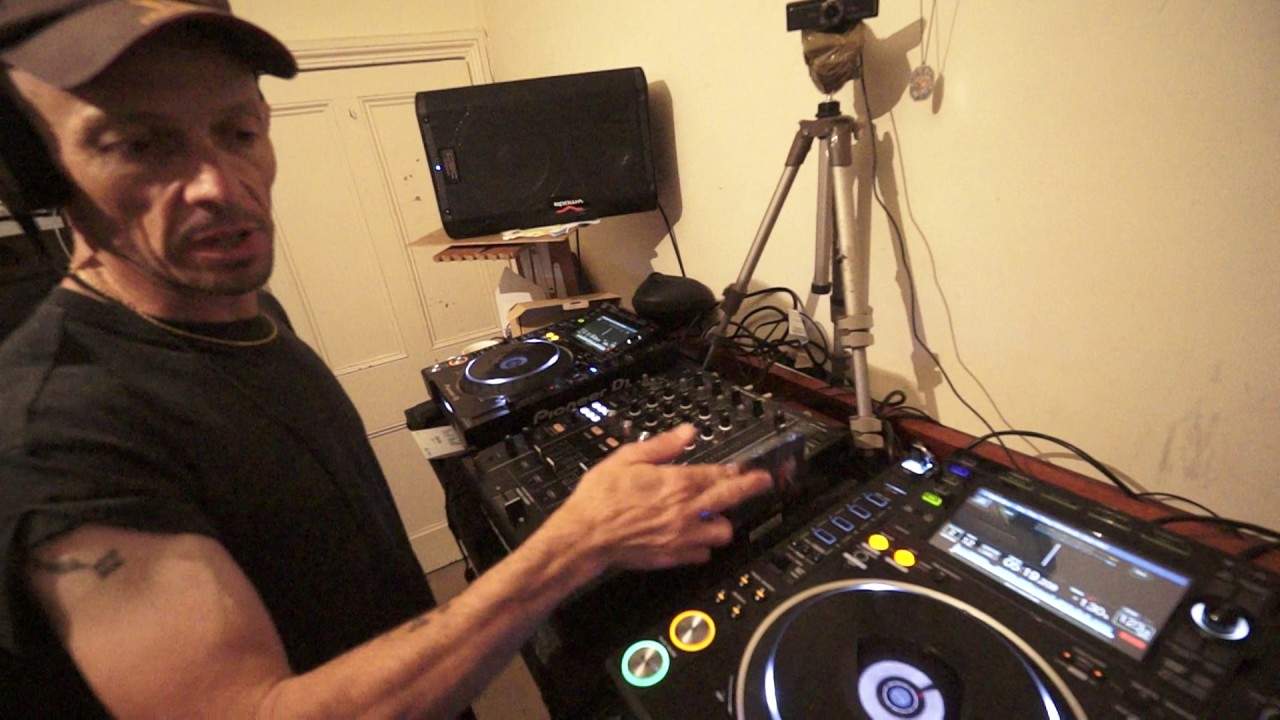
Right guys, Jonathan here, The DJ Tutor. Question for you, how many places are there in two tracks where you can form a mix? Is there one, two, three? Maybe there's five. Maybe, depends on the track. How long is the track? Is it extended? Is it the radio version? Is there a lot happening? Is it a lot of vocals, a lot of melody? Is it a tech house tune that's just got one steady bass line? And it should be quite easy. How many times can you mix two tracks into each other? How many places and whereabouts can you mix them? Where should you? Where shouldn't you? Well, that's a question or those are questions that can be answered. Some of them can be answered. For example, where you can and can't mix in. Should you mix? Shouldn't you mix at a certain point? But if we break all those questions down into one, which is,
How many times or how many points in a track can you mix another one into that track? There's probably quite a few. Now, some of you may be thinking well that is probably based on the phrasing because I sort of agree. It's a good idea to mix the tracks in at the beginning and end of a phrase so on that basis if the track is phrased in let's say bars of 16 and there are 10 phrases that means you've got 10 choices or 10 options to bring the next track in but then maybe halfway through the phrase there's another change it could be an 8 or maybe at the fourth bar in a phrase there's something that seems to complement the other track third phrase in halfway through it's about listening to the tracks
2:20 On the other side, this is track one from CD number one
And working it out for yourself. This is the joy. This is one of the joys of DJing, is not to follow everyone else. You know, you have to sit and follow a certain protocol. You've got to follow to make sure it's in key or keys that work, and make sure you're 120 and 120, not 120 BPM and 120.7 BPM, or even 120 BPM on here and 120... On the other side, this is track one from CD number one. Track... 12 from CD number 2, Riker Sia one-time thing. Now if you listen first of all, those keys, the sound seems to be the same. They seem to have... So this is one of the things we first look for in DJing really, is are the sounds complementing each other? Now this is... In my eyes, some DJs may have a different opinion, but mixing in key is the most important part of DJing. Now underneath in a comment, say yes or no if you want to, you could be completely off beat, you could be completely off phrase, but if somehow that transition is in key, you will keep the vibe of the mix. Excuse me, on the other hand...
4:07 No, it's not cold, just hay fever and stuff like that
Cold. No, it's not cold, just hay fever and stuff like that. On the other hand, some of you may think, well yeah, well it doesn't matter about the keys if it's in time and it's in phrase. Great. But you imagine, try this. Try having two tracks that are not in key, in time, in phrase, and mix them during a chorus or a verse. It's going to sound shit. Believe me. Right, so... We'll play Duke Jamont, Gordon City, real life and I'm going to skip through to sort of beginning of one of the breaks. Let's start the other one. Okay so right at the beginning of a one-time thing 16 bars and then we have some sort of a bass line. Now I started the Duke Jamont at a break with eight bars only eight bars of it so let's
Carry on having that. Let's imagine that that is the track that's playing and we're going to bring one time thing in. So I'm going to count eight bars. One, two, three, two. One, two, three, three. One, two, three, five. One, two, three, six. One, two, three, seven. One, two, three, eight. One, two, three, there. Now also very important, do not pause it on the eighth bar. For the beginning of the next one. Right, so there. Now then, have a listen to the difference in transition now. Okay, so let's go back to that phrasing again. Not only a good transition, it sounds good, it's the same kind of vibe and energy, but we're snapping one part of the track that is finishing on a... Like, the end of a good phrase. And then we're bringing in the next track that has in turn got something interesting happening. So, another explanation I'd like to put forward is if you bring two songs together beginning and end, then you're going to end up with transitions that are just full on and then you've got this lull of a beat from the end of one track into the beginning of the next. Then you've got a track that's full on
7:53 Let's carry on playing the one-time thing and let's bring in real life
And then you've got the end of one track into a beat and the beginning of the other one into a beat. So it's a bit like, the analogy here is going on a lovely walk, a summer's walk, and going, oh look there's a hill, get to the top of the hill, down again, and you're on a flat plane, this is boring. Oh another hill, up, down, flat plane, up, down, up, down. What you want to do is you want to be staying on the peak, slowly coming back down again but then rising, not going all the way down from where you started and getting back up to the top again. Right, let's carry on playing the one-time thing and let's bring in real life. Okay. Okay, there, yeah. Okay, so that was not a good transition, let's say if we're thinking about phrasing, but there was something going on there. Now, some of you will be saying, you know what? When you're in your room and you're practicing and you're having a bit of a go and you're experimenting, then so what? Who gives a shit?
10:12 Let's see what the vocals finish
It's a little bit like being a chef in a wonderful kitchen with no people out there to cook for and just yourself. You experiment, you try new ideas, you add new ingredients until you get the perfect, perfect bit of food. That's what you're doing. So let's just get back to the beginning of that phrase. So I paused it here. Let's just go back a little bit. I'm listening for a change that will tell me it's the beginning of a new phrase. Bang, there. So, bring this forward. Let's see what the vocals finish. It's not exactly a ministry of sound mix, but you know what? It's palatable. It works. It feels good. And that is the main thing. When you're doing a transition this is something you need to remember and this is very, very important. We have our nose to smell, we have our eyes to see, ears to hear and touch and taste but there's also another part that we're missing. One of those senses that not enough people can tap into and that's the vibe and the energy and the feel.
Thank you very much.
This transcript was produced automatically from the audio of the video and may contain mistakes.