 9:56
The same moves on vinyl
On YouTube this video is called DJ Lesson. Mixing with Vinyl
What this lesson teaches
The first half applies only to vinyl, and he says so. It is worth reading anyway, because it explains how DJ sets used to be built.
The problem, with numbers
Two records whose keys work beautifully together. One at centre pitch, the other at minus five - and at those settings they sound right harmonically.
But minus five is far too slow. So you bring it up to match, perhaps to plus one, and now the tempos agree.
And the keys do not, because you have moved the record six per cent and taken its pitch with it. The thing that made the pair work has been destroyed by the thing that made them mixable.
The rule of thumb
His figure: on vinyl you can mix two records together within about plus or minus three per cent before the key shift becomes a problem.
Beyond that, the record is audibly in a different key from the one it was cut in, and anything you were relying on harmonically no longer holds.
What that means in practice
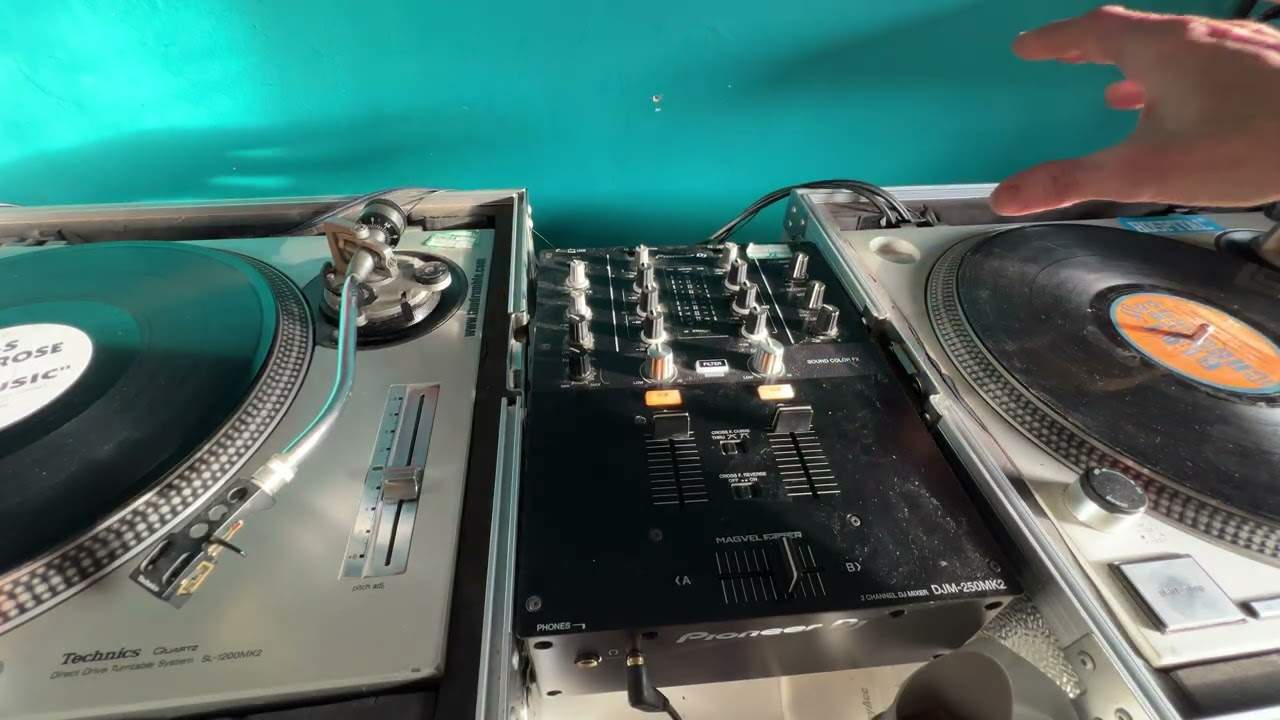
The fader on an SL-1200 offers eight per cent, so you cannot musically use most of your own pitch range. Three per cent of 125 BPM is about four BPM in each direction.
So a vinyl DJ's two records have to start within roughly eight BPM of each other, or one of them is going to sound wrong. That is a hard constraint, and it is why record boxes were organised by tempo, why sets moved through speeds gradually, and why a DJ knew the BPM of everything they owned.
Why it does not apply to you
Key lock removes it. A digital player corrects the pitch as it changes the speed, so you can pull a track a long way and keep it in its original key.
Which is a genuine expansion of what is possible, and worth appreciating rather than taking for granted. A great deal of what seems like conservatism in older DJing was equipment, not taste.
Contents of the video
0:00 Of this tutorial does not apply
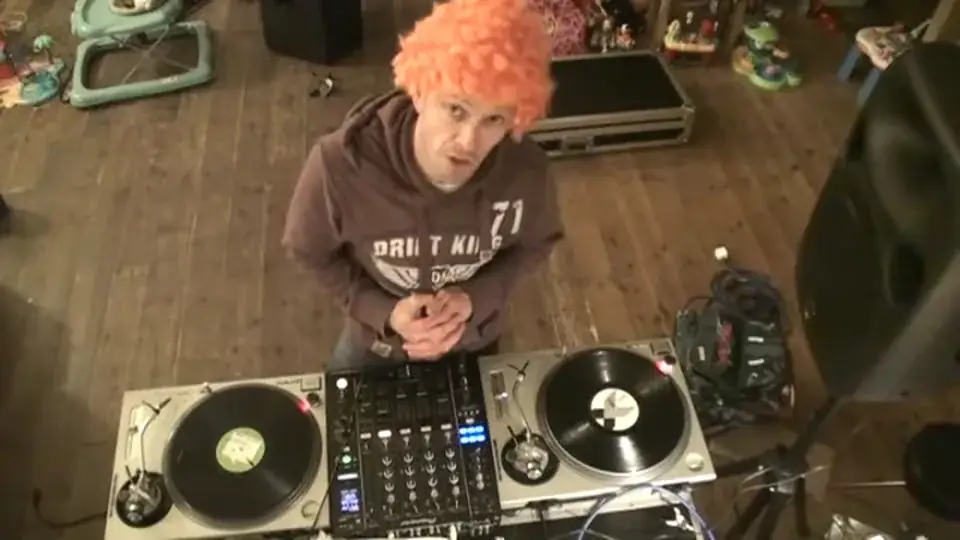
Alright ladies and gentlemen, a bit of a demo and a tutorial mashup at the end of this video on learning how to mix with vinyl. Now first of all, the first part of this tutorial does not apply if you're using CDJs or PC programs but it's probably worth a watch to give you an idea of what old school DJs used to have to put up with. Right we have two records, now let's disregard the records we've got at the moment, let's have this analogy. Let's imagine that we have two tracks Here are some keys that work perfectly together, but this one is let's say at the centre point. This one here is at minus 5. Now at that point where this one is at minus 5 and this one is at the zero position, the keys work perfectly. They sound as though they will work well together, but this one at minus 5 is way, way too slow.
If I now speed this one up to plus 1, this one is still at the centre point and I try and get them perfectly matched so I may have to increase or decrease it very slightly. They match perfectly BPM wise but what will happen now is they will be out of key. This one will be out of key. That's because I've had to increase it too much. Now there is a rule of thumb where vinyl turntables are concerned. You can mix two tracks, two vinyl turntables or two records together pretty much perfectly. Of course if they're in BPM. More importantly where this is concerned, where the key is concerned, within plus or minus 3% on your turntable. So for example, if you have to mix one track in and you go Below or above about 3%, in other words, plus or minus three on your deck, then what will happen? It will start to go out of key. So like I said earlier, maybe they work perfectly together in key when one of them is way below or way above plus or minus three. But they may sound fantastic and you need to speed one up or slow one down to get the match in beat.
2:27 It's the e-smooth vocal 12 inch mix
You may have to speed it up or slow it down quite considerably to get it into beat. If you have to do that and it is above plus or minus three, I hope I'm not confusing you, then it will be out of key. So you need to be very wary about that. Right, what we're going to do, we're going to do a bit of a mashup here first. And what I want to do, I want to get the vocals of this one in time with the bass line of this one. The track I'm using on the left This track is Insatiable by Thick D, which is a beautiful track. It's the e-smooth vocal 12 inch mix. Promo only, it's on Subliminal Records from 2002. It's a stonker. And this one here is the freaks, the creeps get on the dance floor. So the first thing I need to do is count the bars. So I'm going to put the needle on the record there and... Not that one, this one here.
I'm going to start counting the bars, so if I just do that. So as soon as I get the first beat, I'm going to do some lines and every time I get a bar, I'm going to put a line down and I'm going to put Thick D and then that one there, that side, and that side there, Freaks, so I know which one's which. Right, so what I'm going to do, as soon as I start hearing the track, I'm going to start counting the bars.
3:58 One, two, three, four
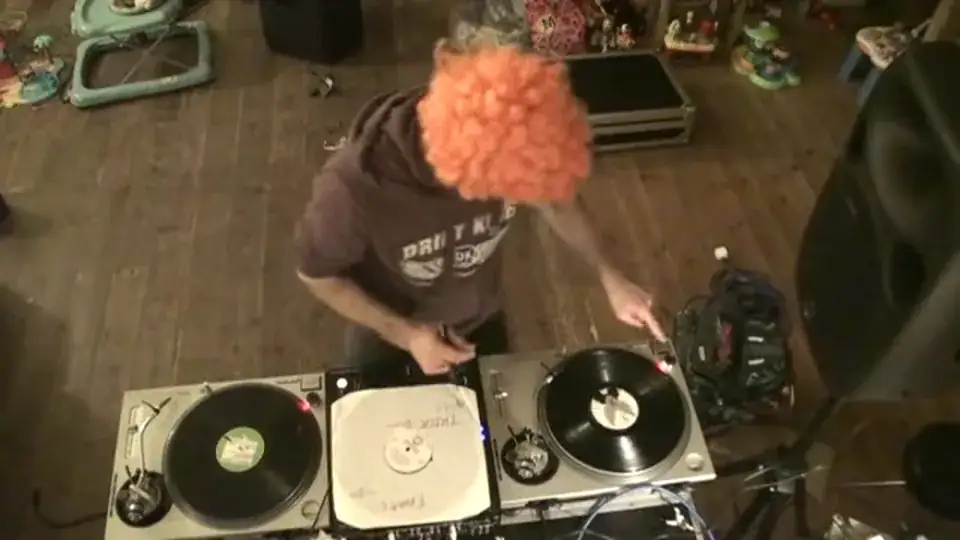
One, two, three, four. One, two, three, four. Oh yeah, I need to add as well. As soon as I get a bar, I'm going to draw a line down here and I'm going to do five bar gates. So when I get to five, just going to cross it. So one, two, three, four on a cross. So we'll start again. Here we go. One, two, three, four. One, two, three, four. One, two, three, twenty. One, two, three, twenty-four bars before... The vocals came in. Let's do exactly the same with this track. We need to count how many bars. So, let's give it a go and off we go. One, two, three, four. One, five, ten, fifteen, twenty, twenty-five, thirty-two. Thirty-two. Okay. So, 32 here, 24 there. So what we need to do is we need to take one away from the other. So, 24 from 32.
7:14 For this demo we'll just get rid of the headphones

We've got 24, we've got 32, we have 10, no sorry, 8. I can't even spell to save my wife. That's a good one. Right, 8 left. Right, so what's happening here? What do we do? How do we work this out? How do we do, I mean, what's going on? Alright, very simple. We've got 8 bars to play with. There are 8 bars on here more than the beginning of that one. So, if I play this one and count 8 bars and then on the 9th bar bring that one in, let's see what happens. Right so, I'm going to get that about there, I'm going to get this one ready. For this demo we'll just get rid of the headphones. Ok so I've got that ready, probably could be quite a good mashup as well. 1, 2, 3, 4.
This transcript was produced automatically from the audio of the video and may contain mistakes.