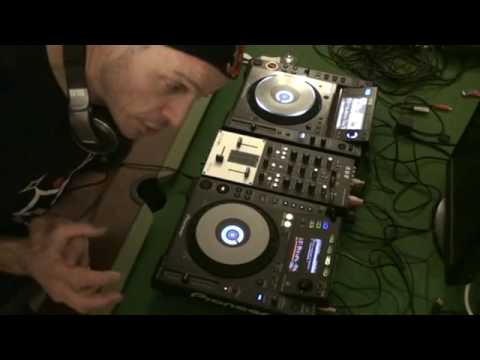
 10:34
Dubstep, and dropping a house track into it
On YouTube this video is called DJ Tutorial on Mixing Dubstep and droping a house toon in too!
What this lesson teaches
A genre crossing done by cutting, and the lesson includes the clearest account of what dubstep actually is.
Where it came from
His version: somebody took a drum and bass track, pulled the pitch control all the way down, and then added a lot of bass. Then somebody else said no, more bass. So it became dubstep.
That is a joke about where the feel came from rather than an account of the tempo - drum and bass runs at 170 to 180, so dubstep is not it at half speed. What dubstep did inherit is the half-time feel: the record counts at around 140, but the snare lands where the ear expects beat three, so the pulse you actually move to is about 70.
Why that matters for crossing
Because it gives one track three tempos to play with.
A dubstep record at 140 is rhythmically compatible with:
- House at 140, counted straight - which is the crossing he makes here.
- Hip hop or downtempo at 70, counted half time.
Drum and bass is not in that family: at 170 to 180 it is a real tempo change away, whatever the two genres have in common in feel.
So a dubstep track is an unusually good bridge between fast and slow, and knowing which two tempos it answers to is worth more than any particular transition.
The technique here
He does not blend. He cuts - and the thing he is looking for is the moment in the dubstep record where it feels as though something else could come in.
That is the judgement being taught. Not a bar number, but a point where the track has thinned or resolved enough that another record arriving would feel like an answer rather than an interruption. Every genre has those moments; finding them is what the structure stage was for.
And the counting, again
He acknowledges that people cannot hear where the time is in dubstep, and the answer is the same as for drum and bass: there is no steady four-to-the-floor to count, so listen for the snare and count in half time.
It is there. It is simply not announcing itself.
Contents of the video
0:01 Loads bass
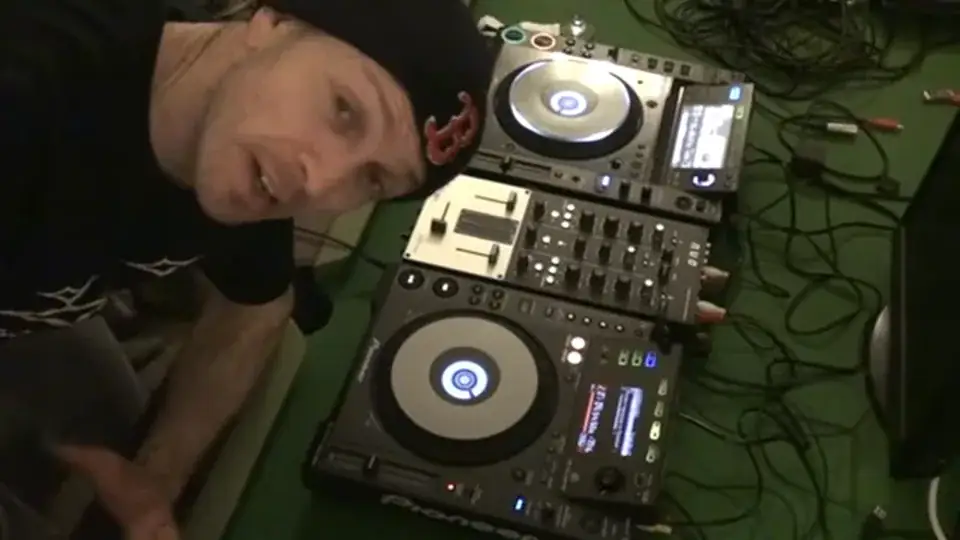
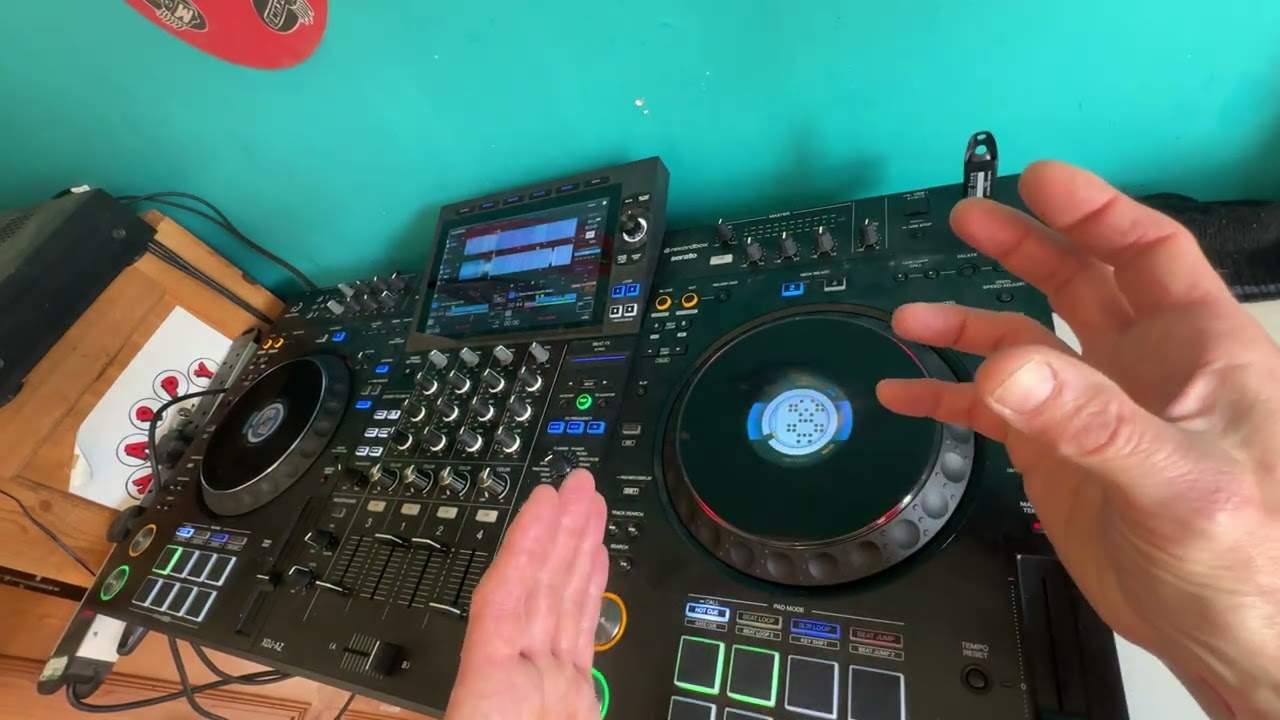
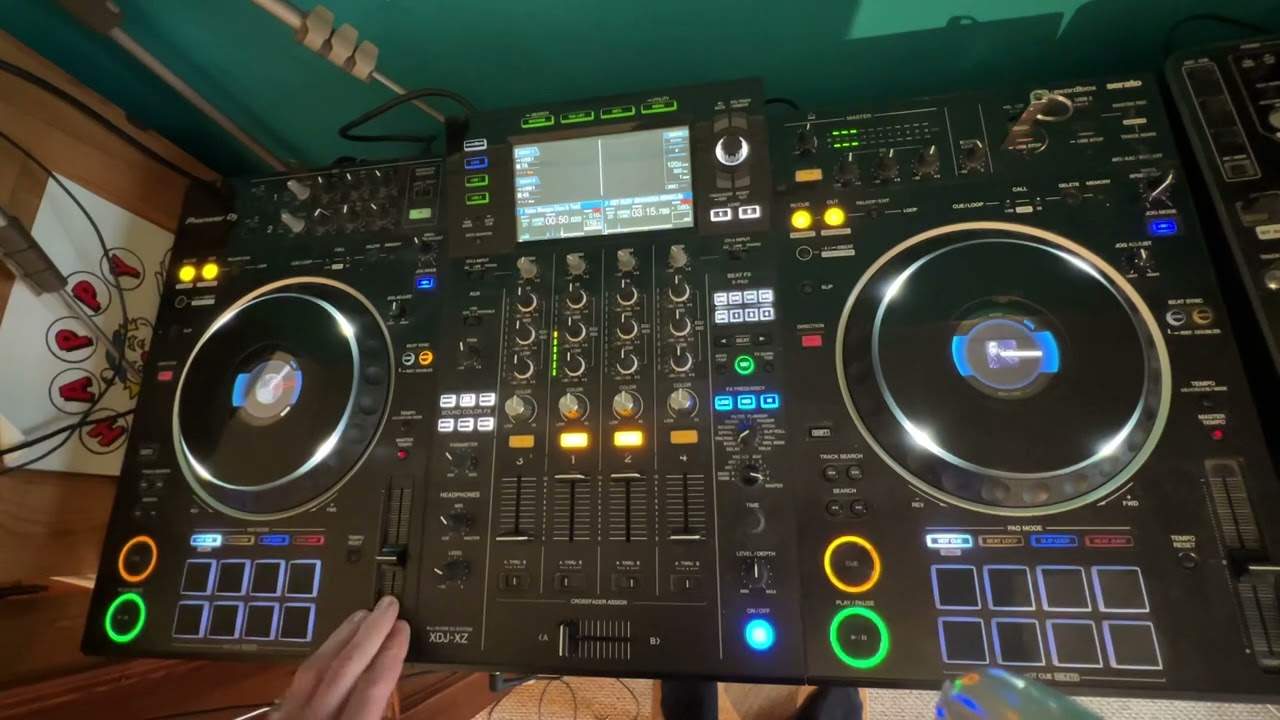
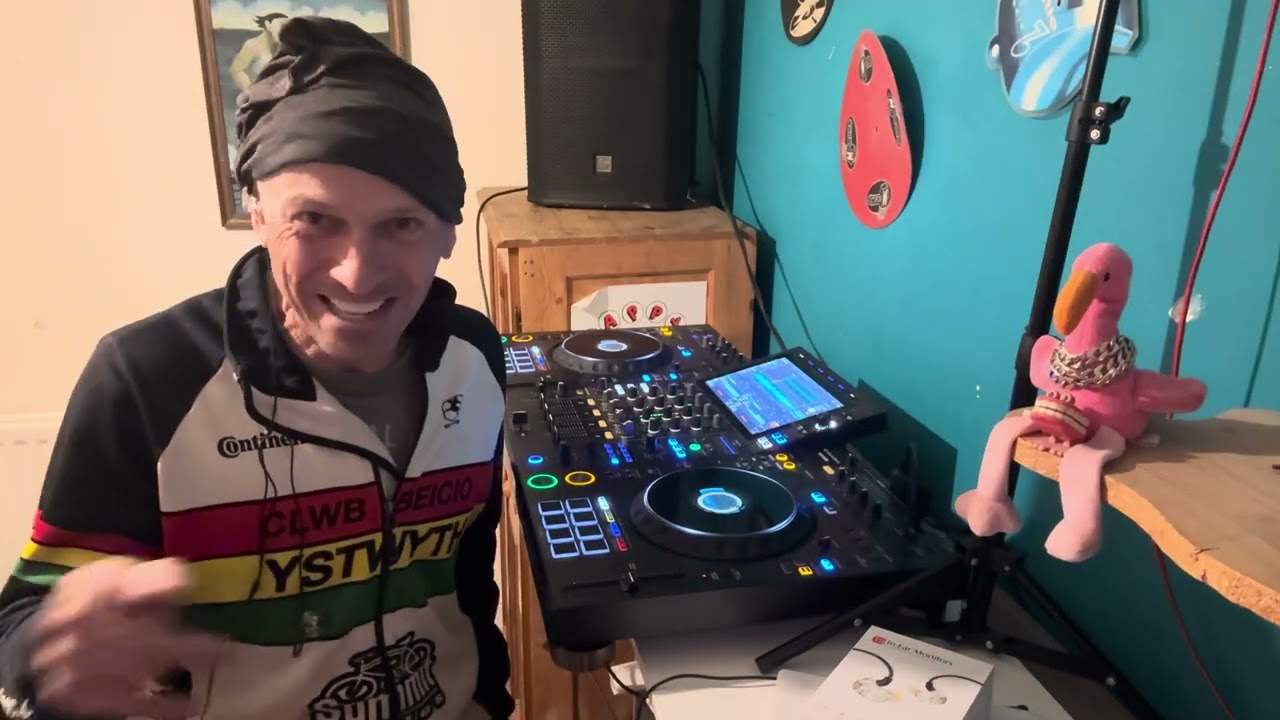
Right guys, we've got ourselves as usual a bit of a random video here and in this one we're going to be doing a bit of mixing of dubstep but slight difference, not your conventional oh we're going to mix one into the other because we're going to be doing a little bit of cutting but also there's a part in this particular track where it's almost like this sort of vibe where you feel as though you could bring something else in so we're going to go right from dubstep to house. The track I'm using is Murder Sound and we've got then Coty, Fill My Roth. First of all this one here. Then we've got this guy over here. Now a lot of people can't understand dubstep, they're thinking like what the heck is going on, where's it going and how do you count the time and where is the time? I can't hear any steady sort of dum, dum, dum. Well of course dubstep in a sense is almost the equivalent of let's say some guy who all of a sudden decided to take...
2:07 How do we count the timing?
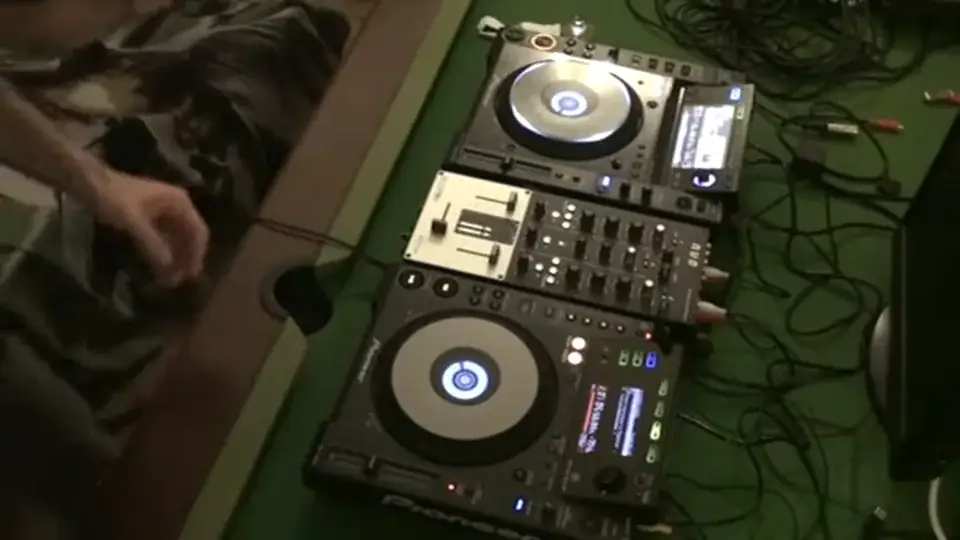
Take the pitch control from a drum and bass tune and just go all the way down. He thought, nah, I'm going to go... But what they did is they thought, yeah, let's just chuck loads of bass in there. And once we've got loads of bass in, let's add a tiny bit more for good measure. And then someone else came along and said, no, no, no, more bass! So it became dubstep. Right, so... How do we count the timing? From there. Now again, with dubstep it's very difficult to try, if your ear isn't familiar with the counting, it's very difficult to let's say try and count where the bass beat is concerned. So what you need to do is almost use the same philosophy counting time with say the likes of drum and bass and use the snare, that
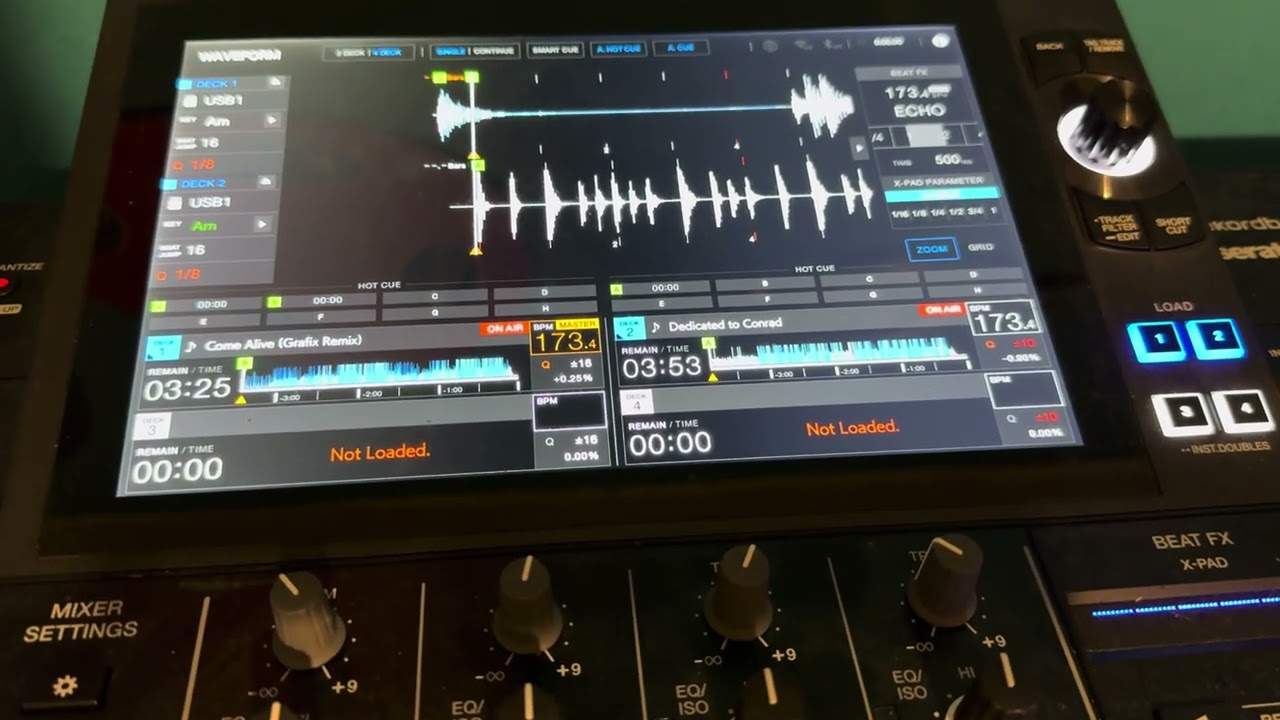
That's what we're going to do here. Exactly the same principle applies. So I'm going to count in a minute. And listen to the way the bass works. One, two, three, four. One, two, three, four. 1, 2, 3, 4. 1, 2, 3, 4. 2, 2, 2, 4. So almost in a sense what we had there, if you listen to it again, go rewind, like that. Okay. Oh look, I'm going to look back at these videos in 10 years and go, my God, one of them. Okay, anyway, right, so what you want to do there is if you... Oh dear, this is crazy. If you listen to this particular tune, you've almost got like four lots of four. So you've got like four bars into four and then you've got another load of four bars into four. It's almost like you've got sets of bars. Trust me, most dance music is formatted in that sort of way. And once you, you don't have to necessarily listen to each track and go, that's four, four, four and eight and six. Eventually it'll just think, you'll have this imprinted into your mind. You'll think, yeah, there is structure. So there's that track there.
4:34 I'm just going to bring this one forward a bit
And this one over here. And listen to that defining sort of like... Okay, right, so... Very sort of quick mix, but I did say earlier on I was going to try and mix a house beat into this. Now, I think it was at 248. So I'm just going to bring this one forward a bit. This bit here. Now bearing in mind you would have sort of constructed your mix prior to, or then again you would know certain tunes and you would know certain parts in certain tunes that you can do certain things. It will be complete and it will make sense eventually, hopefully. Right, so what I'm going to do, I'm just going to get any track I've got on here that, let's have a look, what have we got on here? Not a lot actually. I have got, oh dear, where was it?
I should have, talk amongst yourself please. Ah, here we go, right. Right, Danny J Lewis Red Light, which is this one here. It's a house tune, so it's 1, 2, 3, 4, 1, 2, 3, 4. So just imagine you're playing a dubstep tune, all of a sudden you've got this area and you think, I could bring some house in here. Well, if you're, let's say again, not meaning to sort of digress completely, but if you're just... Theoretically you're supposed to be playing dubstep, then you're not going to all of a sudden play a house track. But let's say for example, you know, you're a mobile DJ or someone's just said, play some dubstep. So you play a few tunes of dubstep, you want to keep the continuity, you want to keep the tempo going, then you can do this, let's say, in that sort of scenario.
8:02 The best tune to mix into that, but it gives you a general idea
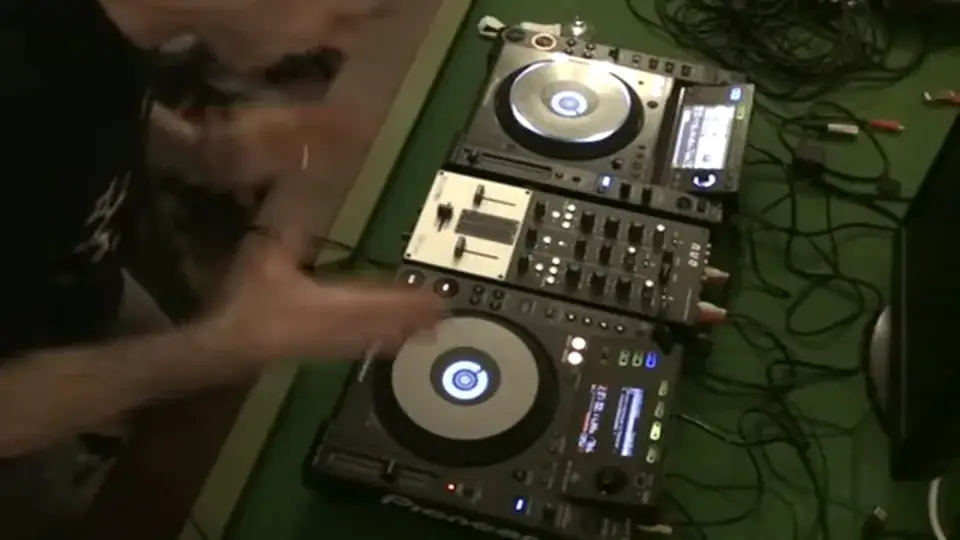
The best tune to mix into that, but it gives you a general idea. You can do it. Now let's just... Right. What I'm going to do now, we're going to listen to the timing and the counting. And I'll explain how we can go from the... Okay, right. So we've got that...
That's your house beat. So again, what you could do there, maybe, like I just did there, oh headphones, maybe at that point you could bring that and just completely make the audience go like, what the hell is going on? So on that basis, not meaning to contradict myself, but let's say hypothetically you are just playing a dubstep set. You could make the audience go, my God, the DJ's playing house in that break. Bam, bam, bam, bam. And the crowd would probably start doing all of this and then of course as soon as the break finishes you come out of the house tune back into the dubstep tune. I hope it makes perfectly no sense at all. Practice and enjoy. There we go. No, I hope it does make sense actually. Where's the on off button?
This transcript was produced automatically from the audio of the video and may contain mistakes.