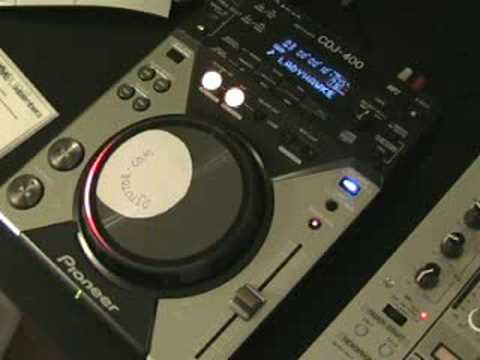
 7:12
From a slow track to a faster one
On YouTube this video is called How to mix from a slow toon to a faster one. DJ Tutorial
What this lesson teaches
A good lesson with an odd beginning: the file opens with an unrelated phone call about a perm and some highlights, picked up by the recorder before the tutorial starts. Skip past it.
The problem
You are playing something at 120 and you want to bring in a track at 130. That is a large gap, and without key lock it is a problem of a kind people do not usually recognise.
Why he goes to the piano
This is the clearest explanation of a thing stated flatly elsewhere in the curriculum.
He finds middle C, then plays an octave - C up to the next C - and then the steps in between.
The point is that pitch is organised in semitones, and changing a record's speed moves it through them. Speed a track up enough and you have not merely made it faster; you have transposed it. The vocal is now in a different key, the bassline is playing different notes, and the harmonic relationships you were relying on no longer exist.
A few per cent is a fraction of a semitone and nobody notices. Eight per cent starts to be audible. The jump from 120 to 130 is over eight per cent, which is around one and a half semitones - enough to take a record genuinely out of key.
What to do about it
Key lock, if you have it. The player corrects the pitch while changing the speed, so you can make the jump and keep the original key. This is precisely the situation the feature exists for.
Do not do it in one move. A set does not have to get from 120 to 130 between two records. Three or four records each a little faster than the last will get you there with nobody noticing, and that is how most DJs actually raise the tempo over an evening.
Or use a transition that does not need matched tempos - a cut, a break, an echo across the join - and simply start the next record at its own speed.
The underlying point
Tempo and key are not independent on a turntable or on a player with key lock off. They are the same control. Knowing that stops you from being baffled when a well-beatmatched mix sounds sour.
Contents of the video
0:00 Yeah, yeah, 5.30, that's fine, okay
Yeah, yeah, 5.30, that's fine, okay. So, yeah, um... Well, no, ideally just washed initially, but then a perm would be pretty good. Yeah, okay. And highlights? Okay. I was thinking sort of, you know, maybe a few red highlights in there that would look quite nice. And I think with a perm, do you think that would look quite nice with a perm? Yeah? How much is that all together, the highlights and the perm? That's £65, okay. So you can definitely fit me in, yeah? Okay, sure, yeah, fine, alright. So, okay, yeah, okay, so highlights and perm at that, fine, thank you very much, yeah. Loads of people are asking about how they can increase the speed of the tracks while they're in the mix. In other words,
You're playing your mix and all of a sudden you've got a track here that's 120 BPM and you need to mix a track in that's say 130 BPM. Well, how do you do it? Because there's one hell of a difference, especially very important if you haven't got what is known as key lock. Now, no I'm not going to do it with this track, I'm going to explain it first. But before I even do that, what we're going to do, we're going to have a look at the old Joanna, which is a slang term for something called a piano. And by the way, do excuse me because it sounds rather dodgy. Hold on. Right, here we go. This here is a piano and it sounds like a pub piano, but hopefully it will give you an idea. That guy there is middle C. Have a listen. Right. Now, an octave is from C to the next C. So we have C, D, E.
And then we go to C. Now have a listen to this. Imagine our tune at 120 was down here. And imagine the next tune we want to bring in is sort of up here. It's a lot faster, but listen to the sound. But what we want to do, we want to bring this one up to this one. So what we need to do is logically The track I'm going to be using is Ladyhawk, a track entitled Dusk Till Dawn and it's on Island Records and it's released September 08. Now at the moment, I've got the pitch control here in the centre position. Now also, I have not got master tempo on. This is important. Now first, I suppose in a sense, if we put master tempo on and very quickly, anybody out there who doesn't know what master tempo does, basically that will keep the same sound of the track while you increase or decrease the speed. If you have master tempo off, the track will all of a sudden go...
4:25 116 BPM, sorry, all the way near enough to 122 odd
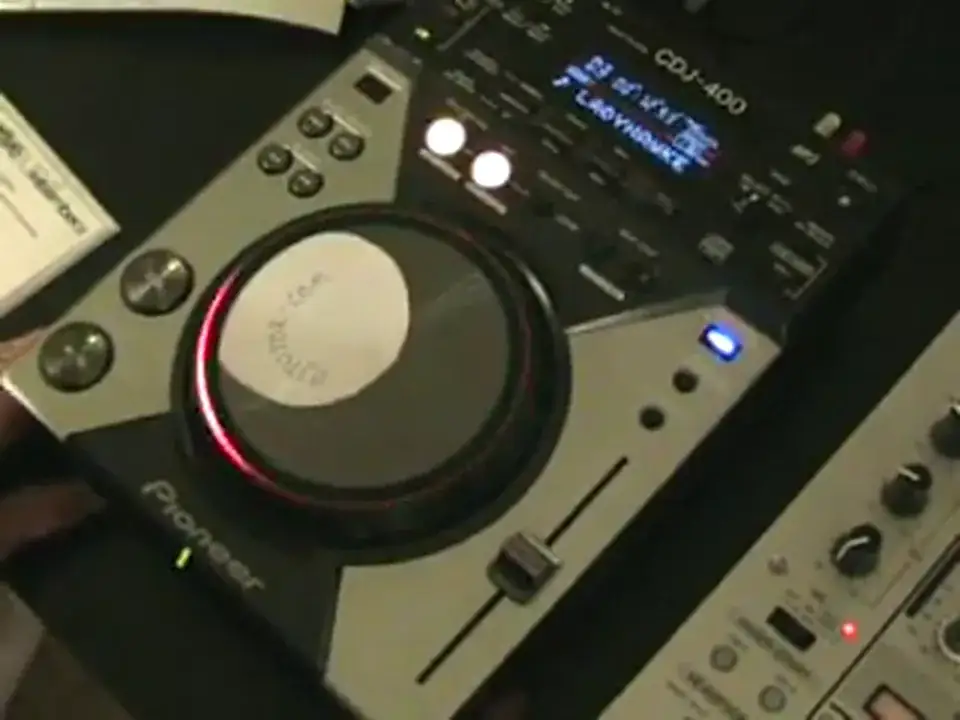
When you lower the speed and it'll go when you make the speed go faster. So, have a listen first with master tempo on. Here we go. We've slowed the track down but the sound has stayed the same. Move it up. Now, the sound is exactly the same but then we've made it go faster. Alright. Master tempo off. Now let's say for example, right by the way if you can see that this particular track is at 115 BPM, 115 beats in every single minute at the centre position on the pitch control. Let's press play again, here we go. Now again, this will take a little bit of practice. But, and remember the piano thing, it's all about the sound. Now what's happened is theoretically, if I've done that correctly, and again this is a tutorial, I've gone from
115, where are we now? 116 BPM, sorry, all the way near enough to 122 odd. 123. Okay, alright, so you can't necessarily do this any time during the course of the record. You can in a sense if you're very good at doing it, but what I'm doing in a sense, I'm using the method, a bit like using a piano, going up an octave, going from that kind of thing. In other words, you're staying in the same key, but you're taking it that one step higher. So I'll give you another demonstration, here we go. Let's sort of wang it forward a little bit. Right, knock it down here.
Okay, where is it a good time to do this and where is it a bad time to do this? Well, in a sense, it's possibly not a good time to do this if there's vocals or if there's a lot of melody etc. A great time to do this is let's say in an instrumental break or when there's not much going on, alright? Now again, like I've said many a time, I am far from the best DJ in the world. But if I can share a little bit of knowledge, give a bit of advice, then all the better. If you've got any more info on this kind of thing, then do me a favour and everyone else out there, post video responses, comments, and as usual, get out there and practice and enjoy. Thank you very much.
This transcript was produced automatically from the audio of the video and may contain mistakes.