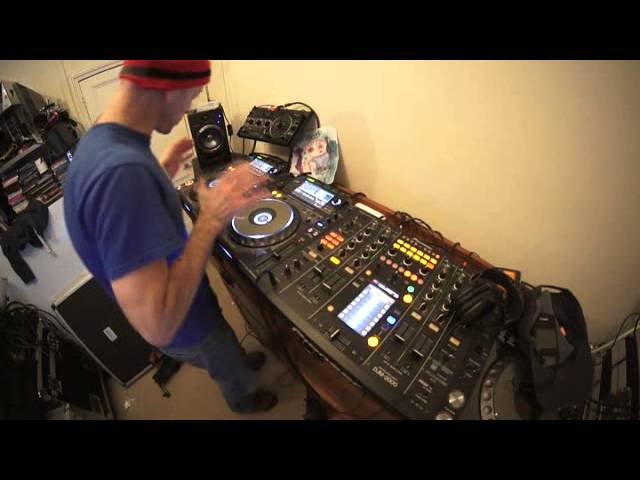
 8:07
Mixing techno
On YouTube this video is called How to Mix Techno BY Ellaskins the DJ Tutor
What this lesson teaches
No blending here. Straight in and straight out, cut, chopped, punched in with some force - because certain techno tracks need that.
The organising idea
And here is the thing to take from this lesson and apply everywhere else.
Take three tracks. You want to mix track two into track one, and separately track three into track one.
Track two might want to come in smoothly. Track three might want to be cut. Same outgoing record, both pairs in key and in beat, and two completely different right answers.
His phrase for it: the tracks will tell you how they want to be brought in.
That sounds mystical and is not. A record with a long sparse intro is telling you there is room for a blend. A record that begins with a full drum pattern and no run-up is telling you it wants to be cut, because blending it means fading in something that was built to arrive.
Why techno in particular
Because techno is often constructed from sections that change abruptly. The music itself cuts - a new element arrives on a bar line with no transition - so cutting between records is consistent with how the genre behaves internally.
Blending two techno tracks for thirty-two bars is not wrong, and it frequently produces something more muddled than either record.
What cutting requires
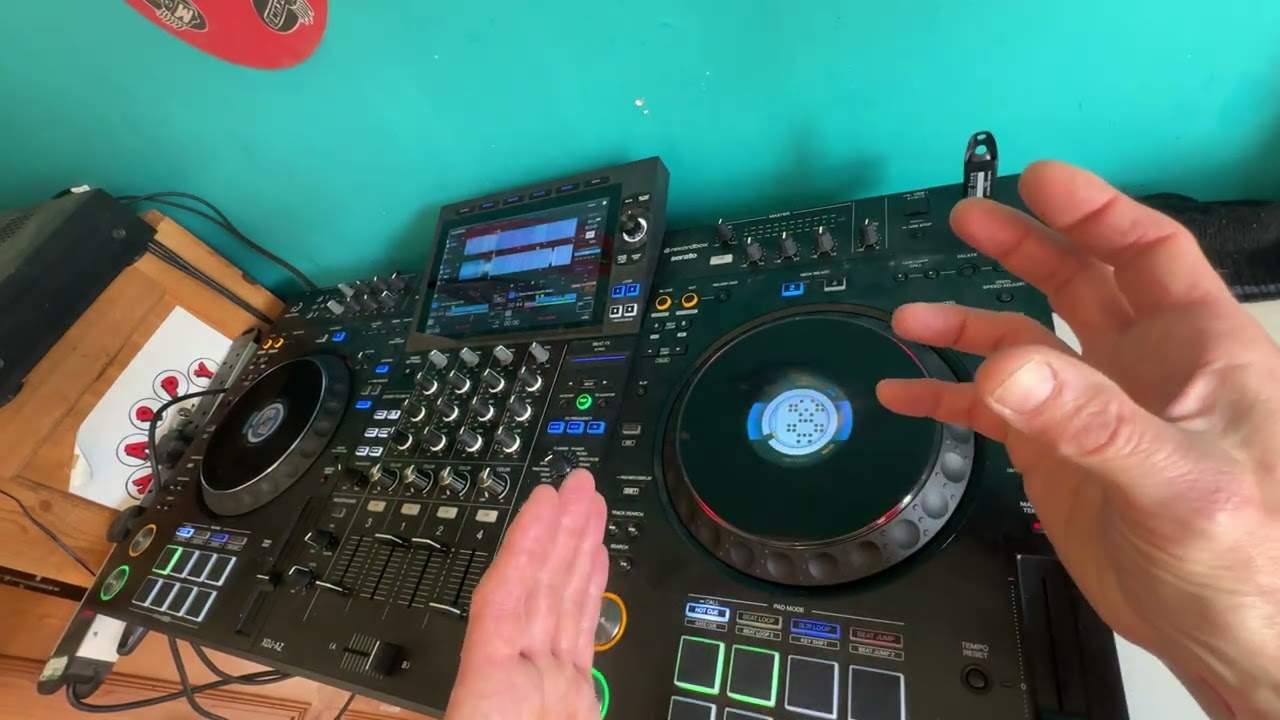
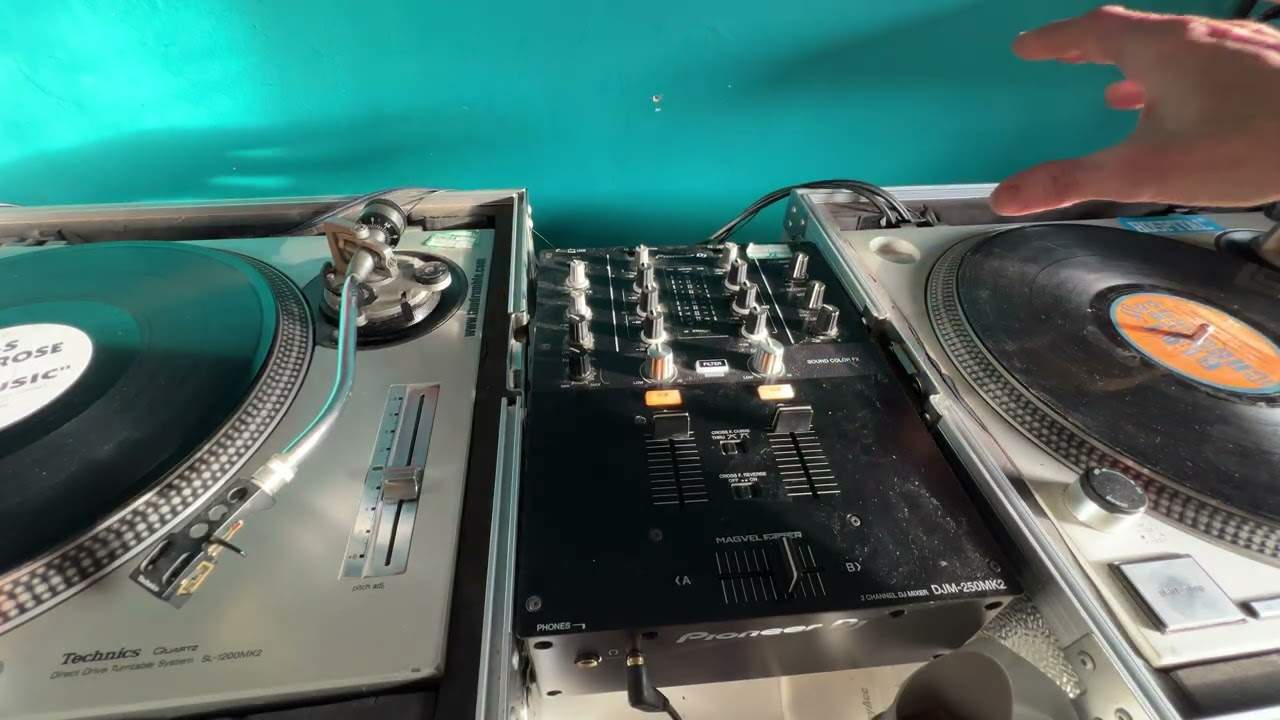
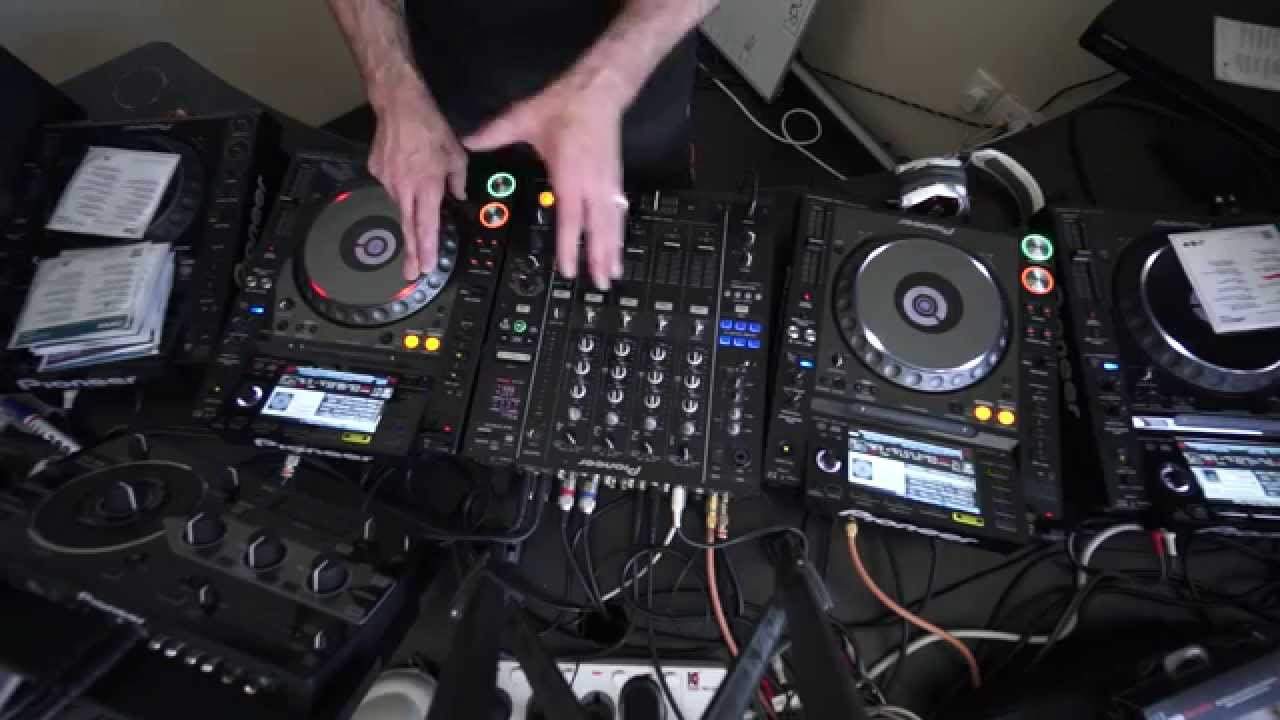
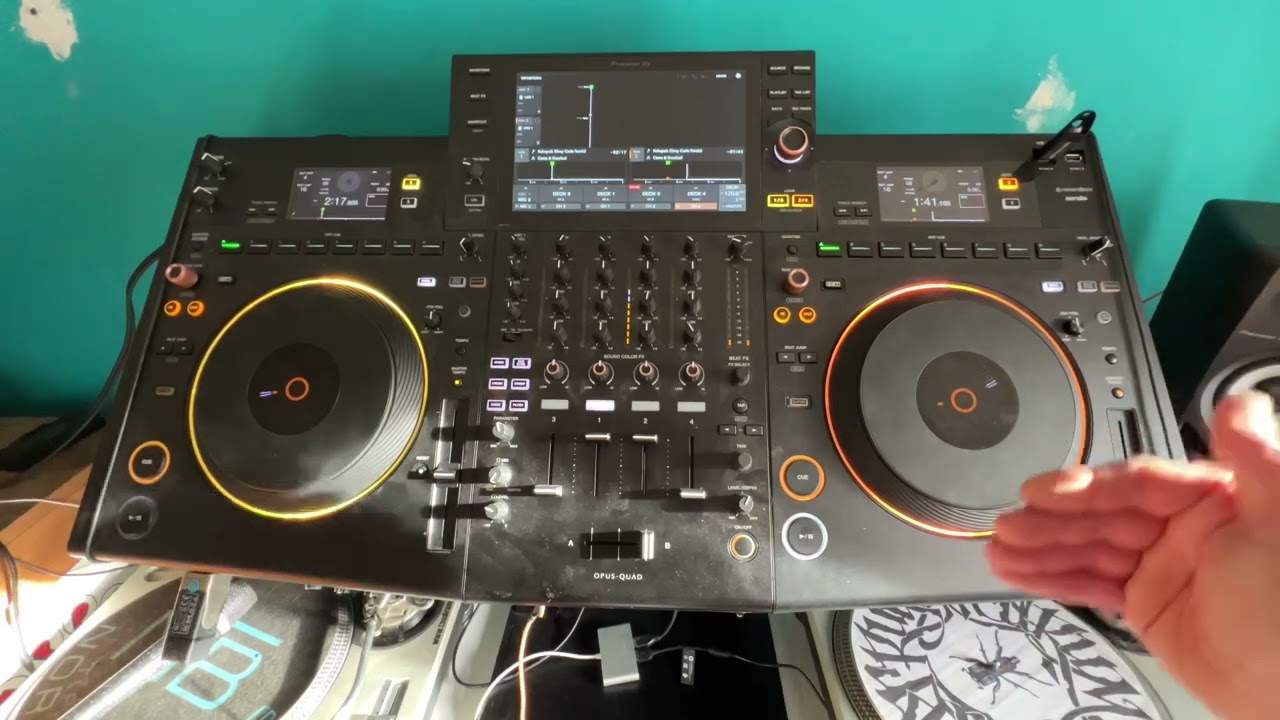
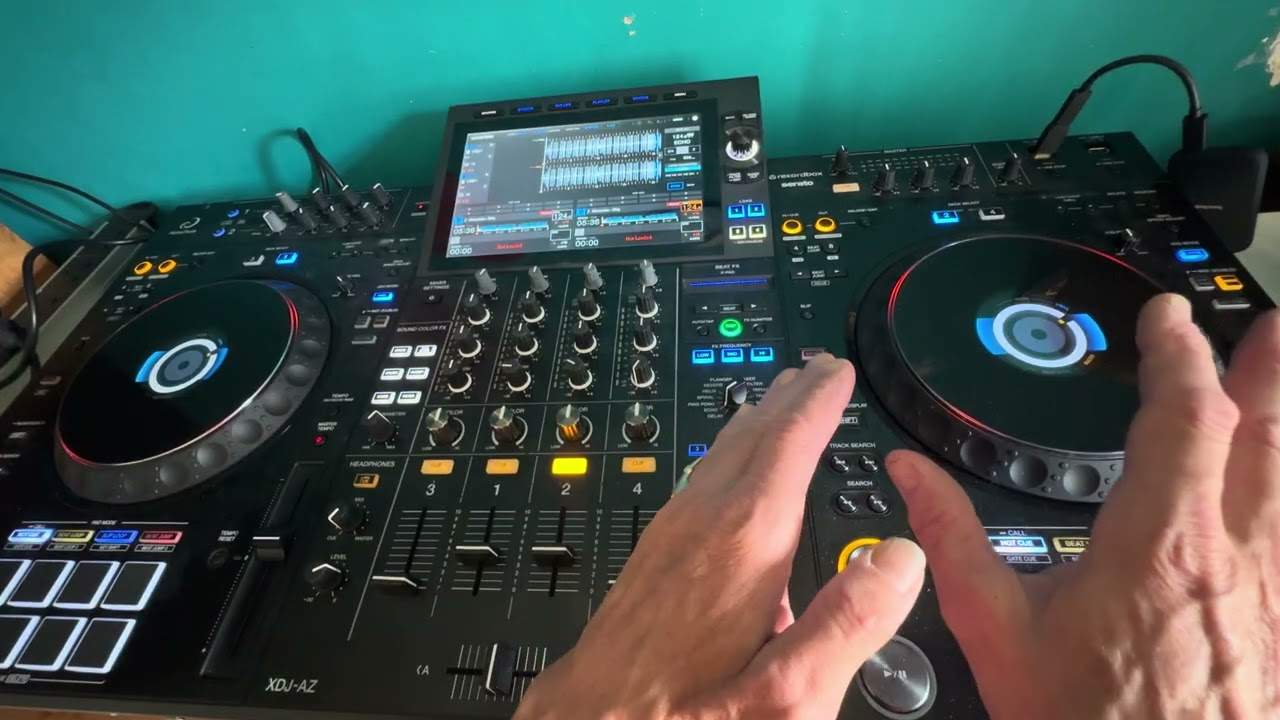
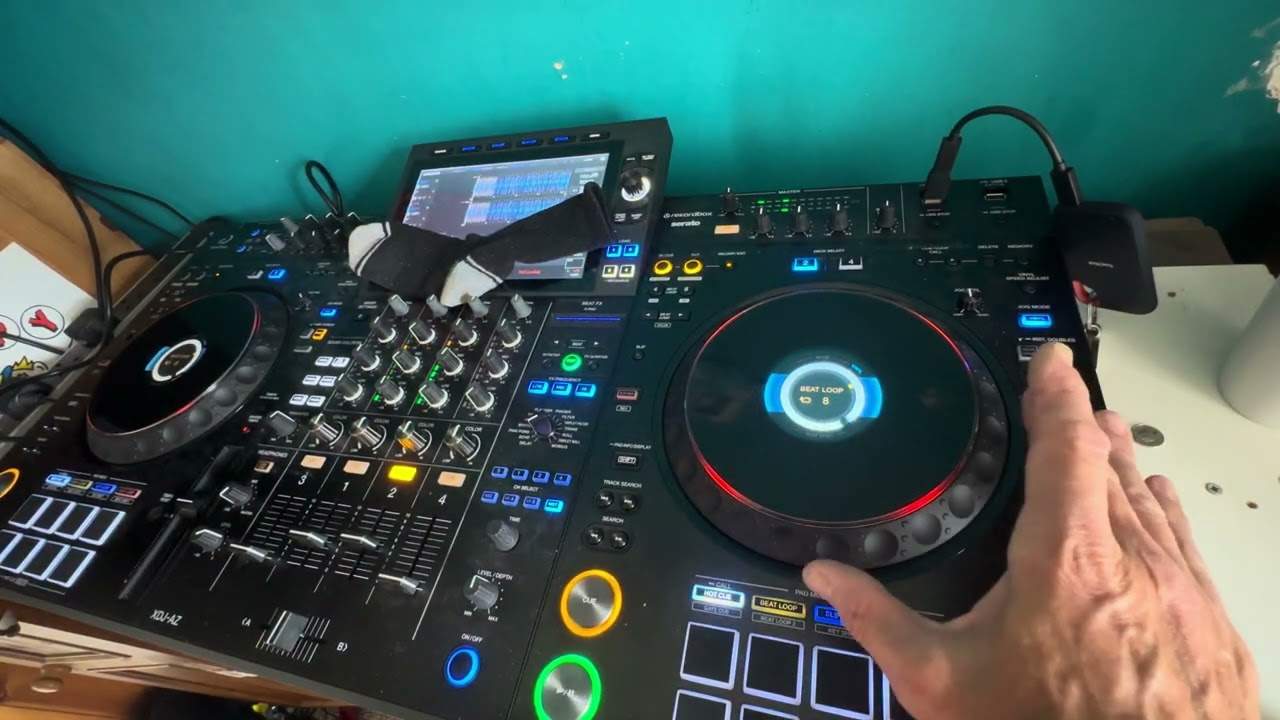
The same setup as the breaks lesson: faders up, crossfader doing the work, a sharp curve so the switch is instant.
And the counting, absolutely. A cut that lands on the one is an edit; the same cut anywhere else is a mistake, and there is nothing to hide behind.
How you learn which is which
Experience and practice, as he says - but you can speed it up. Take a record and deliberately try it both ways against the same partner: once blended over sixteen bars, once cut on the one. Listening to the two back to back teaches you more in five minutes than a year of only ever doing it one way.
Contents of the video
0:01 Another demonstration straight tutorial for you
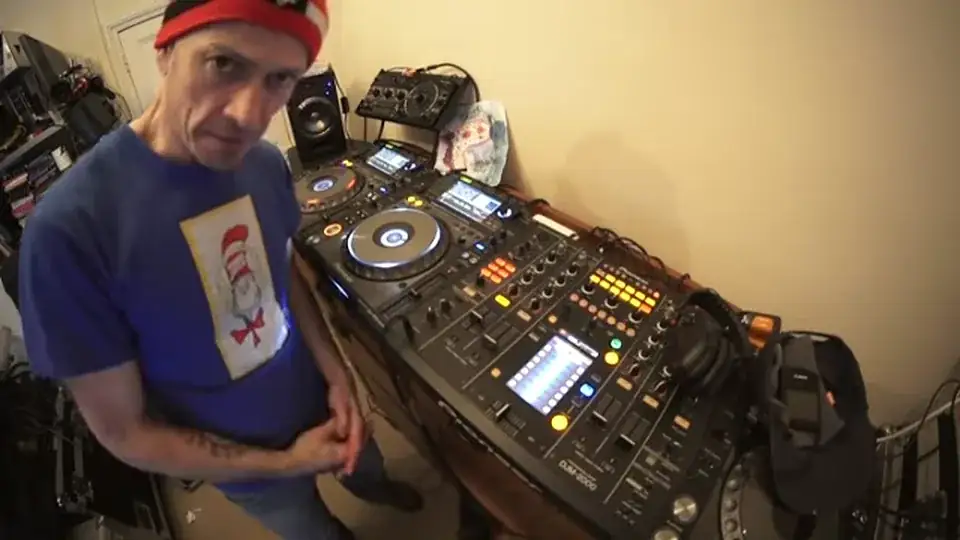
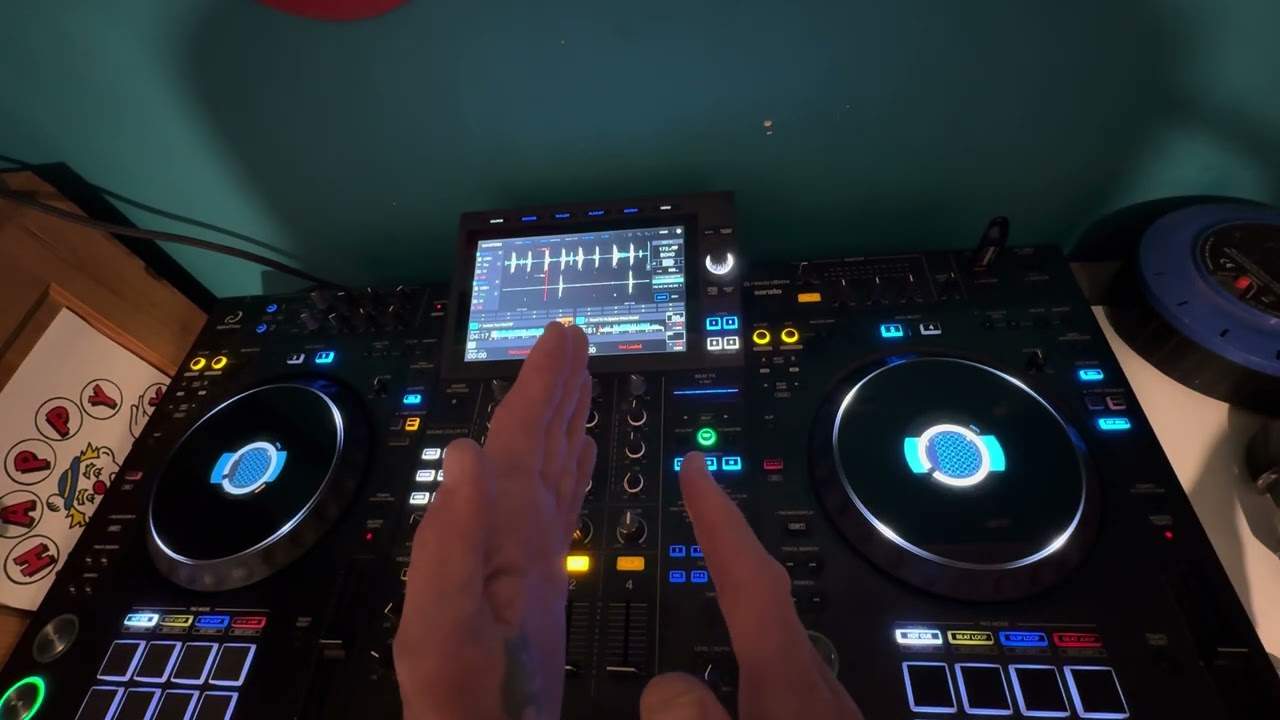
Alright ladies and gentlemen, another demonstration straight tutorial for you. And first of all I would like to give my profound apologies. This is a working environment. There could be sort of noises in the background from children running around and completely destroying the house where we live but it's not my fault because this is real life. I have of course barricaded the door just to make sure they don't come in. In this video we're going to start to mix some techno and we're going to mix it in. We're going to actually cut, we're going to chop, we're going to like punch it in. We're really going to give it some oomph. There's not going to be any blending here, it's just going to be like straight in and straight out.
Certain techno tracks need this. A track. So imagine anything. People say how do you mix it in? How would you mix that track in with that track? Well every single track is different. Let's say for example we have track 1, 2 and 3. We've got three of them. You want to mix track 2 with track 1. Track 1 may make you want to feel, may tell you that track 2 needs to be mixed in smoothly. If you say take track 1 and you want to mix in track 3, bearing in mind they're in key and they're in beat, track 3 may tell you that the mix needs to be mixed in smoothly. You want it to be just slight edges to it, just a bit more cutting. Whereas track 2, smooth. Track 3, yeah, you know, you must be able to follow me. So the tracks will tell you how they want to be brought in.
Again this is about experience and practice. Now the two tracks I'm using here is James Bacon, a track called Entitled Persecution. That's P. I wish it would stop. No, I want to move it back. Because when you start it, the, never mind. I'll put the names of the tracks in the description, promise. And then over here we have Dosem, Tales of Tomorrow. So let me play you a little bit first of the James Bacon. Gently fried with a pinch of garlic.
2:23 It's a bit more of a It just moves, it goes
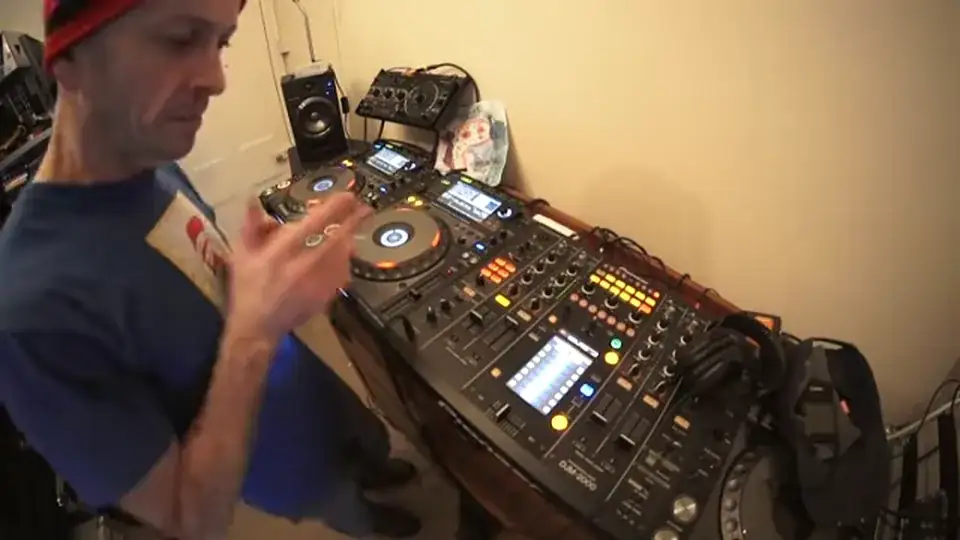
Let me see again. If we have a listen to this, it's what I would classify as the James Bacon. It's a bit more of a It just moves, it goes. You know, if this was a car, if this was a car, it would be a Bentley because you drive along in a Bentley at 60 miles an hour and it's as though it's not doing anything. It's like you could sort of open the door and just get a packet of sweets before you die from your head being stuck all over the floor on the road. But you just think as though this car will go on forever and ever and ever. That's a good thing. It's sort of like a bit boring, but then it's not a bad thing.
Right, slight changes. Maybe in the car you've turned the radio up a little bit or maybe you've put the fanny on. I think like having a hunt. So...
Right. OK. Right, OK. This one here, Dosem, Tales of Tomorrow. Let's have a listen to this one straight away. This to me, it's spiky. It's... I can imagine there's been a beetle going
It's almost as though it's got that much energy and power. It wants to carry on going but you know, you've got to try and slow down, you've got to pull it back.
That track is telling me... And again this is the beauty about this one mix. Me mixing Dosem, Tales of Tomorrow in with the Bacon track. Dosem, Bacon. Bit of egg. Rather nice for breakfast. Is I need to cut this one in. I need to chop it and have a good old cut and a mash up if I'm mixing the Dosem into the James Bacon. But... If I was doing it the other way around, I'd probably want to blend this one in. Slowly and gently. Now do you follow? See? You're going... Scratching your head now. OK. Right. OK. So...
4:52 Let's go sort of towards the end of the track
So let's go sort of towards the end of the track.
If you're always wondering where's the end of the track, if you're using vinyl, you can see the end because it's like... Oh look! There's nearly the end of the track! With PC programs and CDJs, you've normally got a countdown timer. If it's counting up, probably means you've just got to press one button so it starts counting down. I'm going to get it at that point there. We've got that sort of break. Right. It finished too early. OK. It did finish too early there so let's try that again. You know, again with this sort of genre you do... You do want like longer mixes but that's what people sort of do most of the time. Again it's up to you. Be different. Right let's play it again. This is what I like about these demonstrations and tutorials.
They're very random and hopefully you'll pick up certain parts and think I'm going to go along with that but definitely not with the other bit because that was crap. There! I nearly said bollocks.
And... That's where I brought it in on the first mix.
Now because I know that we haven't got much time left, maybe at this point I need to leave it in the mix. It's still there.
That was the better place to bring it in. Because we've still got the old track playing and we've now got the bass line of the new track coming in. Another tip and trick for you. Practice and enjoy! Thank you very much.
This transcript was produced automatically from the audio of the video and may contain mistakes.