 7:45
Ride the pitch part 3, keeping it in beat
Contents of the video
0:00 I'll turn around and I'll show you
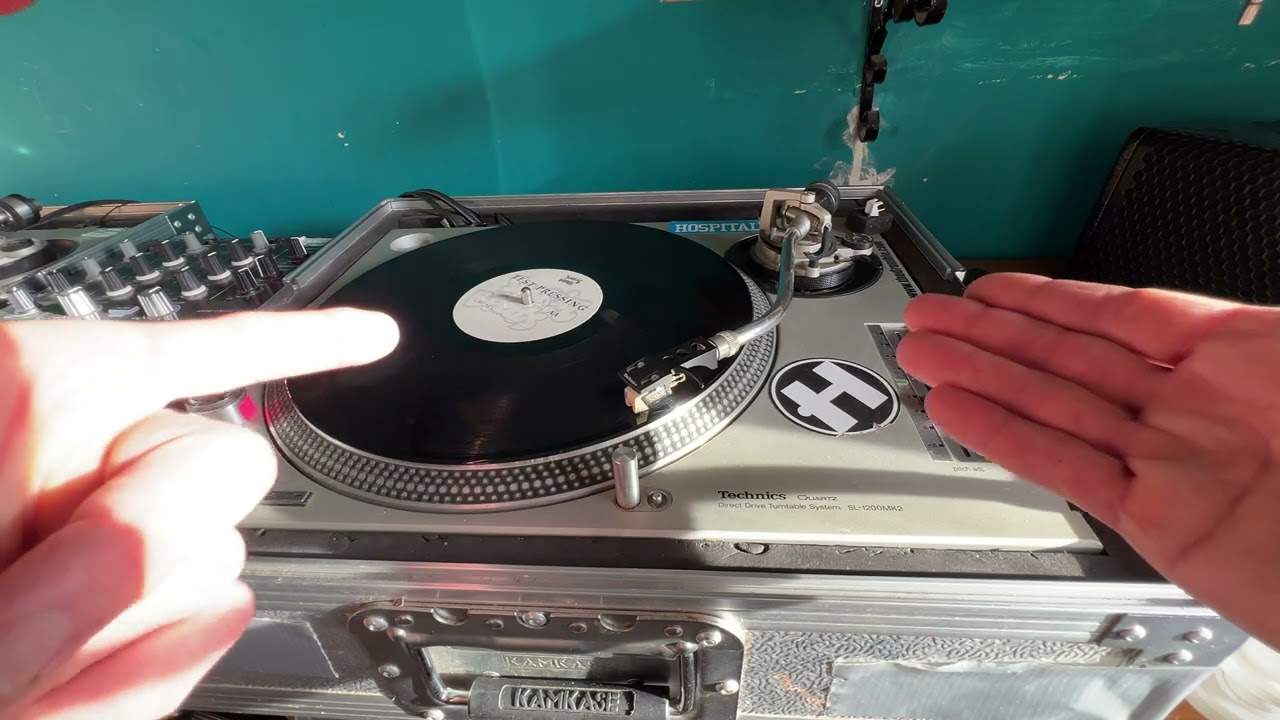
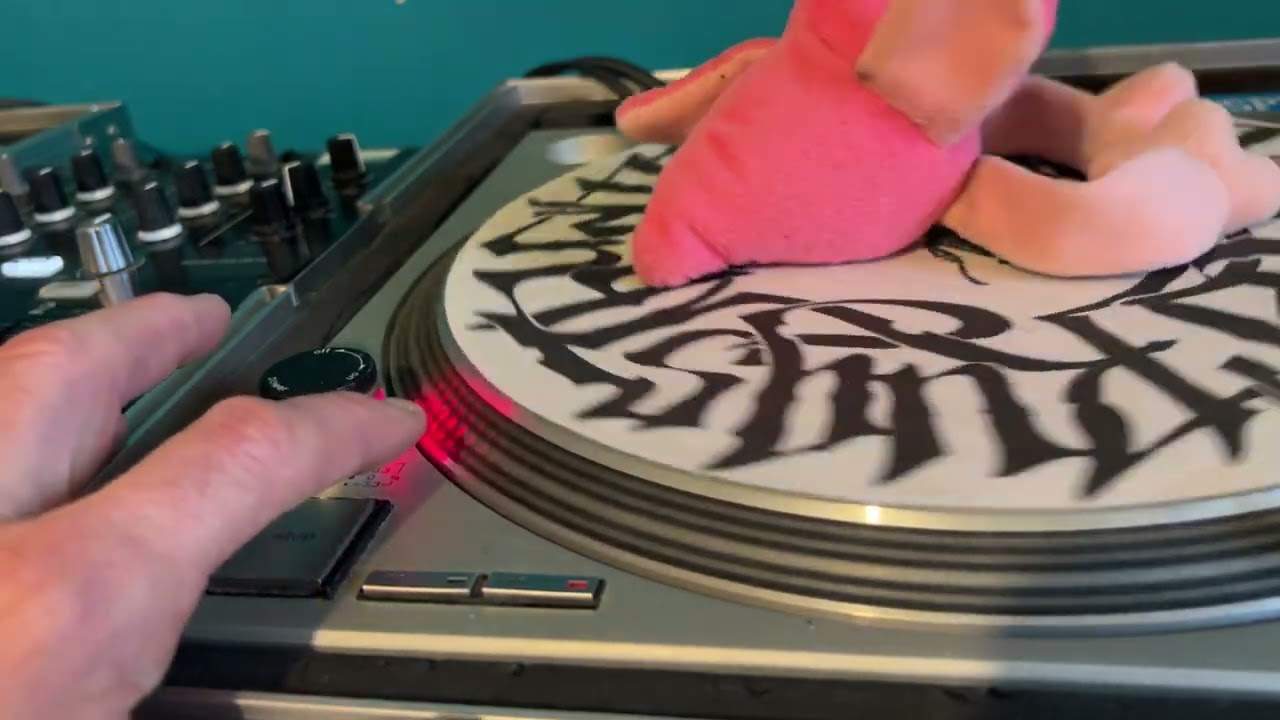
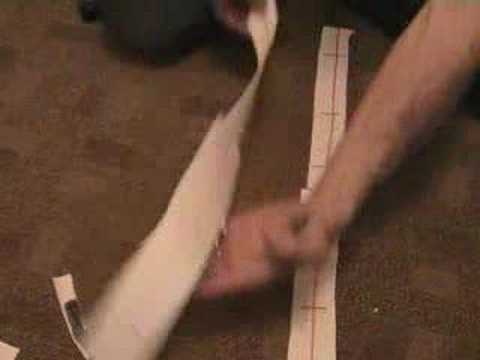
Alright folks, quite a few people say that once they've got the actual records in beat, they find that they start going off-beat again. So what do you do? Right, I have done a video on this before, it's called Riding The Pitch and I'm down on the floor for a reason because I've got some of my dodgy pictures again. Right, so I'll turn around and I'll show you. Now then, if I sit here and have that facing me so I can see what I'm doing, then I know you can see it in camera. That, if you imagine a record and again it doesn't really matter because a CD is a piece of music but a piece of vinyl is an ever increasing decreasing spiral. Now if you imagine on that spiral the lines are the bass beats so if we were playing this record it would be boom, boom, boom, boom, boom, boom, boom. Now then what I'm going to pretend is that we're going to elongate that line so it's no longer a spiral
It's a line, okay? So there you go. There's our line. Now then, let's say hypothetically now, those now are the beats of two records, okay? Now let's see, these guys here are the actual styli. I know it looks very silly, but if you can see on the end of the styli, there are two tiny points. Now those points are very, very tiny. But if I just move it in camera there, now then. The beat will start almost, in fact actually the way to look at a beat, if you imagine, if I move those away for a second, I should have done this earlier but I don't think it matters that much. The way to look at a beat I suppose is almost this. It will start, it'll come in quiet and then you have a boom. So that's almost like a beat. It's like, it's a sound wave.
2:29 On the second beat in the same place, there
Now then, the styli has to hit really to get the beat phasing with another one. Has to hit at that point there. But if you think about it, to get it phasing you need two beats. So, in essence, you would have two of those. Another one there. Now then, let's say the second styli hits that place. On the second beat in the same place, there. So there's your beat, boom, together, boom. Then you will get phasing but because if we actually elongated that beat, in other words I would like you to try this on your turntable, have the actual power off but the volume up and I want you to slowly speed up and you can do this with a CD player as well, slowly but with your finger, get to that beat. So it's like that. And I want you to listen to that beat. The beat's . Okay? There's quite a long area where that beat is on that record, but when the record is turning, it's . But the slower you take it, the longer that beat is. To get it beatmatched, you've actually got to try and get the styli
Of both tunes in exactly the same place. Now that is beatmatched. That is sort of beatmatched. And that is sort of, and this side is sort of, and this side, and here and here. But when you start going here and here, you're offbeat. And that's when you get that g'dung, g'dung, g'dung sound. Now then, let's go back to these two here. I've got that off my chest now. Now then, let's say for example now, hopefully you'll see where I'm coming from. Alright, these lines aren't perfect. Should it be that way? Let's have a look. Right, let's put it... So, if you imagine now those beats, they're in beat. Now then, what I'm going to do, I'm going to have that, say there, and I'm going to have the two styli there. Now then, all of a sudden now, this DJ has got these two records in beat.
The stylus hitting the beats, they're going boom together. They're going boom together. Boom. And together again, boom. And together, together, boom. Now then, that's because they're both perfectly beatmatched. But this is what will happen if let's say they're slightly off beatmatch. In other words, the DJ has listened and he's maybe got the first two or three booms correct. But because they're very slightly off, this is what happens. So we have them both in, boom. And then another two, boom. Now what happens is this one here is going to start to go slightly faster. Boom, boom. And then again, boom, boom. Now we're going off, boom, boom. Now they're going all over the place. Now this is why I say it's a good idea to do what is known as ride the pitch. Simply because of this.
5:30 Even if you're only utilising one pitch adjustment, this one here, oka
Even if you're only utilising one pitch adjustment, this one here, okay? Because if you ride the pitch, you've always got control of one of these. So as this one is going a normal speed, in other words, let's say the pitch adjustment on this tune is 3.5, that's fine. Let's say the pitch adjustment on this one is 4.5 because it is a different BPM. Now then, if I keep my finger continually on that pitch control and listen, I can always keep it. Boom, boom, boom, boom. I can always make sure that this one stays in beat. I may only be doing very, very fine movements, but because I'm doing fine movements, it's not going to do this. We have the two together, boom. And then the next two, boom. And then because I haven't got my fingers on this pitch control, we come up to the next line. This one comes in but this one's a fraction behind. And then we come to the next one and this one now is even further behind because it's going too slow. And the next one is even further behind again. That is another lesson in riding the pitch. I hope this has been a help. If you can't understand what I'm on about here, then please email me.
If you think it's a good lesson, then let me know. But it's all about keeping your ear open and keeping your finger on that pitch control. Unless you've got them perfectly matched, you don't need to. The only way you'll know if you've got those records perfectly matched is if you can have them both having the same beat together, boom. And then that boom stays like that for at least 30 seconds or 40 seconds. If you start hearing ba-boom, ba-boom, ba-boom, ba-boom, then you know that one of the records is either too fast or too slow. Look on this principle, okay? I hope this has been a help. Practice and enjoy. Thanks for watching.
This transcript was produced automatically from the audio of the video and may contain mistakes.