 17:00
This Is WHY Your Vinyl DJ Turntable Does Not Possibly Seem to Keep in Beat with the Other Track
Contents of the video
0:00 One key feature that you need
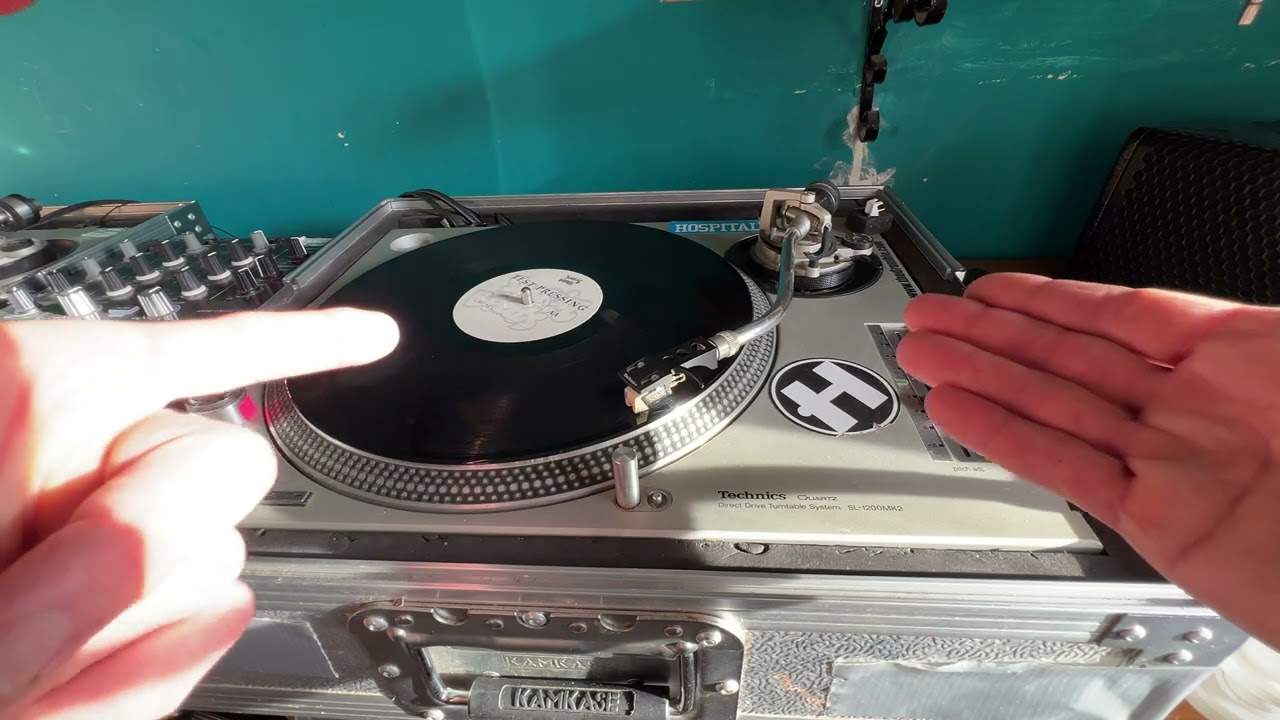
Right, ladies and gentlemen, Jonathan Ellaskins, The DJ Tutor. In this video I'm going to show you one key feature that you need to look for when you are buying a second-hand vinyl turntable. I've talked about this before the videos out there in the interwebby YouTube somewhere algorithm like deep dark in a corner somewhere, but if I do this video now, there it is, number one right at the top and hopefully it will give people a bit of information so you'll save some money and not have to spend a fortune once you've purchased something that you've been after for ages. Anyway, I bought a couple of second Technics 1200 SL. I talk what like I do sometimes, don't I? Yodah! I bought a set of Technics SL-1200 Mark II, yes, and here they are. Well, actually there's one there and the other one's over there.
1:54 Key feature here, which is what
But what I'm going to do is show you what to look for to make sure that when you buy them, the pitch works perfectly. Now these are not perfect. They're about, I would say 80% perfect, which is not good enough if you are buying them to do some fine mixing. So I'm going to stop that and I'm going to show you what to look for now. First of all, just to let you know with the slider. Now the slider with the Technics SL-1200 Mark II always clicks in the centre position. Now, if you want to, if you really, really want to, this is I'm not telling you to do this, but you can always pull it apart. Pull the pot, the pitch apart as well. Take out the spring and ball bearing, put it back together, solder it back in.
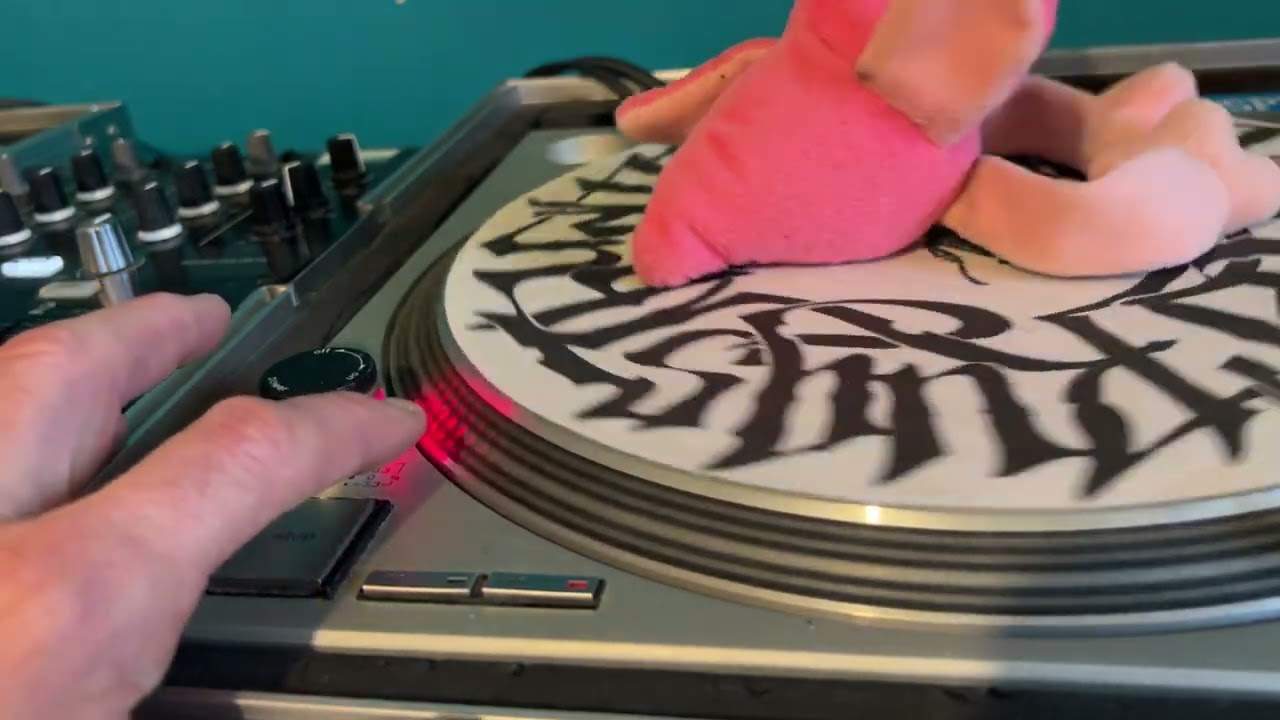
You haven't got the issue with the click, but it does take a long time. And I do not advise people if you don't know what you're doing to pull your deck apart because you might not be able to put it back together again, which is a bit of a silly thing. So let's have a look at the key feature here, which is what we're going to look at. Not Pinky Ella's butt cheeks, but butt cheeks. We're going to look there at the pitch itself. Now, let's have a look if I can just get a bit closer. There we go. All right. So I will explain as well. Hopefully this isn't going to be blurred on YouTube land. But what I've got here next to the on off, is I have four dots, I have plus six plus 3.30 minus 3.3. I've got four lines of dots on the platter two at the top, a large one and then one at the bottom.
So these indicate the percentage of speed that you can increase the actual track. So this is based on the BPM. So you can actually increase or decrease by plus or minus 8%. So in other words, if your track is 100 BPM, you can make it up to 108 or down to 92. Now how that works with these dots is when the dots are stationary, you are at plus six plus 3.30 or minus 3.3. So I can demonstrate that now. So I'm now going to move the slidey upy downy bit on the pitch towards me and the top circles should be stationary now. Now again, this is an old deck. I'm going to give it a clean. So of course the new decks nice and shiny, shiny, and you can see it a lot better when it's stationary. So that's about plus six two plus 3.3 and zero and minus three.
So you should be able to see that a lot clearer too far. So what you want to do is make sure it's stationary. Now, the first thing to look for, okay, when you turn your turntable on is you do not want the dots to do this. All right, that's a no-no. Now hopefully you're not going to have strobing in this video anyway. But basically what's happening is the dots seem to be going fast, slow, fast, slow. You don't want that to happen. There could be big issues with your pitch. But what I'm going to do now is I'm now going to very from the centre position, I'm now going to move the pitch away from me, bring it back to the centre and then towards me and then put back to the centre so I'll talk you through the process as well.
4:55 I did say earlier these pitches are about 80% okay
So now on it's at the centre, I'm going to move it away and then back to the centre and now towards me and there you go. Okay, now I did say earlier these pitches are about 80% okay. That's because if you are predominantly a DJ who wants to beat mix, it's got to be bang on the money. It has to be 100. 99 isn't good enough. It's got to be 100%. So firstly, what's happening when I slow move the pitch away from me? What is happening is as I'm moving it now from the centre position straight away we had almost a quick move there. It's almost as though it went from stand and still and it started speeding up quite a bit. Now that isn't good enough. What we need is we need it to have more of a slow move from stationary or from its original speed
Or slowly decreasing the speed, okay? So that's where there are definite issues with the pitch only very slightly but again it's got to be 100%. Now this is where it gets even worse all right. But when I say worse, it's not going to fall apart. But again, this is where it's most of the 20% out of the 80%. So I'm now going to speed it up. I'm now going to bring the pitch towards me. Okay, so the green light is no longer on and we seem to have a slight bit of movement towards us. But now what happens as I move the pitch towards me, it stopped its stationary again. So I'll just do that again. So there it's in the green and now I'm going to bring it towards me. And now I can see it slowly. I can see the dots slowly moving in an anticlockwise fashion very slowly
7:22 Let me move that camera
And now bring it towards me to the plus position a bit more. And now they're stationary and now I'm going to bring it towards me and now the dots are moving. They're moving away from me, the centre dots. So what that tells me is that the pitch on this deck is old and does it need replacing? Does it? Well, let me move that camera. To be quite honest, it's probably... Stay there, I'm not moving around with you. Okay. To be quite honest, it's probably all right because if you know how your deck works, it's a little bit like... Okay. The analogy here. It's like having a classic car. It's very unlikely that a classic car has every single bit working as it did when it left the factory unless it was made on Friday.
On the other hand, I'll start again. It's very unlikely that every single bit works. Okay. But if you are a keen fanatic with old school classic cars and you get into your classic car, stop it. You will know how it works and what's right and what's wrong. You'll understand the niggly bits about getting it in gear. And when you put it into second gear, you don't just go straight down or up. You have to jiggle it about and then you go up. Now exactly the same with this deck. Once I get used to it, I will know that, well, if I have the pitch just about three millimetres above the centre point, that's not good enough. I need to bring it a bit further towards me and then it's fine. Now I can compensate doing that by moving
9:42 I hope you get what I'm saying
The other pitch the other side so I don't have to be in that position on the first deck. If you get what I mean, I will explain. So let's imagine that the deck that's playing the pitch is at plus three and the deck, this one here where there's a slight issue. Pinky, I'll stop where there's a slight issue. That position of the pitch is where it should be to beat match it with the other one, but it's not beat matching because of course that position is where the fault is. So all I need to do is the deck that's playing slow that one down or speed it up. So the deck with the issue has to be slowed down or made faster, which means I'm now not in the point, the position where the problem is. I hope you get what I'm saying.
So it's exactly like having a classic old school something or other. You know your way around the issue so it does work. And if you're happy with that, then if it's not broken, why fix it? Well, it is sort of broken, but does it need fixing? Now, with Technics, I think I was quoted £39 for the pitch and for the circuit board to just change the whole thing. It's about 13 quid. So if it was two turntables, you're looking at about £100. So it's not too bad. Now these decks here. Okay, what can I tell you about them? What I will say is that these are going to hold their price. In fact, every single day that goes past, there are probably less and less in circulation. So at the moment now we're in 2021, maybe in 2031 or 2025.
These are going to be worth double AR now. Now if you do have a set of Technics or you're thinking of getting them, keep them or make sure you do some research on them first, because you have to treat them like a classic car, like something that needs a bit of TLC. Now the only other things you need to watch is, of course, the RCA cables, plug them into the back of the mixer, make sure that the earth cable is intact, isn't falling apart as well. Right. If I just take the cartridge off there now, you may find sometimes what happens is you get some oxidisation on the four pins here. There, you can just about see them there. Hold on, I need to get rid of that icon there, right? Okay, there's four pins now those will attach, not literally attach,
12:10 Tone
But they're squashed against four pins inside the arm. So maybe when you plug your turn table in, maybe you've only got one side playing. So the first thing to do is to take the cartridge off, just blow inside the arm of the deck first. And then those four pins, just rub them on your pair of jeans. You just need to rub them lightly because there could be a little bit of oxidisation, like I said, on the ends, push it back in and that pretty much should be it. Now also what you shouldn't have is if you take the tone arm and I'm holding onto it now, I'm not letting it drop. So if you take the tone arm off here, the little housing there, the tone arm rest, you shouldn't be able to have any form of wobble here.
In other words, if you hear a tiny bit there, I mean that's fine, but it shouldn't wobble a lot. There should be no vibration whatsoever. Now, if that is the case, it could be because one of these three parts here may be loose. Now you need to make sure that they are secure, because what you've got here is you've got a screw. And I think if memory serves me correctly, there's small bearings inside of here that need to move freely. Also just make sure that the tone arm lift works and what you will find with a lot of old school techniques is very often, more often than not, the pew light doesn't work and I'll be honest with you, they are an absolute nightmare to fix. If you're going to fix these, I believe you can now get LEDs.
14:34 I just buy it because if anything, that would be great for parts
So I would again, this isn't me saying do it, but if I'm going to change that, I'm going to put an LED in there, not one of the normal lights because it's bound to stop again. So on off 45 33, I mean, there isn't really that much that can go wrong with these decks. And what I will say as well is that if you see one or a set of them and the seller says, well, they need a lot of work doing to them, they're not working that well, I would just buy them anyway. If someone said there's a turntable here, the tone arm's a bit loose, the platter is broken, but it turns on or whatever. It's 100 quid. I wouldn't even think about it. I just buy it because if anything, that would be great for parts. So there you go. I mean, that's just about it again.
I have mentioned this before, but if you do want to for some reason take the platter off, I think that come off. Yeah. Okay. What you can do is if you've ever had this problem, I'm going to turn that off. And you can't take the platter off. You've got two holes here, so ideally you need to put your fingers in, lift it up, but you can't then just get maybe a rolling pin, not a sledgehammer or a metal object ideally would and then just tap the spindle lightly a couple of times and that should loosen the platter. Okay. Again, it's a direct drive motor. Now, please again, this is only advice, but if you are, if you are going to clean the deck as well, make sure it's completely unplugged from the mains. You've got one, two, three, four, five screws.
Undo those lift this plastic covering underneath there. You've got circuit board and what I do is I just give around the outside a nice clean. You do get a lot of debris dust and crap over the years end up in here. It's always a good idea to clean that as well. Right. As you can see here, there's bits there as well. And it just, you know, again, after this, I've done this video. I'm going to give the platter a clean. I'm going to get maybe a non abrasive cloth and give this clean as well. But there you go. I mean, these are absolute great turntables. And when people say, you know, vinyls back in or vinyls dead or vinyls appearing, to be quite honest, it's never gone. All right. And if you want to be an old school vinyl DJ and you want to be a true old school vinyl DJ,
If you can turn up with a two channel mixer and a set of Technics SL 1200 Mark II, you are indeed a true vinyl DJ. Practice and enjoy. Thank you.
This transcript was produced automatically from the audio of the video and may contain mistakes.