 6:22
Video 1 A look at DJ/ Club lighting
Contents of the video
0:00 Quite a few people have said, can you do something on lighting?
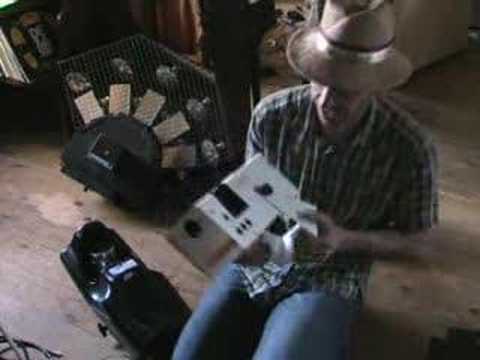
Alright folks, quite a few people have said, can you do something on lighting? So this is going to be the very first video in lighting, showing you a few lights, the very basics without going into a lot of detail. Now then, first of all you have some lighting that's called intelligent lighting. Now then, like this guy here, alright? Now then, intelligent lighting doesn't mean to say that it's highly intelligent and can make a cup of tea for you. What it means is that this unit here can be controlled by a DMX controller. ...or DMX control box, say in a certain place in the room, then you have a cable running to this and then this can be utilised from the particular person by the DMX controller, pressing a few buttons, and then he can manipulate the light to do what he wants it to do. In other words, if he wants it to go green...
If the light has a green effect in there, the light will go green. If you want it to go green flashy flashy, it can go green flashy flashy, etc. But again, like I said, we'll go into more detail during the course of these videos. Now then, DMX controllable. Now this one here, again, like with that one, is DMX controllable. But both of these lights, you can also put them to what is known as sound-to-light. If you're a mobile DJ and all you want to do is set a few lights up and not have to bother about messing around with a DMX controller, what you can do with this is you can get half a dozen of these, two or three, whatever, stick them on a T-bar, make sure all of your little buttons here are set so...
2:02 This guy here is known as a strobe
If the unit is working at sound to light, then what happens, there is a microphone here. If I show you it a bit closer, that tiny bit there is a microphone. Now what that does, it will pick up certain frequencies from your speakers. So if all of a sudden the bass kicks in, dum, dum, dum, the light will twist, dum, dum, dum, dum. Like so. That's how it works. Sound to light, in other words you leave it and it'll just run through all its patterns and just do flashy things. There you go. Right now then this guy here is known as a strobe. Now then this is an old classic sort of design but strobes have been around for years and probably will be around for a lot more. What does it do? Okay. Excuse me. You turn it on, turn it off. You've actually strobed the light.
But if you could do that really fast, you don't do that because you're electrocuting yourself or blowing the entire circuitry of your house. But what happens if you can switch it on and off very strobe effect? It happens with this. Normally there's a dial on the back and you can increase or decrease the strobe to flashing 10 or 20 times a second. So if you've ever been in a nightclub and all of a sudden you've noticed that their shutter is light, this very intense white light is coming on and off, More than likely is a strobe. Right, now then, another light and one of my all-time classics here is this thing. Now, this is a projector. These are from OptiKinetics. Now, this unit by itself does nothing except shed white light through there. I haven't got the lens on here at the moment. But these guys, now, these are one of my favourite all-time lights because you can do so much with these things. What you need is you need one of these, which is a basic...
Wheel rotator, you'll put that into the actual unit. If I could just put the camera down a little bit so you can have a better look. There we go. Right. Now that thing, that will sit inside there, like so. You'll plug it in there. But this is the beauty about it, right. And again, don't forget, in other videos, I'll probably go in slightly more depth into all of these lights. And then, have you ever seen these guys? These are known as oil wheels. These originated, I think it was late 60s but more likely in the 70s. And these are the sort of things whereby if you ever see a wall and all of a sudden you've got like this watery effect on a wall, it's continually moving, colours, there's a lot of motion there. Then values done by these guys, it's called an oil wheel. What you have there is three plates of glass. That is quite a good little effect there. There you go. So that's the oil wheel. Now then.
4:32 What else have we got here?
What else have we got here? There's this thing here which is a basic box standard colour changer. What we do, open it up and there's a small little lens there, turn it on and all that will do is just give it a nice warm colour and it will change from red to green, orange, purple, that kind of thing. Now very quickly as well, alright how do we get the lights from these guys? Two ways. Well, there's actually quite a lot of ways, but in some lights you'll have what's known as a discharge bulb. Now, a discharge bulb is basically an arc. Now, what is an arc? Right, now then, if you can imagine, let's say lightning, all of a sudden a lightning, shoot of lightning, that's almost the equivalent of the actual light you'll get from what's known as a discharge bulb. If you can imagine, you've got two pieces of metal.
In between those pieces of metal you'll have an arc, some light. Now that will be very bright and intense. That is known as a discharge bulb. Then the other types of bulbs you have, namely in something like this, is known as a dichroic bulb. Now what that is, it's exactly the same as say a light bulb but it's a lot smaller and a lot brighter and there's a little filament that lights up. Thank you for watching. Practice and enjoy.
This transcript was produced automatically from the audio of the video and may contain mistakes.