 12:15
What PA Sound System Should You Buy if Your a Mobile DJ?
Contents of the video
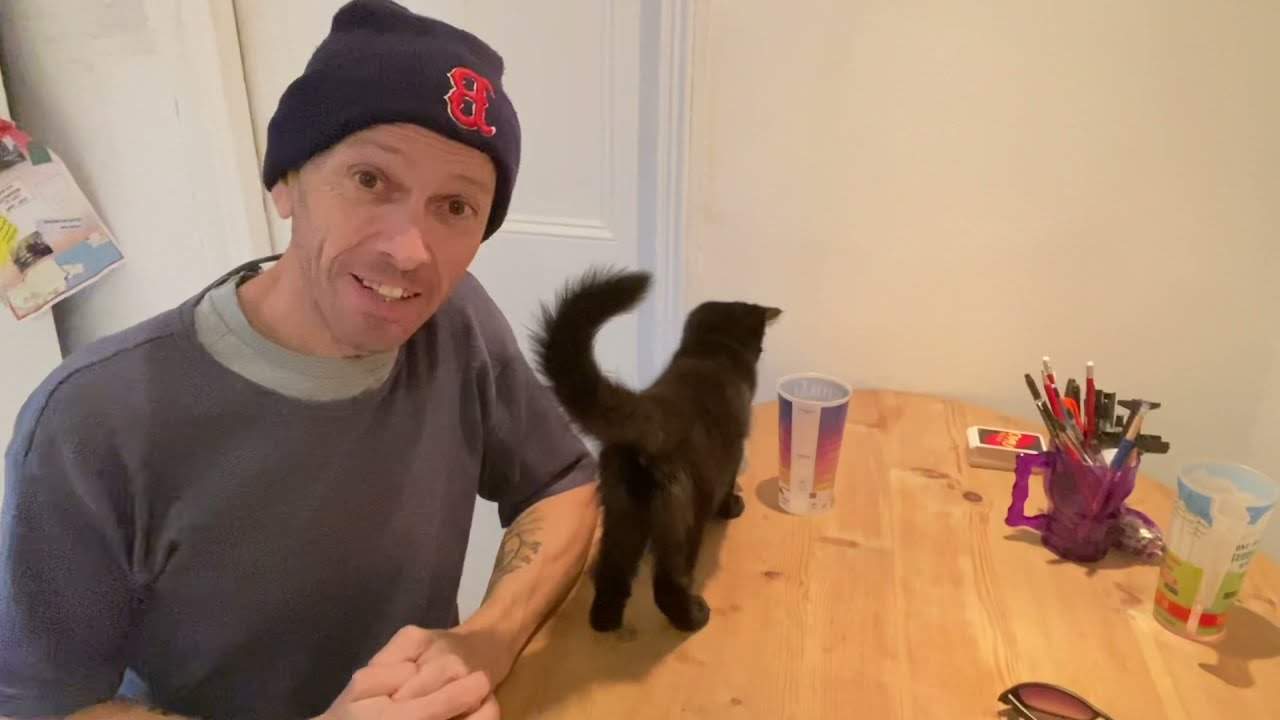
0:00 Welcome to the kitchen table, a cat's backside and a discussion on PA
Welcome to the kitchen table, a cat's backside and a discussion on PA.
I'm sorry about the camera wobbling. Right. OK. Right. So loads of questions about what PA to buy, why you need it and size and so on. So hopefully this video will maybe give you an insight into the best PA for the environment that you're going to be playing in. OK. Now, first of all, there isn't really such a rule of thumb as in what PA for what event. I've always got a saying and I stick by the saying is that, you know, you turn up to any venue with a big PA and you can always turn a big PA down. You can't turn. Actually, I'll try and stop touching the table so the camera doesn't wobble. That's better. But you can't turn a small PA up. So always please bear that in mind. I mean, many gigs I used to turn up with, you know, a vast array of PA and people used to think what on earth are you doing?
And that was my answer. Well, I can always turn it down. I can't turn it up. Now, of course, you get a little bit older, a little bit wiser. You realise, you know, you don't have to take loads of speakers and whatnot. It's not about how big the PA is. It's the quality of the DJing that really matters. But of course, that's not the point. That does depend on the amount of people you're playing to. There's no point turning up with a set of 12-inch and horn playing to 500 people. You might as well just walk out and take up needlework. So what do you need? Now, first and foremost, you definitely need to invest a good amount of money in a set of speakers. There's no point paying thousands on the latest Pioneer only to end up with having a set of speakers that cost you 100 quid because not only
2:25 You know, they don't really want dancey drum and bass sort of stuff
Are they going to be, they're not going to be efficient. They're going to sound terrible and possibly halfway through the night die on you. So you don't want to do that. So I would always invest in good quality PA. If you see on eBay a set of 12-inch and horn for like 100 quid, just walk away. Don't even go near them because they're going to sound shit. They're going to be awful and you're going to be wasting your money. On the other hand, if you invest the likes of, say, 600, 700 or 800 pounds on a decent set of speakers, then they are going to last you indefinitely. But having said that, you still can to this day buy a set of 12-inch and horn for 300 or 400 pounds and they will do the job. They may not be as loud and as efficient, but they will indeed do the job.
So for argument's sake, let's say you're turning up to an event with 50 people and they just want popular music. You know, they don't really want dancey drum and bass sort of stuff. They just want a general mixture of chart and pop stuff and oldies. Then a set of 12-inch and horn on tripods will do. Always put them on tripods. Just do not buy a set of 12-inch and horn or 15-inch and horn and put them on the floor because A it looks stupid, B people can trip over them. And as soon as you get a dance floor full of people, the sound is going to be muffled. They need to be head height. That is very, very super important. Also looks more professional as well. Then let's say if you're going towards more like 100 people, maybe consider 15-inch and horn because
You're going to get a little bit more bass response with the 15. But now this is where we start to get in that orca position of bass cabs because when you start getting a 15-inch and horn and pushing it quite hard, you may find that you're going to lose some of the overall feel of the audio. The dynamic sound is going to start to reduce because you're pushing that 15 too much to get the bass out, you're losing the mid sound. So this is where we start looking at bass cabs. So my recommendation really is a set of 15-inch bass cabs with say 10-inch and horn or 12-inch and horn because the 15-inch bass cabs will do the low, bass sound and then the 10s or the 12s will do the mid and high. Now, a lot of 15-inch bass cabs check first have what's known as an internal
4:46 You're only ending up with mid and high on the top cabs
Crossover and what that will do, that will separate the base from the mid and top, mid and top from the base. So generally what you can do then is you can go from your mixer into the bass cab, out of the bass cab, into the mid and top, and hopefully the crossover would have taken away the bass sounds or the bass frequencies, sorry. So you're only ending up with mid and high on the top cabs. Generally, you know, you're looking at a crossover frequency of 80Hz to 100Hz. So anything from 100 and below, the base cab will do, anything from 100 and above, the mid and top will do. Now when you get to using a bass speaker and mid and top, A, the sound is going to be far better. You're going to have better quality sound because the mid and top isn't doing the bass and vice versa.
But also you're going to have a lot more boom, a lot more oomph. So really when you're looking at 15 inch sub and a 12 and a horn or a 10 and a horn, you know there we're getting into the realms of being able to play good quality dance music and not sounding like a prat because the speakers are popping. Let's say we want to take it to the next level. And again, the 15 sub and mid and top would be quite sufficient for a good 100 people. But once we get to 150 or 200, that's when you start need to looking at maybe getting some 18 inch or twin 18s and horn. Once you get to the realms of over 200 people, I highly, highly recommend you get 18 inch. Now, again, you may have gone into nightclubs and noticed that they seem to have a base station, all the bass speakers in one place.
That's because when you put bass calves together, you will increase the decibels by 1 or 2%. Now, that may not sound a lot as in from 120. Maybe you'll increase it to 120, 122. Now adding that extra two doesn't sound much, but it's actually increasing the decibels, the sound pressure level quite considerably. Because if you think you have a 1000 watt amp and you just need to double it, you get 2000 watts. You're wrong. You probably need more like seven or 8000 watts just to double 1000. I don't know the exact physics behind that. Do some research, but you will indeed find that if you've got a 10K system and you want to double it, 20K will not double the sound, you need to go to 40 or 50K to double the overall sound pressure level.
7:24 I remember having some Wharfdale sound systems
So what I've done in the past is I've had twin 18s and I put them together in a whole block. I remember having some Wharfdale sound systems. Each one of the cabs was 1600 watts RMS. That was a continual power, peak power of 3.2K per cab. And I used to put them in a big blocks. There's 418 speakers together on a Crown Macrotech VZ3600. And I'll tell you what, that system absolutely rocked. I used to stick that in a corner somewhere and then I used to just have four mid tops, 12 and horn or 15 and horn to either side. And that sound system was insane. It was pretty much like a nightclub sound system. And again, I relate back to the beginning of the video. I had a great sound system that I could turn up as much as I wanted, but I could also turn down.
Now when you get to the stage where you've got 18s and four mid tops, this is when you start to get good clarity of sound. You can hear everything. And this is what you want, especially when you're playing to a lot of people. Because the worst thing in the world you can do is have 150-200 people turn up with a set of 15 and horn only to find you're overpowering them and you start losing the quality of sound. The speakers get hot, they start to get less efficient and you end up getting to the stage where you have to turn it down because if you carry on turning it up and keeping it at a certain level, your speakers are going to start to wear away a lot quicker. And again, I relate back to the beginning of the video because if you have invested in some good PA in the first place,
9:43 RMS, this is the actual sound
Then of course they should be able to withstand a good old punch. Now something that is really important. This is paramount here. You need to always look at the RMS. That's really the important thing. Important signal that talks really about the overall power of the speakers. Because RMS tells me and should tell you that this is the power output that the speaker can give continually. So in other words, if you see PMPO or peak power or AES, I think it is of 1000 watts or 2000 watts, that potentially could be the power output that the speaker can do for a millisecond. And you want to completely ignore that. On the other hand, when you look at RMS, this is the actual sound, the pressure that the speaker can push out continually.
So when you see something like 350 watts RMS, it may not sound much, but that's 350 watts of continual power that that speaker, that driver should be able to push out all night, all day, all weekend with no questions. Now, lastly, I want to talk about passive and active. Passive system, external amplifiers, active is internal. Now, a lot of DJs now are going towards the active sound system because if you get a good quality make PA or a sound system speaker, then theoretically the company should have designed and built not only the cab, the speaker and the amplifier. So everything is made for the one purpose. A lot of the cheaper companies will just buy in an amplifier, buying a speaker, make a cab, chuck it all together,
Chuck it out there and hope for the bloody best. That's where you take your chance. So basically what you're looking at here in a nutshell is if you're just a regular mobile DJ where you've got a couple of speakers in the back of the car, you're doing 50 to 75 to 100 people, a good quality set of 12 and horn, 15 and horn, make sure you pay a decent amount of money and they should last you a long time. When you start getting into the realms of 150 and 200 people, that's when you need to look at maybe a set of subs mid tops as well go with 12 and horn because they're going to be more efficient and you don't need 15 and horn and a 15 inch base cab because the 15 inch is going to do the job anyway. 200 and above.
Then you start looking at 18 and mid top and then anything above 200 people start looking at twin 15s or twin 18s subs and your mid tops. And then you need maybe consider having four mid tops, not just two. I hope that's a help practice and enjoy. Thank you very much.
This transcript was produced automatically from the audio of the video and may contain mistakes.