 6:00
What size speakers and amp to buy
On YouTube this video is called what size speakers and amp should i buy? part 1
What this lesson teaches
Six minutes sorted by use, and the value is in the boundaries between the categories.
Home only
Floor-standing speakers, 24 to 36 inches tall - his unit of measurement is two or three twelve-inch singles stacked up - or bookshelf cabinets, six to twelve inches.
Both have a bass-mid driver and a dome tweeter - the small round dome that handles the high frequencies. Fifty pounds to several thousand, and for DJ purposes the expensive end is not worth it.
And note the word in the heading: only. Take domestic speakers to a party and you will blow them. They are built for a living room at living-room volume and the drivers have neither the excursion nor the heat tolerance for anything else.
The hi-fi amplifier trap
The genuinely useful warning in this lesson, because it describes the most common first setup there is: a DJ mixer plugged into a home hi-fi amp's aux input.
That works, and the level the hi-fi amp's volume control sits at is critical.
Volume up, mixer normal is fine. The hi-fi amp does what it was designed to do.
Volume at 2 out of 10, mixer cranked to 10 to compensate is not. You are sending a massively over-cooked signal into an input expecting line level. The result is distortion - and over a short period, in his words, a knackered hi-fi amp.
The rule it gives you is general and worth keeping for life: make up the level at the amplifier, not at the source. A quiet system is a reason to turn the amp up, not to hammer the mixer.
Small functions and parties
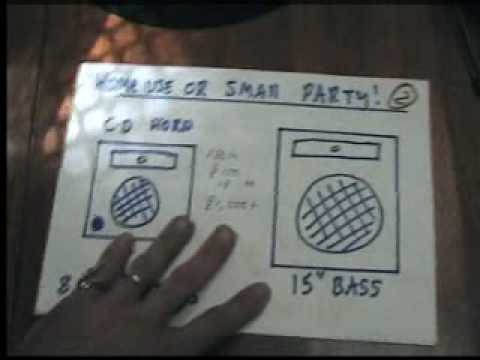
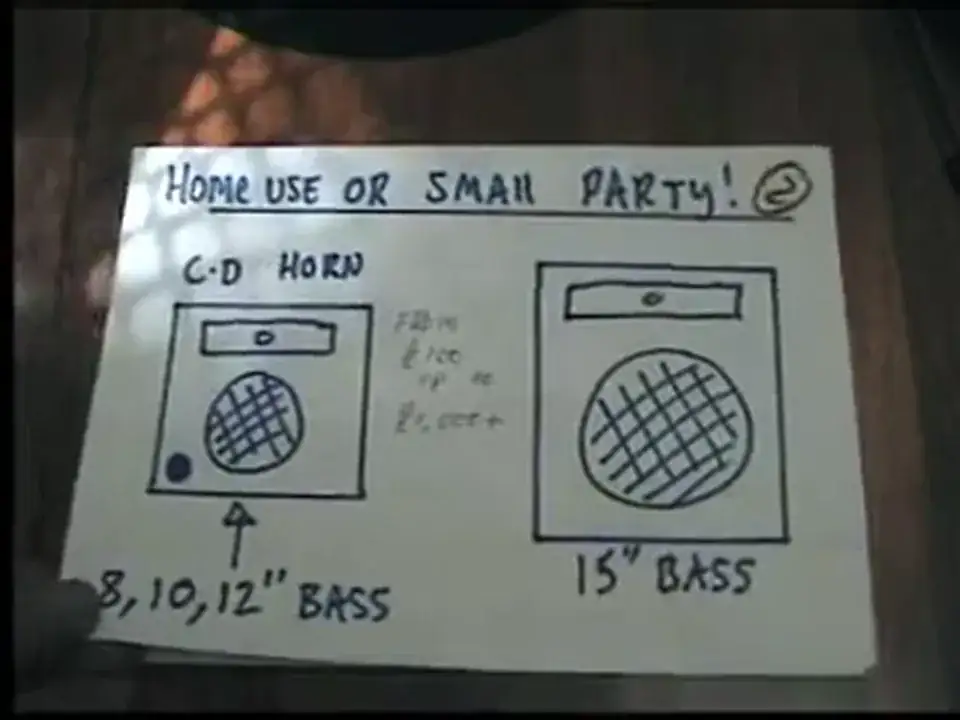
A 10, 12 or 15 inch bass driver with a compression driver - the horn, which he notes is often called a CD horn and which, in his assessment, does kick ass.
Inside is a passive crossover that keeps the bass out of the horn and the treble out of the bass driver. Often ported, and the port is part of the bass tuning rather than a hole somebody forgot to fill.
15-inch and horn for drum and bass and anything with real low end. These will annoy the neighbours, which is the point of taking them to a party rather than keeping them at home.
The price warning
And here he gets emphatic, rightly.
If you see a brand-new 12-or-15-inch-and-horn cabinet in a shop for £100 or $200, his view is that you are barking up the wrong tree, and that it is unlikely to be built for heavy use.
The reason is that the parts cost what they cost. A real 15-inch driver with a decent voice coil and magnet, a real compression driver, and a cabinet braced well enough not to resonate, cannot be built and shipped for that money. Something has been left out, and it is usually the part that fails under load.
His range for something that will survive: £100 to £1000 and up, with the honest caveat that the more you spend the better you get. Looked after and not overpowered, decent cabinets last a long time.
And the amplifier for them
A power amp - left and right, a fan each side, volume controls, and nothing else. No tone controls, no input selector, because it does one job.
The fans draw cool air in, across the heat sinks, and blow the heated air out of the back. Which tells you how to rack it: leave the back clear.
They are built to 19-inch rack width, the industry standard, which is why crossovers, limiters and compressors are all the same width and all fit the same flight case without a bracket.
Contents of the video
0:00 Mobile disco, inches high, floor standing
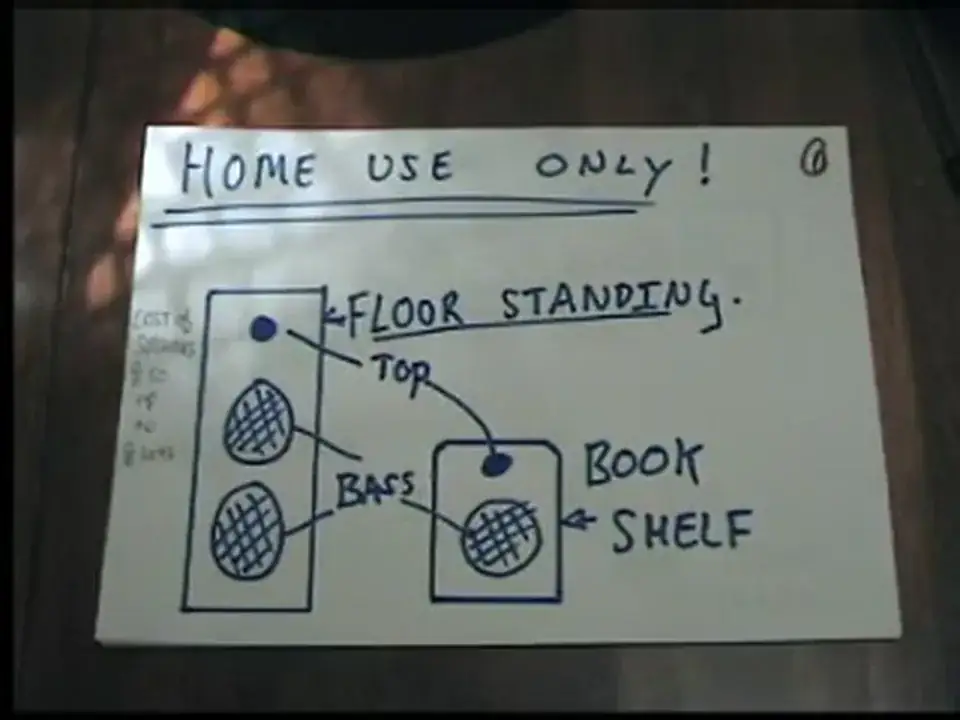
G'day folks, here's another video for you and this time what I'm going to try and do is have a bit of an in-depth discussion in what sort of speakers you should buy for the situation you're in. In other words, if you're a mobile disco or you're thinking of doing that, then hopefully I will be able to advise you on the type of speakers you will need. If you're just in the house, likewise applies, or if you're thinking of doing a band PA or a big mobile disco, then likewise again. Home use only. Now note I said only, the reason being if you buy this sort of speaker, not like this because this would look very dodgy, but if you buy this kind of speaker and you take it to a big party, you're going to blow the suckers. So what we're looking at here is your basic floor standing speaker that could be anything from 24 to 36 inches high. That's roughly 2 or 3 12 inch singles. Known as floor standing because logically it sits on the floor. These guys here are known as bookshelf mounted speakers.
1:27 You would go into the auxiliary input, okay, in the back
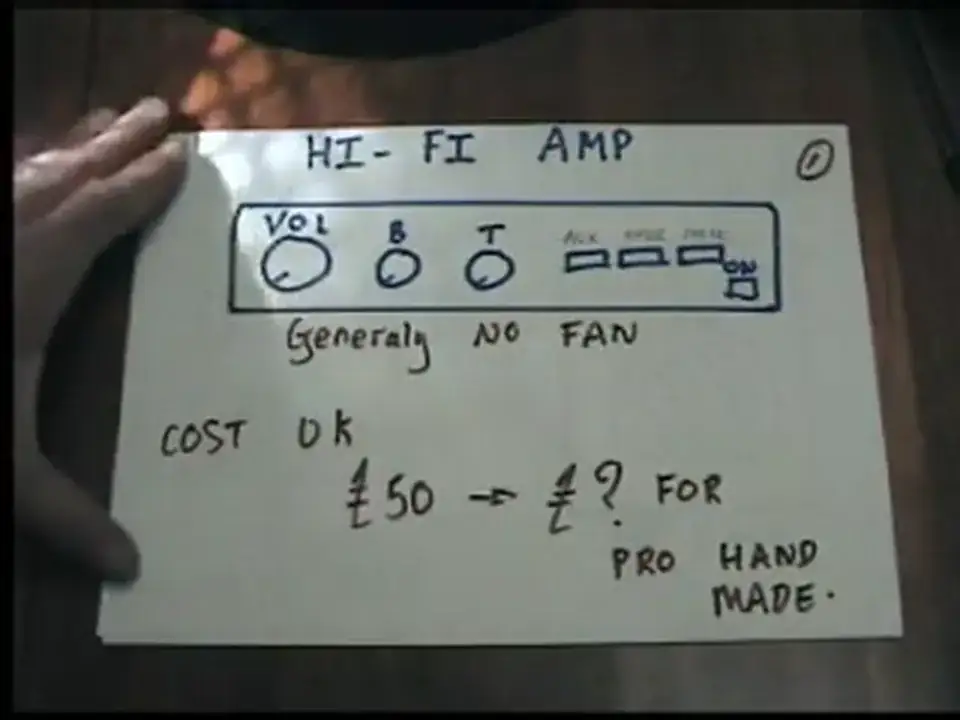
Generally they could be anything from 6, 8, 10, possibly even 12 inches high. You have here the bass speakers and also they will supply you with mid-range. These little holes here, the dots, are known quite often as dome tweeters and they will supply the high frequency. Cost in the UK of these is anything from £50 up to thousands of pounds if you buy the pro audio handmade stuff, the really expensive hi-fi gear. For what we need, it's not really advisable to do that. The amplifier you'll probably need to power those units is basically just a general hi-fi amplifier. What does it have? It has a volume control, bass, treble, auxiliary, tuner is your radio, phono if you just want to plug in a basic turntable into it. You would go into the auxiliary input, okay, in the back. Now then, quite simply this, you would go from your source
If you have a mixer on half volume, That's fine if the volume is all the way up. If you've got your mixer on full volume, that's fine because the volume is all the way up. So the hi-fi amplifier will do exactly as it's supposed to do. But think about the negative side. If you've got your volume only say on number 2 from a scale of 1 to 10 and you start cranking your mixer up to 10 then what's happening is the signal coming into this amplifier All of this will end up being distorted and there is a very good chance over a short period of time you'll knacker your hi-fi amp. So bear that in mind, and like I said cost fifty quid up to well anything. Now then if you want to do like your little house party or maybe go on the road do small functions, discos these guys here again can be used for home because there's no real size
You can't use it in the house. Well, there is actually. If you can't get it through the front door, forget about it. Ah, you could always knock the wall down, couldn't you? Right, OK. These guys here, CD Horn, they're more commonly known as compression drivers and these suckers do kick ass. Inside here, like I've said in a previous video, you have what's known as a passive crossover that will eliminate treble from the bass and eliminate bass from the treble units. Small ones, 8-12. 10 or 12, which is the bass speaker. This guy here, normally they're ported. There should be ports here as well. Or you can have a 15-inch driver with a horn. These are far more suitable for people who like drum and bass and who like a bit of booming sound. These guys, yes, they will annoy the neighbours, but these are the sort of things, if your mates say, yeah, come and do a party, take those along.
4:07 You're barking up the wrong tree because they probably won't last
And quite often, if you look after them and you don't overpower them, they are virtually bomb-proof. But again, it's on the basis how much you pay. If you're going to buy a set of speakers for 100 quid, please listen to this. This is so important. If you go in a shop and you see a set of brand new speakers with a 12 inch and a horn or a 15 inch and a horn and they're £100 each or say in the US, $200, believe me, you know, you are... You're barking up the wrong tree because they probably won't last. You need to spend a decent amount of money. The more you spend, the better quality you will get. Sadly I can't give makes really at the moment. If you want any makes you can email me and I'll send you loads of decent makes. But anything from £100 up to £1000 plus. Now the amplifier you'll need to run these is known as a power amp. Now these guys just have left and right, a fan either side.
The fans circulate the hot air out of the amplifier, sorry they circulate cold air into the amplifier and then the cold air is heated up through the heat sinks and then they blow the hot air out of the back. Left and right on, a fan either side, volume controls, anything from £100 in the UK up to £1000 plus, power amps 50 watts up to maybe 300 watts per side. And they're known as 19-inch rack mounts. The reason being is it's an industry standard size. By that what I mean is 99% of crossovers, of limiters, compressors, all that kind of stuff you see in rack mounted systems are 19 inches across so they all fit perfectly and you don't have to mess around sort of screwing extra bits of metal on to fit them into your flight cases.
This transcript was produced automatically from the audio of the video and may contain mistakes.