 19:11
What Was It Like Using Old School 7" Vinyl at a Gig?
Contents of the video
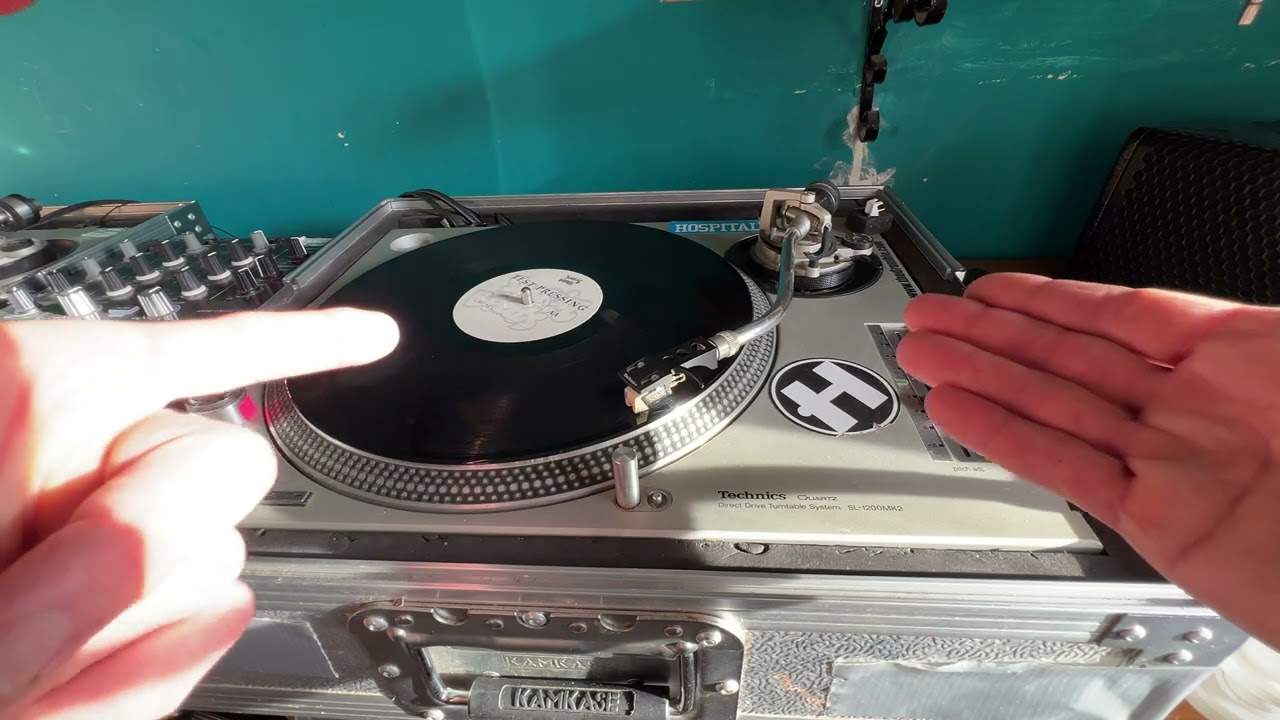
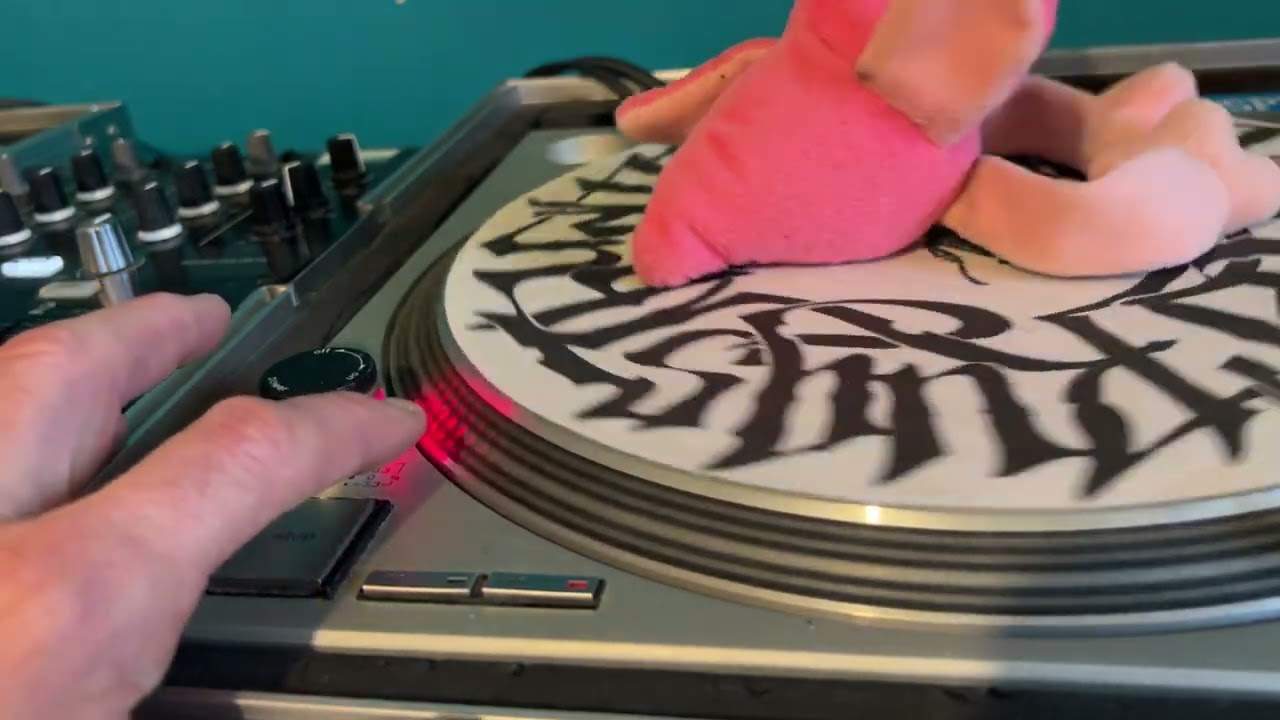
0:00 These are the Technics SL1200 Mark II
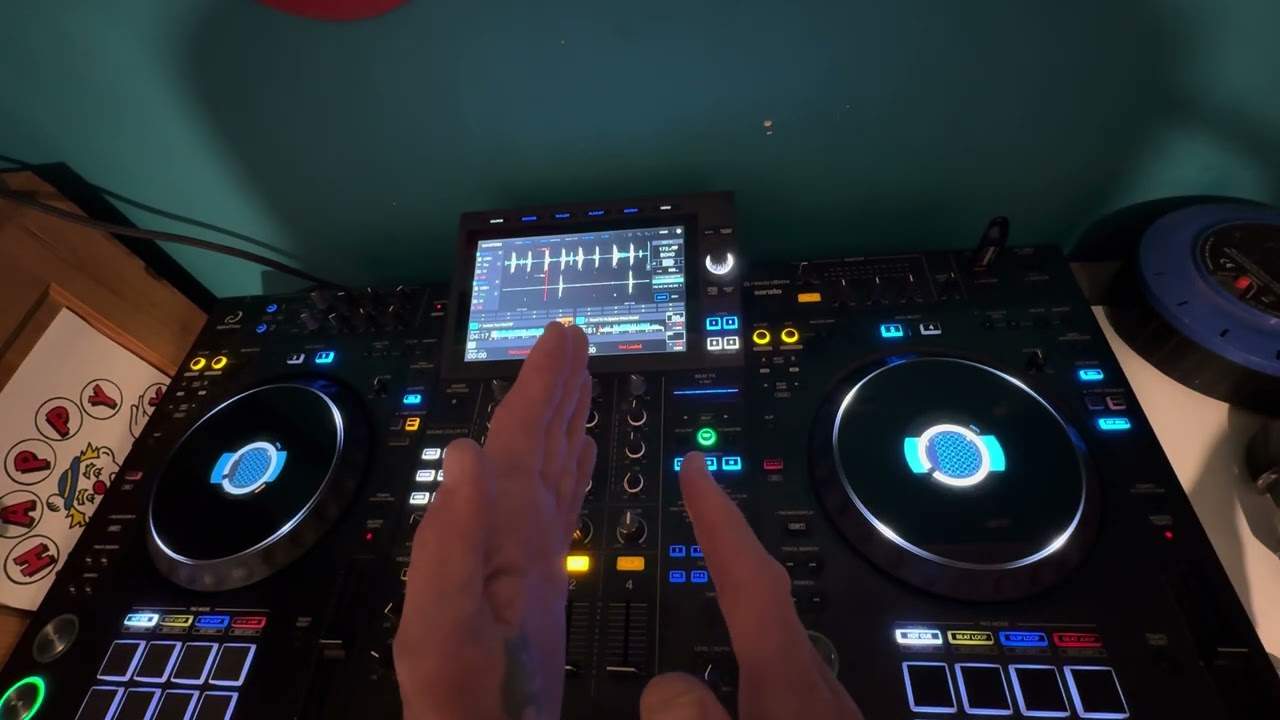
I'm not really saying what you've got in front of you doesn't make you a real DJ, because it's about the person. It doesn't matter whether you've got the most expensive kit in the world or whether you've got something you bought from the local second-hand shop for 20 quid, you plug it into your laptop and you can come up with some kind of good party transition and so on. But this is old school. These are the Technics SL1200 Mark II. These are the industry standard, were the industry standard. Back in the day, they are direct drive pitch, minus 8 plus 8 percent. So if your tune was 100 BPM, you go down to 92 BPM, you go up to 108 BPM. But not only could you slow the track down or speed it up, you could make the music rise and the music fall. So the general rule of thumb...
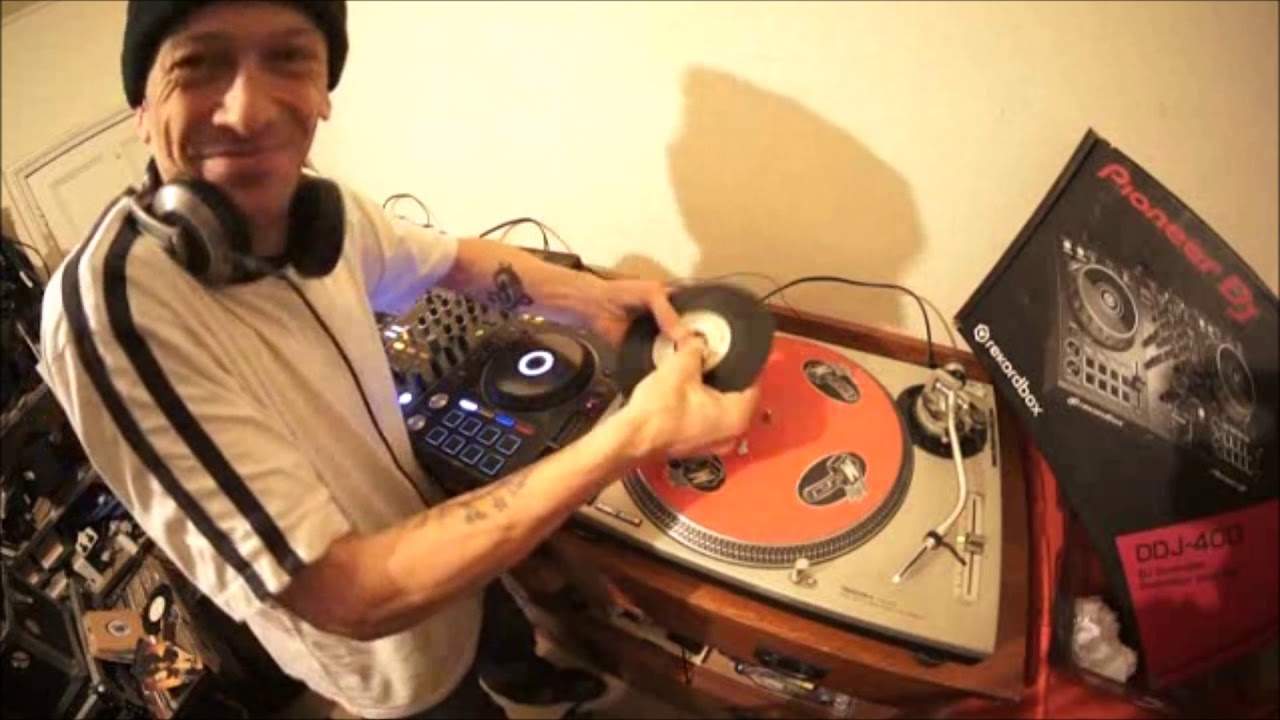
If you could form a mix around about plus or minus 3%, you wouldn't lose any semitones. After that, below or above that, you started to also not only slow or speed the track down or up, but you would reduce or increase the key of the track so it would start to sound a bit strange. Now that is a 7-inch single and this is a 12-inch single so you can see the difference. There you go. Quite a bit of a difference in size there. You could almost fit another two there if you cut them out and did that, but you wouldn't want to cut them out really. Okay, so now if you were mixing vinyl, old school seven inch singles, it was rather difficult. So I'm going to just do a couple of like really simple transitions. Now these are the sort of transitions, not so much I would have done back in the day, but when you only had vinyl and you used seven inch singles.
2:19 These are old school tunes
I promise you this, and there's not one person out there that would ever disagree with me. You had no idea about loops. You had no idea really about trying to formulate this 16 bar, 32 bar mix. Because in most cases, you couldn't. You just could not do it. Unless of course, let's say, you had the club version. If you missed your cue point, if you missed... That precise moment when you've got to bring that tune in, you were basically buggered. Yes, and you had to then just bring it in and drop it in whenever you could. Now, these are old school tunes. This here is Kid Creole and the Coconuts, I'm a Wonderful Thing Baby. So, what else have we got here? Shaka Khan, This Is My Night. Now, I'm going to leave the pitch in the centre position and... Oh, it jumped!
4:42 I wanna spend some time with you
It jumped! So I'm using the slip mat. All I'm going to do now is throw that in. Now notice I haven't, or well I don't know if you can see that one but the pitch is in the centre position so I'm not thinking about trying to get them in beat. All I'm doing is dropping them in. Now I have underneath that 7 inch single like the other one I have a slip mat. Now the slip mat will allow me to, let me just put that back, grab hold The DJ Tutor is a professional guitarist who has been working with us for over a decade. He's been working with us for over a decade. Okay, so let's just let it go. There we go. Right, now look at that one. That's got an issue, hasn't it? There's a bit of a hole in there and if I put this record, which is also one of my favourite tunes actually, this is Alton Edwards' I Just Want To Spend Some Time With You. Do you know what? I wish someone would do a remix of this because this is an absolute classic. Oh, I just want to...
I wanna spend some time with you. I just wanna be with you. Right, now then, this is what happens if you accidentally drop a seven inch... In fact, let me show you on this side so you can see, because you can't see over there, can you? Sorry, do pot shows. Let's put it over there. So I'm now going to place that in the wrong position on the piece of vinyl. This could be very interesting. Right, here we go. Have a listen to this. Yeah, the producer was pissed at the time. All that's happening is it's sort of slowly, well it's not slowly, it's speeding up quite fast then slowing down quite fast because as the turntable rotates, I'll give you an analogy. Let's imagine that you are...
7:07 It's to do with physics and stuff like that
I'm doing some sand surfing. If you're not familiar with sand surfing, you've got to do it, but please take care because you could hurt yourself. What you do is you get a piece of wood, a thin piece of wood, you curve the end up, you cut some thick pieces like 4x2, so curves are a little bit like the front of Santa's sleigh. You nail that to the piece of wood and then you have some framework around the back, you have a cushion on it, you have something that you can tie a piece of rope to and you put that...
The other side of that long piece of rope on the back of a car. And then you go on some sand dunes and you get pulled along by the car. Now, when the car turns, the car can carry on doing, say for example, 500, no sorry, you wouldn't really want to go 70 miles, that's amazing, don't do it. Let's say the car's... Oh dear, the things I used to get up to. Nightmare. Anyway, I'm still here, hold on, all my bits, just a few broken bones, no, just joking. When the car turns like that, you are no longer, if the car's going 20, you're not going 20 miles an hour, you're going about 30 because you're just like that. So this is sort of what's happening here. The motion of the vinyl being further away from the centre, if we look, means that it's going faster. It's to do with physics and stuff like that.
10:06 Frissing, piece paper, cussing
Let's put sandsurfing, amazing. Of course the great thing as well is if you fall off, you just roll but you do have a mouthful of sand. Actually that was the bad part really but it's fun. Anyway, don't do it. Okay so let's put Alton Edwards on. I could even actually put the vocals side on, it might be even better actually. Yes, it is a lot better. Okay, so what have we got here? I'll show you this record in a minute. Now this could go disastrously wrong because... Right, we're going to do this anyway. Alright, let me just stop that a second. Now I want to show you this. I'm going to carry on playing Alton Edwards over this side but I want to show you the problems DJs faced back in the day. That there, okay. And oh yeah also I need to show you this. This was handmade anyway but that is a center part and that would fit there of course I should have done that anyway. So there you go and that will of course make sure that the seven inch single or whatever you're using is central to the spindle. Very important! Right don't do it again sorry. Okay but on the other hand you may find sometimes these things now
Generally, when you found vinyl like that, they would have come out of jukeboxes because a jukebox had to have either a big spindle inside of it or something. I don't know much about jukeboxes but back in the day if you saw a record like that, well they're likely to come out of a jukebox and that's what you had. You had one of those things that would fit in the centre to hold it in place. But if I put that now on the vinyl, I don't know if you can see that, it's very wobbly. And that is fine if it's being played and you don't touch the vinyl. But if you're trying to cue it up, that could have been a really big problem because as you're moving the turntable or if you're touching the vinyl, if the needle jumps out slightly, you've got to start all over again. If you're holding it in place and you're just about to throw it in and it jumps out...
11:59 Cousin's sick of my frisbee, this time
It's going to be out of time and out of position and all sorts, so the best thing to do would have been to get a piece of paper. So I'm just going to get a little piece of paper like this, and I am going to put that in the centre of the vinyl like that, or the dead centre, can you see that? And then just twist it over. Like that. And then place that. Now, alright, it's still wobbling a little bit so you'd have to get a bigger piece of paper. A4 preferably. I'm going to put that now in the centre and hopefully that will do. I know it's faffy but you don't realise how blinking lucky you are with modern day controllers and what not. Back in the day, my god, it was an absolute nightmare. Mind you, DJs were very, very fit and strong because we had to... Frissing, frissing, cussing. Frissing, cussing, frissing. Doesn't that look like glass to me? Oh God, right. OK, we'll edit that. And chop. So, back in the day, we had... One of those. Yeah, let's get some paper. This is half a receipt. I think it's thin in a receipt anyway. Frissing, cussing, pissing, frissing, frissing.
14:35 You'd have probably done it once
Cousin's sick of my frisbee, this time. People have left. Dad's floor's empty. And they're like, hang the DJ, hang the... They're like, come on you silly muppet. Right, okay, so, put that on there. So, right, okay, so let's put Alton Edwards over here, get the centrepiece, put that in there. Okay, okay. Right, I've got that cued up ready now. So, after... The chorus. I'll bring it in. Oh dear. I'll bring it in here. I'm going to pop it in there. Okay, so. Now, I'm not interested in BPM or mixing it in. I'm just trying to bring them in, in somewhere that just seems to sort of work. And that's what we did back in the day. We didn't have hours and hours. The DJ Tutor program is available in English, Spanish and English.
16:46 They just wanted to hear some music
And instead of forming kind of a mix, it was just 2, 3, 4, 1 over that side to that track. I mean, I know it's what a faff, but, you know, OK, so back in the day, if you'd have played that 100 times, you wouldn't get a piece of paper and shove it in the middle 100 times. You'd have probably done it once. And also, what I used to do was sellotape it in there so it doesn't fall out. Right, OK, so let's put that over there. What else have we got? I think, yeah, could do Bob Marley and the Wailers. Right, now, yes, that's right. This is why I was going to do this. Urban Cookie Collective feels like heaven. Right, so... And again, just a straight chuck in. Now, most of the time, the objective with mixing 7-inch vinyl was to make sure...
The music complemented each other with both tracks, but also that what you tried to do was when people were dancing, they weren't dancing 1, 2, 3, 4 and then there was this magical kind of break and then it was like 4, 3, 7, 8, 1, 3, 5. In other words, what you wanted to try and do, let's imagine you have a track on the right side and you were counting 1... 1, 2, 3, 4, 1, 2, 3, 4. What you would try and do is on the other side take over from that counting. So very simply 1, 2, 3, 4, 1, 2, 3, 4 on the other side. Now back in the day people weren't that interested and in a way most people, let's be honest here, most people who go to fun bars, fun pubs and... Just generally get drunk and want to jump on someone in the late, early hours of any time of day. They just wanted to hear some music. And if it sounded relatively good and there was some kind of transition in the middle, they weren't that bothered. On the other hand, of course, if you did transitions like this in some super club in Ibiza, you'd probably only do one transition and then you would be walking home.
Not very good idea. So, back in the day, using vinyl was really, really difficult. It was hard. It wasn't easy. No laptop there telling you the BPM or the key or anything like that. No one advising you the occasional jumping record. And of course, the trouble is then if the needle jumped, you had to then quickly... If it was jumping or if... If, though, let's say there was a scratch on the piece of vinyl and the record was going, oh, one, two, three, four, one, two, three, four, one, two, three, four, you know, apart from looking quick at an idiot, you had to do something very quick. And quite often what you would do is you would just take the linen off the record and put it somewhere in front of that jump, not behind it, because if you put it behind it, then you'd get back to that jump again. So you had to move it towards the centre.
The DJ tutorial by Ellaskins, The DJ Tutor. You don't really have three and a half minutes because you've got to spend a little bit of time getting it ready, cueing it up, make sure you've got the right position. But that's if you're lucky. You go back to old school rock and roll and rockabilly and stuff like that and a lot of those tracks were just about two and a half minutes. You had even less time. So that's when a DJ really did work. Hard work. But it was fun. Practice and enjoy. This is old school. This is vinyl. This is a Technics SL12. Look at that.
This transcript was produced automatically from the audio of the video and may contain mistakes.